




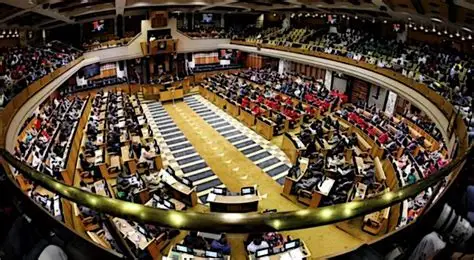
“South Africa’s Government of National Unity (GNU) has achieved fiscal stability but faces mounting judicial interventions on flagship legislation, including the NHI Act and Employment Equity reforms. With the 2026 Local Government Elections approaching, coalition partners and opposition parties are leveraging high-stakes bills as bargaining chips, raising uncertainty in the legislative process.”
South Africa’s legislative landscape in mid-2026 reflects both progress and peril. The Government of National Unity (GNU), formed to stabilize governance after years of political turbulence, has managed to deliver fiscal discipline. Yet, ideological battles over healthcare, employment equity, and land reform have shifted decisively into the courts, creating a dynamic where judicial oversight increasingly shapes parliamentary outcomes.
Fiscal Stability Achieved
- Budgetary discipline has improved compared to 2025, when near-gridlock threatened investor confidence.
- The Clearing House Mechanism (CHM) streamlined committee processes, ensuring smoother passage of money bills.
- Businesses welcomed this predictability, though structural reforms remain delayed.
Judicial Oversight as a “Third Actor”
- The Constitutional Court has become pivotal in adjudicating disputes over contested reforms.
- The NHI Act, designed to overhaul healthcare access, faces partial invalidations.
- Employment Equity legislation is similarly stalled, with rulings shaping its trajectory.
- This judicial role underscores the fragility of coalition compromises.
Coalition Dynamics and Political Bargaining
- Smaller GNU partners and opposition parties are using high-profile bills as leverage.
- The Local Government Elections (LGE) in 2026 amplify these tensions, as parties seek to position themselves advantageously.
- Parliamentary impeachment processes involving presidential legal challenges further complicate governance.
Risks Ahead
- Politicisation of oversight processes threatens institutional credibility.
- Delays in flagship reforms risk undermining public trust.
- Judicial interventions may invalidate or reshape legislation, prolonging uncertainty.
Opportunities Emerging
- Governance-strengthening bills in the pipeline include:
- Anti-money laundering legislation
- Whistleblower protection laws
- Labour modernization reforms
- These measures could enhance institutional resilience and investor confidence.
Broader Implications
- For the private sector, the message is one of qualified stability.
- Fiscal legislation passes without crisis, but regulatory overhang remains elevated.
- The judiciary’s assertive role may safeguard constitutional principles but risks slowing reform momentum.
Conclusion
South Africa’s Parliament stands at a crossroads. Fiscal stability has been secured, but the price is legislative stagnation on transformative reforms. As the 2026 Local Government Elections loom, the interplay between coalition politics, judicial oversight, and public expectations will define the trajectory of governance. The coming months will test whether the GNU can balance stability with progress—or whether judicial rulings will continue to dictate the pace of reform.



