




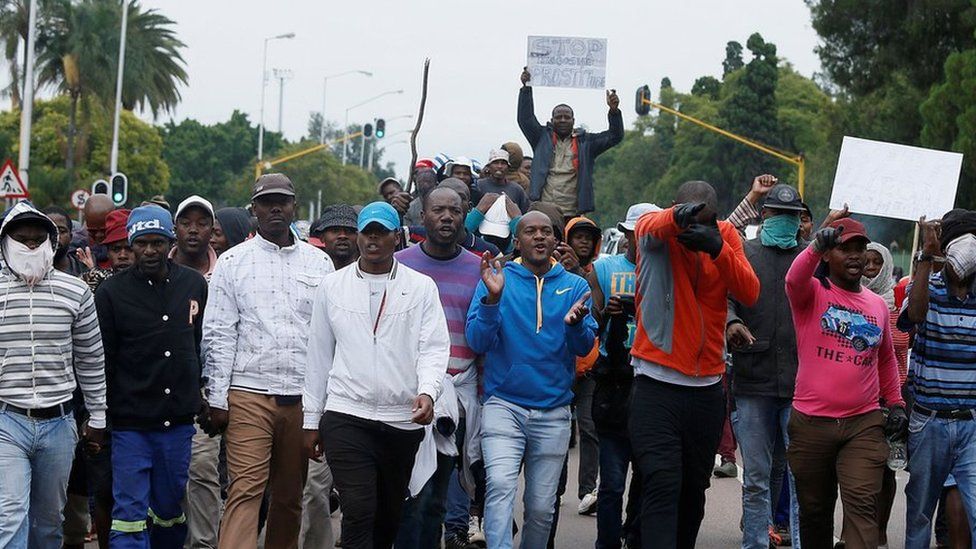
“South Africa is bracing for mass protests on June 30 over undocumented migrants, with activists demanding stricter immigration enforcement while rights groups warn of rising xenophobia. The government faces mounting pressure to balance public frustration with constitutional protections, as tensions threaten to spill into violence.”
South Africa is on edge as the countdown to the June 30 nationwide protests against undocumented migrants intensifies. Activist groups such as March and March and Operation Dudula have mobilized communities across Johannesburg, Durban, Cape Town, and Pretoria, demanding that foreign nationals without legal documentation leave the country. The demonstrations, which began earlier this year, have already escalated into violent incidents, including deadly clashes in Mossel Bay that displaced hundreds of migrants. With just days to go before the planned shutdown, the government is under immense pressure to show leadership and prevent the situation from spiraling into xenophobic vigilantism.
The Department of Home Affairs, led by Minister Leon Schreiber, has been at the center of the storm. Thousands of Malawian nationals in Durban have been systematically verified and repatriated in cooperation with the Malawian High Commission. Schreiber has promised systemic reforms to South Africa’s immigration system, endorsed by President Cyril Ramaphosa, who recently addressed the nation to condemn vigilante violence while pledging stronger enforcement measures. Yet activists argue that government action remains too slow, fueling frustration among communities that feel overwhelmed by migration pressures.
The South African Police Service (SAPS) has ramped up security ahead of June 30. Acting Police Minister Firoz Cachalia assured citizens that SAPS is “operationally prepared” to maintain law and order, emphasizing that while peaceful protest is a constitutional right, violence and intimidation will not be tolerated. Police have conducted weekly enforcement operations to verify the legal status of foreign nationals, while provincial commissioners have been instructed to respond swiftly to any incitement or criminality. Coordination with the Defence Ministry and private security firms is underway to secure high-risk areas.
Activism around immigration has drawn sharp criticism from international observers. The United Nations, African Union, and human rights organizations have condemned the protests, warning that they risk inflaming xenophobia and undermining South Africa’s obligations under international law. Several African countries, including Nigeria, Ghana, and Mozambique, have begun repatriating their citizens, citing safety concerns. Diplomatic tensions are rising, with foreign governments demanding assurances that their nationals will not be targeted.
The roots of this activism lie in South Africa’s economic crisis, where unemployment remains above 32%. Many citizens blame migrants for job scarcity, crime, and strain on public services. Surveys by the Human Sciences Research Council show that hostility toward immigrants has reached record highs, with over 40% of South Africans in 2025 saying they wanted no immigrants in the country. Groups like Operation Dudula have capitalized on these sentiments, framing undocumented migrants as scapegoats for systemic failures in governance and economic policy.
Yet critics argue that the activism risks crossing into xenophobic populism. Past incidents highlight the dangers: in 2025, a Malawian child died after being denied healthcare access by Dudula members. Courts have since issued injunctions against blocking migrants from essential services, but enforcement remains inconsistent. Civil society organizations warn that the June 30 protests could reignite the kind of violence seen in 2008, when xenophobic attacks killed 62 people nationwide.
As the deadline approaches, South Africa faces a pivotal moment. The government must balance legitimate concerns about immigration management with the constitutional rights of migrants and the need to prevent violence. Activists are determined to push their agenda, but the risk of xenophobic vigilantism looms large. Whether the protests remain peaceful or descend into chaos will depend on the government’s ability to enforce law and order while addressing the deeper socio-economic grievances driving the movement.
The June 30 protests are not just about immigration—they are a test of South Africa’s democracy, its commitment to human rights, and its ability to navigate complex activism in a time of economic hardship. The world is watching closely as the nation prepares for what could be one of the most consequential demonstrations in recent years.



