




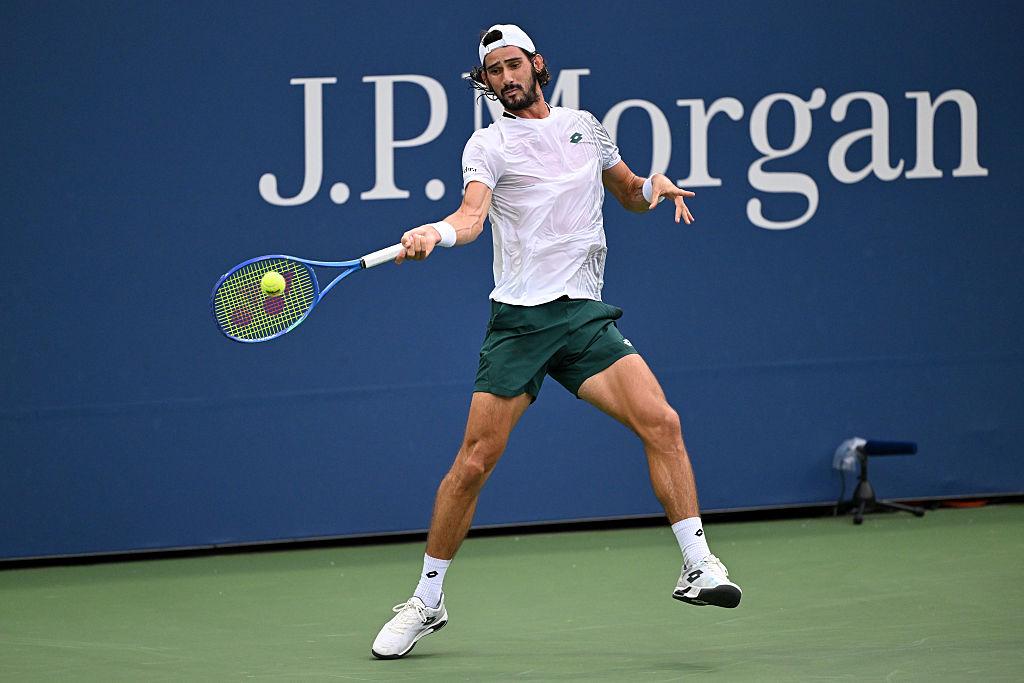
“South African tennis player Lloyd Harris won the Jingshan Open title in China after recovering from a one-sided opening set to defeat Italy’s Mattia Bellucci 1–6, 6–3, 7–6 in the final. The victory followed a strong run in China, including a quarter-final appearance at the Chengdu Open, and provided further evidence of Harris’s ability to compete successfully on the international professional circuit.”
Lloyd Harris’s Jingshan Open Triumph Highlights South African Tennis Resurgence
A determined comeback delivers an important international title
South African tennis received a welcome boost in October when Lloyd Harris captured the Jingshan Open title in China, overcoming Italy’s Mattia Bellucci in a three-set final. Harris lost the opening set 1–6 but responded with an impressive recovery, winning the second set 6–3 before securing the deciding set 7–6. The victory underlined his determination and ability to compete under pressure, providing an encouraging moment for South African tennis as the international professional season continues.
According to reporting published by 919 FM, Harris won five matches during the tournament. His championship performance followed another promising appearance in China, where he reached the quarter-finals of the Chengdu Open. The results demonstrated that Harris remained capable of stringing together victories against international opponents and converting a successful tournament run into a title.
The Jingshan victory was particularly significant because of the manner in which it unfolded. After struggling in the opening set, Harris needed to reset his approach, improve his execution and maintain his concentration. His response demonstrated the importance of adaptability, a quality that frequently separates successful professional players from competitors who struggle to recover when matches move against them.
Recovering from a difficult opening set
The final began with Bellucci taking control, winning the opening set 6–1. That scoreline placed Harris under immediate pressure and left little room for further mistakes. In tennis, losing a set so convincingly can create both tactical and psychological challenges, particularly when an opponent appears comfortable controlling the rallies.
However, Harris managed to reverse the momentum in the second set. He won 6–3, restoring the contest to an even position and demonstrating that he could adjust after an unproductive start. Rather than allowing the first set to determine the outcome, he found a way to remain competitive and take the match into a deciding set.
The third set proved the closest stage of the contest. With neither player able to establish a decisive advantage, the final was settled in a tiebreak, which Harris won to claim the championship. The 7–6 score reflected the narrow margin separating the players at the decisive stage.
Although the available report does not provide detailed statistics on first-serve percentages, winners, break points or rally lengths, the final score establishes that Harris recovered from a substantial early deficit and won the match through three sets. It was a performance built around persistence and the ability to respond when the initial plan was not producing the desired result.
Building momentum after Chengdu
The Jingshan championship followed Harris’s quarter-final appearance at the Chengdu Open. Together, these results suggested a positive period for the South African player, who was seeking to build consistency through competition in China.
A quarter-final appearance provides opportunities to test different aspects of a player’s game against increasingly demanding opposition. Winning a subsequent tournament can add confidence because it requires a player to sustain performance across multiple rounds rather than produce one outstanding match.
For Harris, the transition from reaching the latter stages in Chengdu to lifting the trophy in Jingshan was an encouraging development. It showed that his campaign could deliver more than isolated victories and that he was capable of finishing a tournament strongly.
Nevertheless, one title should not automatically be interpreted as proof of a sustained return to the highest levels of men’s tennis. Professional progress depends on repeat performances, physical condition, match scheduling and the quality of opposition. The next challenge for Harris is to use this achievement as a foundation for further results.
The significance of international competition
Playing tournaments abroad remains an important part of professional development. International events expose players to different playing styles, competitive environments and match conditions. They also require athletes to manage travel, preparation and recovery while maintaining their technical standards.
Harris’s performances in China illustrate the value of taking advantage of opportunities across the international calendar. By progressing through several rounds and ultimately winning the Jingshan final, he gained competitive experience while producing a result that South African tennis supporters could celebrate.
Tournament victories can also contribute to ranking progress, depending on the competition category, the points awarded and a player’s existing results. However, the available report does not specify the ranking points Harris earned or provide a confirmed ranking change attributable to this title. Any assessment of his ranking position should therefore be based on an official ATP ranking update rather than assumptions about the immediate effect of the victory.
The broader lesson is that professional success is cumulative. Players need repeated opportunities to earn points, develop confidence and demonstrate that they can perform against a variety of opponents. A title provides an important achievement, but maintaining that level over subsequent tournaments is what creates lasting momentum.
What the victory means for South African tennis
South Africa has a long history of producing competitive tennis players, but maintaining a consistent presence at the highest international levels requires more than individual talent. It depends on player development, coaching, competitive opportunities, financial support and access to appropriate facilities.
Harris’s achievement offers an encouraging example for aspiring players because it demonstrates that South Africans can still succeed in international professional competition. His comeback also provides a practical illustration of resilience: a poor opening set does not necessarily determine the final result when a player can adjust and remain focused.
For younger athletes, such performances can reinforce the importance of patience and disciplined preparation. Tennis development frequently involves setbacks, difficult draws and periods when results do not reflect the amount of work invested. Progress requires athletes to analyse their performances, identify weaknesses and continue improving rather than judge their prospects by a single match.
At the same time, South African tennis needs a broad pipeline of emerging talent. Sustainable progress depends on junior programmes, school competitions, club participation and professional tournaments that allow promising players to gain experience close to home. International success becomes more achievable when athletes can develop their skills through a structured pathway.
Tennis South Africa’s programmes and tournament calendar form part of that wider development environment. Its official website provides information about junior competitions, rankings and national tennis activities. These opportunities matter because developing professional players requires consistent competition long before athletes reach the international tour.
The importance of sustained performance
Harris’s Jingshan title should be viewed as an important result within a longer competitive journey. Professional tennis is demanding because players must repeatedly perform at a high level while managing physical fatigue and the pressure of close matches.
The final against Bellucci demonstrated why maintaining concentration is essential. After losing the first set, Harris had to prevent the deficit from affecting his confidence. He then needed to sustain his level through the second set and remain composed when the deciding set reached a tiebreak.
Tiebreaks can magnify pressure because a small number of points may determine the entire match. Serving accurately, making sensible decisions and resisting the temptation to rush can all become crucial. Although detailed match statistics are unavailable in the report, Harris’s victory confirms that he won the decisive phase of this particular contest.
His next objective will be to translate that performance into consistency. Strong results in subsequent tournaments would help establish whether the Chinese swing represents the beginning of a sustained period of improvement rather than a single successful week.
Supporters should also recognise that professional tennis careers rarely progress in a straight line. Injuries, difficult draws and changes in form can affect results. A balanced assessment celebrates meaningful achievements while allowing future performances to determine the larger trajectory.
Looking ahead for Lloyd Harris
Following the Jingshan Open victory, the reported next step for Harris was the qualifying draw at the Shanghai Masters. That offered another opportunity to test himself in a demanding international environment.
Qualifying for a major tour event requires players to navigate additional competitive hurdles before reaching the main draw. Success can provide valuable exposure and opportunities to face higher-ranked opponents, although entry into the main draw should never be assumed without confirmed results.
The importance of Harris’s next appearances will lie in how effectively he carries forward the lessons from his recent performances. Maintaining the confidence gained in China, managing his recovery and preparing carefully for different opponents will all be important.
For South African tennis, his campaign also offers a reminder that international progress can come through steady competitive work. Each successful tournament can strengthen a player’s experience and encourage the next generation to pursue ambitious goals.
Conclusion
Lloyd Harris’s Jingshan Open triumph was a notable achievement for South African tennis. By recovering from a 6–1 opening-set defeat to beat Mattia Bellucci 1–6, 6–3, 7–6, he demonstrated determination and the ability to perform when the stakes were high.
Combined with his Chengdu quarter-final appearance, the title provided encouraging evidence of competitive momentum during his Chinese campaign. The challenge now is to build on that success through further performances, sustained physical preparation and consistent results.
For South African tennis supporters, Harris’s victory is a reason for optimism, while also highlighting the importance of long-term player development. A single title cannot resolve every challenge facing the sport, but achievements of this kind can inspire young competitors and demonstrate the value of perseverance.
As the international season progresses, Harris’s subsequent results will show whether this successful period can develop into a more sustained resurgence. For now, his comeback in Jingshan stands as a significant recent moment for South African tennis and a reminder that determination can transform a difficult match into a championship victory.



