




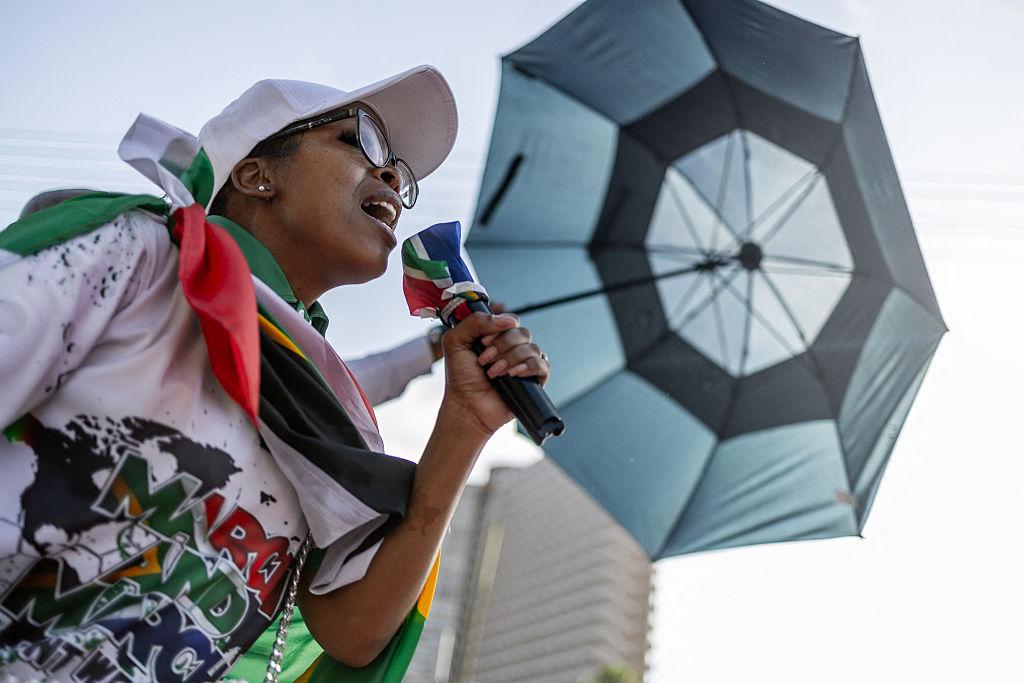
“South Africa’s anti-immigration protest movement March and March has continued challenging government immigration policies and asylum procedures, while court proceedings and police interventions have sought to prevent violence, intimidation and disruption. The movement’s leader previously called for a Durban shutdown on 10 November if the government proceeded with an online asylum-registration system, making the date a significant focal point in the country’s activism debate.”
Durban’s Immigration Protests Put South Africa’s Freedom of Assembly, Human Rights and Government Policy Under Pressure
South Africa’s increasingly contentious immigration protests have emerged as one of the country’s most consequential political activism stories, placing questions of constitutional rights, immigration administration, public safety and social cohesion at the centre of national debate. The March and March movement, led by Jacinta Ngobese-Zuma, has continued campaigning against undocumented immigration, demanding stronger enforcement of immigration laws and greater attention to the economic challenges facing South African communities.
The campaign has attracted supporters from different communities, including sections of the e-hailing and delivery sectors, while simultaneously drawing criticism from civil society organisations, migrant-support groups and human rights activists concerned about intimidation, xenophobia and violence.
The movement’s planned demonstrations have also become a significant test of South Africa’s constitutional protection of peaceful protest, particularly as authorities seek to balance freedom of assembly against the need to protect vulnerable communities, businesses and public infrastructure.
Immigration policy becomes a major activism issue
Immigration enforcement has become a prominent political issue in South Africa amid widespread public frustration over unemployment, poverty, crime and pressure on public services.
March and March has argued that government institutions should prioritise South African citizens and strengthen immigration enforcement. Its demonstrations have focused particularly on refugee reception offices, migrant settlements and areas where foreign nationals operate businesses.
The movement’s activities have attracted considerable attention in Durban, where protests have repeatedly brought together demonstrators, police officers, migrant communities and political representatives.
However, immigration remains a complex administrative and legal issue. South Africa’s asylum system operates under constitutional and international obligations, including protections for people seeking refuge from persecution.
A Constitutional Court judgment delivered in July 2026 concerning asylum applications prompted renewed debate about access to refugee reception services and the procedures governing applications.
Subsequent administrative changes triggered protests and confrontations outside Home Affairs offices.
Reuters reported in October that the Department of Home Affairs withdrew an asylum directive following anti-migrant violence in Johannesburg and Durban. The department cited operational difficulties, pressure on reception offices and public-safety concerns.
The developments intensified disagreement between immigration activists and organisations advocating for asylum seekers.
Durban becomes a centre of demonstrations
Durban has experienced repeated demonstrations linked to immigration enforcement, with protesters gathering around the Department of Home Affairs refugee reception office on Che Guevara Road.
March and March has argued that authorities should address concerns surrounding migrant encampments and immigration enforcement.
Migrant communities, meanwhile, have expressed concerns about displacement, intimidation and access to legal documentation.
GroundUp reported in September that activists criticised March and March’s demonstrations, arguing that unemployment, poverty and inadequate public services could not simply be attributed to migrants.
The reporting also documented confrontations involving protesters and people identified as foreign nationals.
The disputes have increasingly involved questions about whether demonstrations remain peaceful and whether vulnerable people can safely access government services.
These developments have created a challenging environment for police, who must manage demonstrations while preventing assaults, property destruction and unlawful intimidation.
Court restrictions reshape protest activity
The legal dimension of the movement’s campaign became particularly significant in October when police authorities approached the Durban High Court seeking restrictions on March and March demonstrations.
The application followed escalating tensions and incidents of violence associated with anti-immigration protests.
Reporting by IOL and other South African media described court proceedings involving movement leaders and police representatives.
The resulting interim restrictions sought to prevent violent conduct, intimidation, obstruction of businesses and the possession of weapons during demonstrations.
The restrictions also addressed the use of masks and other disguises that could prevent identification.
The court proceedings illustrated an important constitutional distinction: peaceful protest remains protected, but the right to demonstrate does not provide immunity for violence, threats or property damage.
March and March leaders publicly opposed what they described as attempts to silence their campaign. They maintained that their concerns about immigration enforcement deserved political attention.
The police, however, argued that restrictions were necessary to protect public safety and prevent further unrest.
The dispute therefore developed into a broader debate about the limits of activism and the responsibility of authorities to enforce the law impartially.
The planned November 10 shutdown
The movement’s campaign acquired additional significance after Inside Politics reported on 22 October that Ngobese-Zuma had called on e-hailing drivers and delivery riders to prepare for a possible Durban shutdown on 10 November.
The proposed action was linked to government plans for an online registration and appointment system for asylum seekers.
Ngobese-Zuma argued that government should also improve digital services for South Africans who lack identity documents.
The announcement raised concerns about possible disruption to transportation, commercial activity and public services.
It also demonstrated how protest movements increasingly use motorcades, road demonstrations and organised participation by workers to amplify political pressure.
The announcement should not, however, be interpreted as confirmation that a citywide shutdown has occurred.
As of the reporting reviewed for this article, the announcement was a proposal made in October. Independent confirmation of the scale, participation and outcomes of any demonstration on 10 November requires subsequent reporting.
Activists challenge the movement’s messaging
South African civil society organisations have criticised the movement’s approach, particularly where demonstrations have targeted migrant communities.
GroundUp reported on criticism from activists who questioned the movement’s participation in a demonstration associated with gender-based violence and femicide.
The activists argued that campaigns against violence against women should not be used to promote hostility towards migrants.
Their concerns reflect a wider disagreement about political mobilisation and the use of social grievances in activism.
Gender-based violence, unemployment, crime and inadequate public services are serious challenges requiring substantial government intervention.
However, critics argue that attributing these problems collectively to foreign nationals risks undermining constructive public debate and exposing vulnerable people to discrimination.
March and March supporters maintain that immigration enforcement and the protection of South African communities deserve greater attention.
The competing arguments illustrate how activism can influence public discussion while also generating disagreements about its methods, objectives and consequences.
Violence and public safety remain major concerns
South Africa’s recent immigration-related demonstrations have included serious incidents of violence and property damage.
Associated Press reported that protests following disputes over asylum procedures resulted in vehicles being burned and businesses looted in Johannesburg and Durban.
Reuters also reported that anti-migrant violence contributed to the withdrawal of an asylum directive in October.
These incidents demonstrate the risks associated with demonstrations when political mobilisation becomes accompanied by intimidation or attacks.
Violence can also undermine legitimate public concerns by shifting attention away from policy questions towards criminal conduct and public disorder.
Authorities have a responsibility to investigate offences, protect victims and ensure that individuals can exercise constitutional rights without fear.
The same responsibilities apply to journalists, humanitarian organisations and people seeking assistance from government institutions.
Immigration, elections and political accountability
The immigration debate has also intersected with South Africa’s changing political environment.
The November local government elections brought public concerns about service delivery, municipal administration and political accountability into sharper focus.
Reuters reported on 9 November that the African National Congress suffered a significant electoral setback, strengthening the country’s transition towards coalition politics.
The election results highlighted the importance of public confidence in political institutions and the capacity of parties to respond to community concerns.
Immigration activism forms part of this broader political environment, although it should not be treated as the sole explanation for electoral outcomes.
Political parties and civic organisations face pressure to address unemployment, housing shortages, crime, water shortages and administrative failures while maintaining constitutional protections.
The challenge is to distinguish legitimate demands for better government from rhetoric that risks encouraging hostility against particular communities.
The constitutional importance of peaceful activism
South Africa’s Constitution protects freedom of expression, peaceful assembly and association.
These protections are central to the country’s democratic system and allow citizens to organise campaigns, challenge government decisions and advocate policy changes.
At the same time, peaceful assembly does not protect violence, threats or unlawful destruction of property.
The courts have an important role in ensuring that restrictions on demonstrations remain lawful, proportionate and consistent with constitutional rights.
Police authorities must also distinguish between peaceful demonstrators and individuals who commit criminal offences.
This distinction is particularly important where demonstrations involve large crowds, political organisations and vulnerable communities.
Government faces pressure for a sustainable solution
The continuing protests demonstrate the need for a more effective immigration administration.
Government institutions must improve asylum processing, strengthen border management, address administrative delays and communicate policy changes clearly.
Officials also need to confront misinformation that can intensify tensions between communities.
A sustainable response requires cooperation between national government, municipalities, police, civil society organisations and community representatives.
Immigration policy cannot resolve South Africa’s unemployment and poverty challenges on its own. These issues require broader economic reforms, employment creation, improved education and better public services.
Likewise, the protection of asylum seekers and migrants must be accompanied by credible enforcement of immigration laws.
The public debate is therefore likely to continue involving competing demands for stronger enforcement, constitutional protection and improved government performance.
Conclusion
South Africa’s immigration protests have developed into a significant political activism issue, particularly in Durban, where March and March has mobilised supporters and challenged government immigration procedures.
The movement’s campaign has attracted attention because it combines public frustration over immigration enforcement with wider concerns about unemployment, service delivery and political accountability.
However, court proceedings, reports of violence and criticism from civil society organisations demonstrate the importance of maintaining peaceful and lawful activism.
The planned 10 November shutdown announcement added another dimension to the campaign, highlighting the potential consequences of protest mobilisation for urban transportation and economic activity.
Ultimately, South Africa’s challenge is to address legitimate public concerns while protecting constitutional freedoms, preventing violence and ensuring that immigration administration operates effectively.
The outcome will depend not only on protest movements and political leaders but also on the ability of government institutions to deliver credible policies, uphold the law and maintain public confidence in democratic processes.



