




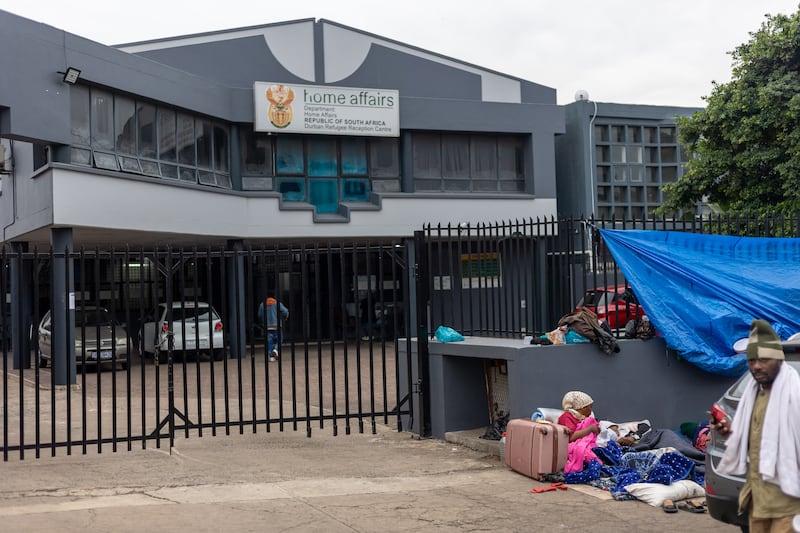
“South Africa’s Department of Home Affairs has launched the first phase of its Digital Asylum System, introducing an online platform for people to register their intention to seek asylum. The reform is intended to improve administrative efficiency, strengthen identity verification, reduce corruption opportunities and help address long-standing processing delays, while preserving the distinction between registering an intention to apply and receiving refugee status.”
South Africa Launches Digital Asylum System as Government Moves to Reform Refugee Processing
South Africa has launched the first phase of its Digital Asylum System, marking a significant policy development in the government’s efforts to modernise immigration administration, strengthen border management and address longstanding challenges in the processing of refugee applications.
The Department of Home Affairs announced on Tuesday that its new digital platform for recording intentions to apply for asylum is operational for an initial group of test cases. Public registration is expected to begin following a routine software release scheduled for the coming weekend.
The initiative represents an important step towards transforming a system that has experienced administrative delays, staffing shortages, backlogs and concerns about corruption and identity verification.
According to the government, the platform is designed to improve the management of asylum applications while ensuring that South Africa continues to meet its constitutional and international obligations towards people seeking protection.
Digital Registration Marks First Phase of Immigration Reform
The new platform allows individuals who intend to seek asylum in South Africa to register their intention online by submitting personal information, facial biometric data and supporting documents.
Once registration is completed, applicants will receive a receipt confirming that they have declared their intention to seek asylum. The receipt will include relevant identification information and a reference number.
However, the government has emphasised that the document does not constitute a formal asylum application, confer refugee status or automatically grant permission to remain permanently in South Africa.
Applicants will still be required to follow the formal asylum determination process established under South African law.
The distinction is important because the reform is intended to improve access to the asylum system without removing the government’s authority to assess applications, reject claims that do not qualify for protection and enforce immigration legislation.
The first phase primarily enables Home Affairs to record anticipated application volumes, improve planning and prepare for the introduction of additional digital processing capabilities.
Constitutional Court Ruling Shapes New Policy Direction
The reform follows a Constitutional Court judgment delivered on 7 July 2026 concerning the processing of asylum applications.
The court declared certain provisions of the Refugees Act unconstitutional because they prevented some individuals from accessing the asylum system solely because of procedural circumstances.
These restrictions included situations involving irregular entry into South Africa, the absence of an asylum transit visa or failure to report to a refugee reception office within prescribed periods.
The judgment reinforced the principle that individuals must have an opportunity to seek asylum and have their protection claims considered in accordance with the law.
Consequently, Home Affairs has faced the challenge of implementing the court’s requirements while managing administrative capacity, immigration enforcement and national security considerations.
The government has maintained that the ruling does not legalise unlawful immigration or automatically grant refugee status to anyone entering the country.
Instead, it requires authorities to ensure that people who seek protection are not excluded from the asylum process merely because of procedural obstacles.
The Digital Asylum System is intended to provide a more structured administrative mechanism for implementing these requirements.
Government Targets Processing Backlogs and Administrative Inefficiencies
One of the principal motivations behind the reform is the longstanding backlog of asylum applications and appeals.
Home Affairs has acknowledged that inadequate staffing and funding have contributed to significant delays in processing applications.
The department has indicated that, at the beginning of the current administration, only nine officials were available to handle thousands of outstanding asylum appeals.
Such constraints have created difficulties for applicants awaiting decisions, officials responsible for determining claims and authorities tasked with enforcing immigration legislation.
The government believes digital transformation could substantially improve administrative efficiency.
Future phases are expected to introduce additional biometric verification, appointment scheduling, integration with existing Home Affairs records and more comprehensive digital processing of applications.
The department has also indicated that machine learning and artificial intelligence tools could eventually support the processing of applications and appeals.
These developments are expected to reduce turnaround times, improve identification procedures and strengthen the department’s ability to distinguish between applicants who qualify for protection and those whose claims are unsuccessful.
However, the effectiveness of these technologies will depend on appropriate implementation, reliable data, sufficient personnel and effective oversight.
Biometric Verification and Identity Management
Biometric identification is another central component of the new policy.
Applicants will provide facial biometric information during online registration, while subsequent stages are expected to incorporate additional biometric verification.
The system is intended to help Home Affairs establish whether applicants have previously submitted asylum applications, identify repeated applications and improve the verification of identity documents.
These capabilities could help address concerns about fraudulent documentation and the repeated submission of applications by individuals whose claims have already been rejected.
Nevertheless, biometric registration is not a substitute for the legal assessment of asylum claims.
The government remains responsible for determining whether applicants face persecution or other serious harm if returned to their countries of origin.
The system must therefore combine technological efficiency with fair procedures and appropriate protection for applicants.
Access, Assistance and Protection of Applicants
Although the digital platform is central to the reform, the government has recognised that not everyone seeking asylum will have access to internet connectivity, digital devices or the technical knowledge necessary to complete online registration.
Assisted registration is therefore expected to remain available at Refugee Reception Offices.
The government’s broader implementation framework also provides for assistance to individuals in police or immigration detention who wish to register their intention to seek asylum.
Legal representatives and civil society partners may participate in providing assistance where arrangements permit.
These measures are important because digitalisation should not create additional barriers for vulnerable individuals seeking international protection.
The government has also outlined the importance of confidentiality safeguards, protection of personal information, complaints mechanisms and appropriate information-sharing arrangements.
Effective implementation will require applicants to understand their obligations, registration procedures and the legal consequences of the documentation they receive.
Immigration Enforcement Remains Central to Government Policy
The launch of the Digital Asylum System also reflects the government’s broader migration management strategy.
Authorities have consistently maintained that individuals whose asylum applications are rejected and who have exhausted their legal remedies must be subject to immigration enforcement in accordance with the law.
At the same time, individuals who qualify for refugee protection must receive the safeguards provided under South African legislation and international obligations.
The government intends to improve the relationship between asylum processing and immigration enforcement through more reliable identification, improved records and faster determination of applications.
These measures are expected to strengthen the administration of migration while reducing opportunities for fraudulent applications and administrative abuse.
The policy therefore seeks to balance humanitarian protection, constitutional compliance, national security and immigration enforcement.
Broader Migration Policy Reforms
The Digital Asylum System forms part of a wider government programme to reform migration administration.
The Inter-Ministerial Committee on Migration has outlined additional measures involving border management, legislative reform, identity verification and the relocation of refugee reception facilities closer to ports of entry.
Government has also been reviewing legislation following the approval of its revised migration policy framework.
Further reforms are expected to address the processing of asylum applications, migration documentation and the administration of refugee protection.
The introduction of digital registration is consequently not an isolated technological project. It represents an initial stage in a broader policy effort to improve the functioning of South Africa’s immigration institutions.
Implementation Challenges and Public Confidence
Despite the potential benefits, the success of the reform will depend on implementation.
Home Affairs will need to ensure that the online platform remains accessible, reliable and secure as registration volumes increase.
The department must also maintain adequate staffing at refugee reception offices and ensure that applicants can complete the subsequent formal application process without unnecessary delays.
Cybersecurity, biometric data protection and the responsible use of artificial intelligence will become increasingly important as the system develops.
Public confidence will depend on whether the reforms produce measurable improvements in administrative efficiency while protecting the rights of individuals seeking asylum.
The government will also need to communicate clearly about registration procedures to prevent misinformation and misunderstandings regarding the legal status of applicants.
Conclusion: A Significant Step Towards Administrative Modernisation
South Africa’s launch of the first phase of the Digital Asylum System represents a significant development in immigration policy and public administration.
The initiative responds to longstanding administrative challenges while providing a mechanism for implementing Constitutional Court requirements concerning access to asylum procedures.
By introducing digital registration, biometric identification and the prospect of more comprehensive electronic processing, Home Affairs aims to improve efficiency, strengthen accountability and reduce administrative backlogs.
However, the reform’s long-term success will depend on whether technological improvements translate into faster decisions, accessible procedures and effective protection for individuals who qualify for asylum.
The coming months will therefore be critical in determining whether the digital initiative delivers meaningful improvements to South Africa’s asylum administration.
For government, the central challenge remains balancing immigration enforcement, national security, administrative efficiency and constitutional obligations within a sustainable and accountable policy framework.



