




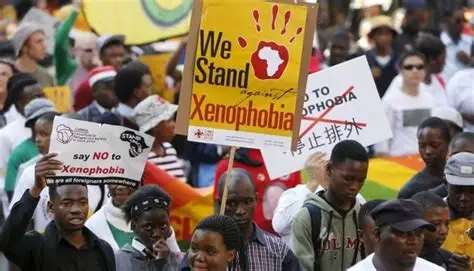
“Hundreds of demonstrators across Johannesburg, Pretoria, Cape Town, and Durban rallied against xenophobia, calling for justice and protection of migrants. Civil society groups condemned vigilante actions and deportation campaigns, urging authorities to address governance failures fueling social tensions.”
South Africa witnessed one of its largest coordinated civil society demonstrations in recent years, as over 60 organizations and community groups mobilized thousands of citizens to march against xenophobia. The protests, spanning Johannesburg, Pretoria, Cape Town, and Durban, were a direct response to escalating harassment, intimidation, and violence targeting migrants and refugees. Activists framed the marches as both a moral and political demand: South Africa must confront xenophobia not as isolated incidents but as a systemic crisis undermining democracy, human rights, and social cohesion.
Background: Rising Xenophobic Tensions
Since April 2026, vigilante groups have staged demonstrations demanding the removal of undocumented migrants. These groups have gone so far as to conduct door-to-door checks, pressuring African and Asian migrants to produce identification documents. Migrant-owned businesses have been looted, and communities report widespread intimidation. The government has condemned these actions, stressing that private groups have no authority to enforce immigration laws. Yet, activists argue that condemnation without enforcement has emboldened perpetrators.
Voices from the March
- Thuli Nkadimeng, a migrant activist in Johannesburg, emphasized accountability: “Authorities must hold those responsible for violence against foreign nationals accountable.”
- Phakamile Johnny, another activist, declared: “We can no longer remain silent while migrants are attacked and their businesses destroyed.”
- Trade union leader Mametlwe Sebei rejected claims that migrants are to blame for unemployment and crime, pointing instead to governance failures.
These voices reflect a broader narrative: xenophobia is not simply about migration but about state failure in service delivery, housing, healthcare, and employment.
Government Response
Justice Minister Mmamoloko Kubayi revealed that 53,000 African migrants had been repatriated or deported through voluntary and enforced programs. While the government frames this as immigration enforcement, activists argue it exacerbates vulnerability and legitimizes xenophobic sentiment. The marches demanded a shift in policy: from punitive deportations to protection and integration of migrants.
Civil Society’s Demands
Protest organizers outlined clear demands:
- Accountability: Prosecute vigilante groups and individuals inciting violence.
- Policy Reform: Halt deportation campaigns and prioritize migrant protection.
- Community Investment: Address root causes of tension—unemployment, housing shortages, and poor healthcare.
- Public Education: Launch campaigns to counter misinformation linking migrants to crime.
These demands highlight activism’s role in reframing xenophobia as a governance issue rather than a cultural clash.
Regional Impact
The protests resonate beyond South Africa. Migrants from Malawi, Mozambique, Ghana, Nigeria, Uganda, and Zimbabwe have already returned home under pressure. This exodus threatens regional economies, disrupts remittance flows, and undermines South Africa’s reputation as a continental leader. Activists warn that unchecked xenophobia could destabilize Southern African Development Community (SADC) relations, especially as South Africa assumes the chairmanship.
Analysis: Activism as Political Pressure
The marches demonstrate how activism under politics functions as a counterweight to state inertia. Civil society is not only defending migrants but also challenging the government’s legitimacy. By mobilizing across cities, activists signal that xenophobia is a national crisis requiring systemic reform. The protests also expose fractures in South Africa’s democracy: while the constitution guarantees equality, enforcement remains weak.
Conclusion
The August 9 marches against xenophobia mark a turning point in South African activism. They reveal a society unwilling to normalize violence against migrants and determined to hold government accountable. Whether authorities respond with meaningful reforms or continue with deportation campaigns will determine if South Africa can uphold its democratic values in the face of rising intolerance.



