




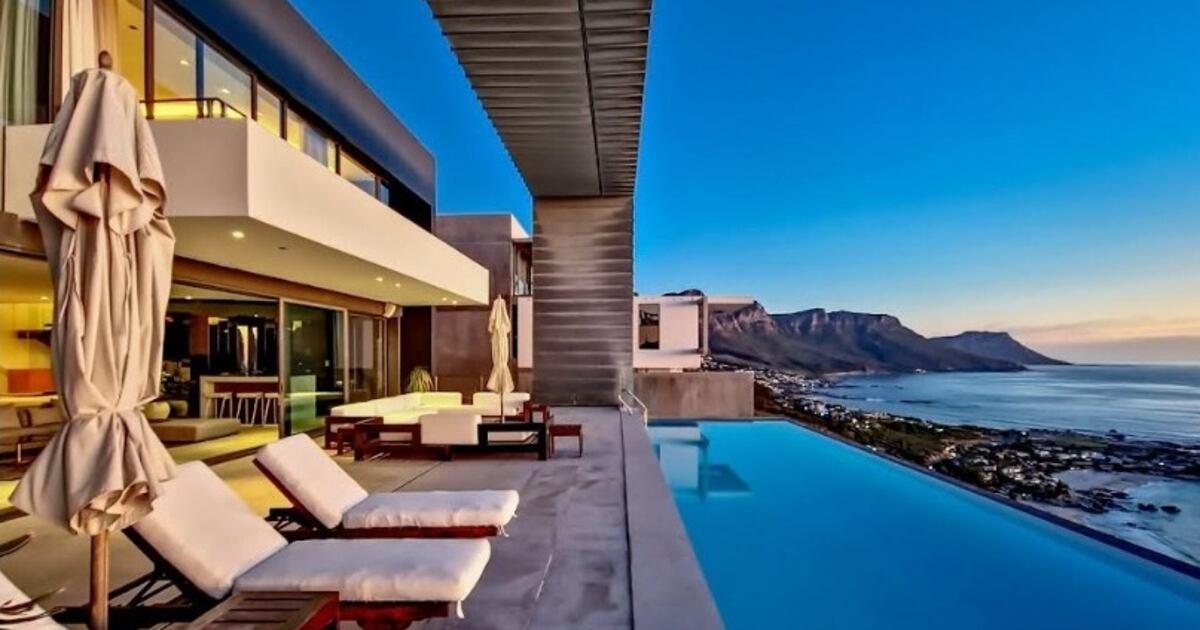
“Cape Town’s luxury property market is experiencing an increasingly severe shortage as wealthy South African and international buyers compete for premium homes in desirable coastal neighbourhoods. Limited listings, rising property values, foreign investment and owners’ reluctance to sell are pushing the market towards increasingly exclusive prices while raising concerns about affordability and urban inequality.”
Cape Town’s Luxury Property Market Faces an Intensifying Housing Shortage as Global Wealth Arrives
Cape Town’s luxury residential property market is experiencing an extraordinary period of demand, with wealthy domestic and international buyers competing for a limited supply of premium homes. The city’s natural beauty, international connectivity, lifestyle appeal and comparatively attractive property values have strengthened its position as one of Africa’s most desirable destinations for high-net-worth individuals. However, increasing competition is creating a challenging environment for buyers seeking exclusive residences along the Atlantic Seaboard and in affluent southern suburbs.
According to a Bloomberg report published by Moneyweb on 7 November 2026, Cape Town’s shortage of luxury homes has become increasingly pronounced, with property owners reluctant to sell and high-value transactions increasingly conducted privately. The situation reflects a combination of rising international interest, strong local demand and geographical constraints that limit the expansion of the city’s most prestigious residential neighbourhoods.
International Buyers Strengthen Cape Town’s Luxury Property Appeal
Cape Town has developed an increasingly prominent reputation among international property investors, entrepreneurs, affluent families and individuals seeking premium residential opportunities in South Africa.
The city’s Mediterranean-style climate, spectacular coastal scenery, mountain landscapes, established hospitality sector and internationally recognised lifestyle attractions contribute significantly to its appeal. Furthermore, international buyers can find luxury properties that offer substantial space, architectural sophistication and lifestyle amenities at prices that may compare favourably with equivalent residences in established global wealth centres.
The city’s growing millionaire population is another important factor influencing demand. Research cited in the Bloomberg report indicates that Cape Town’s millionaire population has increased by more than 35% over the past decade. This expansion has strengthened the market for exclusive villas, contemporary architectural homes, ocean-facing apartments and private estates.
Foreign purchasers have become particularly influential in the highest-value residential segment. Lightstone data cited in the report indicate that approximately 75% of properties purchased by individuals for more than R20 million in the first half of 2026 were registered to non-South Africans.
However, when purchases involving South African individuals and domestic and foreign companies and trusts are included, the proportion falls to approximately 35%. This distinction demonstrates why buyer statistics need to be interpreted carefully when assessing international investment.
Atlantic Seaboard Properties Remain Highly Desirable
The Atlantic Seaboard continues to occupy a central position in Cape Town’s luxury property market.
Neighbourhoods such as Clifton, Camps Bay, Fresnaye and Bantry Bay attract affluent buyers because of their proximity to the ocean, spectacular views, exclusive residential environments and convenient access to restaurants, shopping and entertainment.
The geography of these neighbourhoods creates an additional advantage for existing property owners. The Atlantic Ocean borders one side of the coastal residential corridor, while mountains and protected landscapes restrict development in other directions.
Consequently, opportunities to develop new luxury residential properties in established premium locations remain limited.
This combination of location, exclusivity and constrained development potential has contributed to substantial property appreciation over time.
Billionaires Africa reported on 3 November that Cape Town recorded 190 residential transactions above R20 million in 2025, compared with 144 in 2024 and only 49 in 2019. The publication also reported 115 sales above R20 million in the first half of 2026, including 13 transactions exceeding R50 million.
These figures illustrate the increasing importance of the luxury segment within Cape Town’s wider residential property market.
Record Prices and Exceptional Property Transactions
The uppermost section of Cape Town’s residential market is increasingly characterised by exceptionally expensive properties.
Some of the city’s exclusive streets have become associated with transactions involving tens or even hundreds of millions of rand. Nettleton Road in Clifton, for example, has attracted significant attention because of its concentration of high-value properties and spectacular coastal views.
According to Billionaires Africa, South African DJ Black Coffee purchased a five-level property on Nettleton Road for approximately R157 million in 2025. The publication also reported that a Spanish buyer paid approximately R170 million for two vacant plots on the same road.
These transactions demonstrate that wealthy buyers are increasingly prepared to pay substantial premiums for exceptional locations and scarce development opportunities.
The market is not limited to detached mansions. Luxury apartments, branded residences and hotel-linked residential developments are also attracting attention.
The Bloomberg report highlighted advertised residential units associated with Marriott International’s luxury hotel offering in Cape Town, with prices reaching approximately R160 million.
Such properties appeal to purchasers who prioritise security, hospitality services, convenient management arrangements and prestigious addresses.
Limited Listings Intensify Competition
One of the principal challenges confronting luxury property buyers is the declining availability of suitable homes.
According to Property24 figures cited by MoneyWeb, the number of properties listed for sale across Cape Town had declined by more than 20% compared with October 2025.
The shortage is particularly pronounced in sought-after residential locations where owners are reluctant to relinquish properties that may be difficult to replace.
Some homeowners have accumulated substantial appreciation over many years. Selling may involve capital gains tax obligations, relocation expenses and the challenge of purchasing another comparable residence in an increasingly expensive market.
Consequently, properties that become available can attract considerable attention from buyers who have been waiting for suitable opportunities.
Billionaires Africa reported that well-positioned homes frequently sell within days of listing, with multiple offers sometimes received for desirable properties. Cash purchases and transactions involving buyers who do not physically inspect homes before acquisition have also become increasingly noticeable.
These conditions create significant challenges for purchasers who require additional time to arrange financing, inspections or negotiations.
Cape Town’s Economic Growth Supports Property Demand
Cape Town’s property market cannot be understood independently of the city’s economic development.
The Western Cape has attracted businesses, skilled professionals, entrepreneurs, tourism investment and international residents. Employment opportunities and business activity have strengthened the city’s attractiveness to people seeking residential locations that combine economic opportunities with lifestyle advantages.
The Bloomberg report noted that Cape Town added more jobs than any other major South African hub in 2025, while the Western Cape’s economic growth outpaced the national average.
This economic momentum supports residential demand because employment, business formation and population growth generally increase the need for housing.
However, economic success can also generate unintended consequences.
As affluent newcomers enter the market, property prices and rental costs can rise faster than local household incomes. This creates affordability challenges for residents who may have lived in the city for many years but lack the financial resources to purchase increasingly expensive homes.
The resulting pressure is particularly visible in neighbourhoods undergoing rapid transformation.
Luxury Housing and Urban Inequality
Cape Town’s luxury property boom exists alongside a serious housing affordability challenge.
The city’s population has increased substantially since the turn of the millennium, intensifying demand for accommodation across different income groups.
While affluent purchasers compete for premium residences, many ordinary households struggle to secure affordable housing near employment opportunities.
The situation also intersects with South Africa’s historical patterns of spatial inequality.
Neighbourhoods such as Woodstock and Bo-Kaap have experienced significant changes as investment, tourism and wealthier residents reshape their property markets.
Although redevelopment can improve infrastructure, attract businesses and generate employment, it may also increase rental costs and reduce opportunities for existing residents to remain in their communities.
These developments make the relationship between luxury property investment and inclusive urban growth an increasingly important public policy issue.
Investors Look Beyond Cape Town’s Traditional Luxury Areas
As prime residential property becomes more expensive and difficult to acquire, wealthy buyers are increasingly exploring alternative destinations.
The Whale Coast and Cape Winelands are attracting interest from individuals seeking spacious properties, scenic surroundings, privacy and a less densely developed residential environment.
These locations can offer opportunities for buyers who want large estates, contemporary villas, agricultural lifestyle properties or holiday residences outside the city.
Nevertheless, Cape Town remains an important centre for luxury property because of its established international reputation, economic activity, hospitality infrastructure and accessibility.
The expansion of demand into neighbouring regions could gradually strengthen luxury residential development beyond traditional metropolitan boundaries.
Outlook for Cape Town’s Luxury Property Market
The outlook for Cape Town’s premium residential sector remains closely connected to supply, economic confidence and international investment.
If wealthy buyers continue entering the market while existing homeowners remain reluctant to sell, competition for exceptional properties could remain strong.
However, buyers should distinguish between asking prices and completed transactions. Not every expensive property necessarily achieves its advertised value, and individual developments can experience different levels of demand.
Investment decisions also require careful consideration of property maintenance, municipal services, insurance, security, taxes and the legal requirements associated with ownership.
Ultimately, Cape Town’s luxury property market illustrates the opportunities and complications created when a successful international destination attracts substantial wealth.
Its coastal neighbourhoods, architectural properties and lifestyle advantages continue to support demand. Yet the shortage of suitable homes demonstrates that even highly developed luxury markets can face structural supply constraints.
The city’s long-term challenge will be balancing its international property appeal with housing opportunities for residents across different income groups.



