




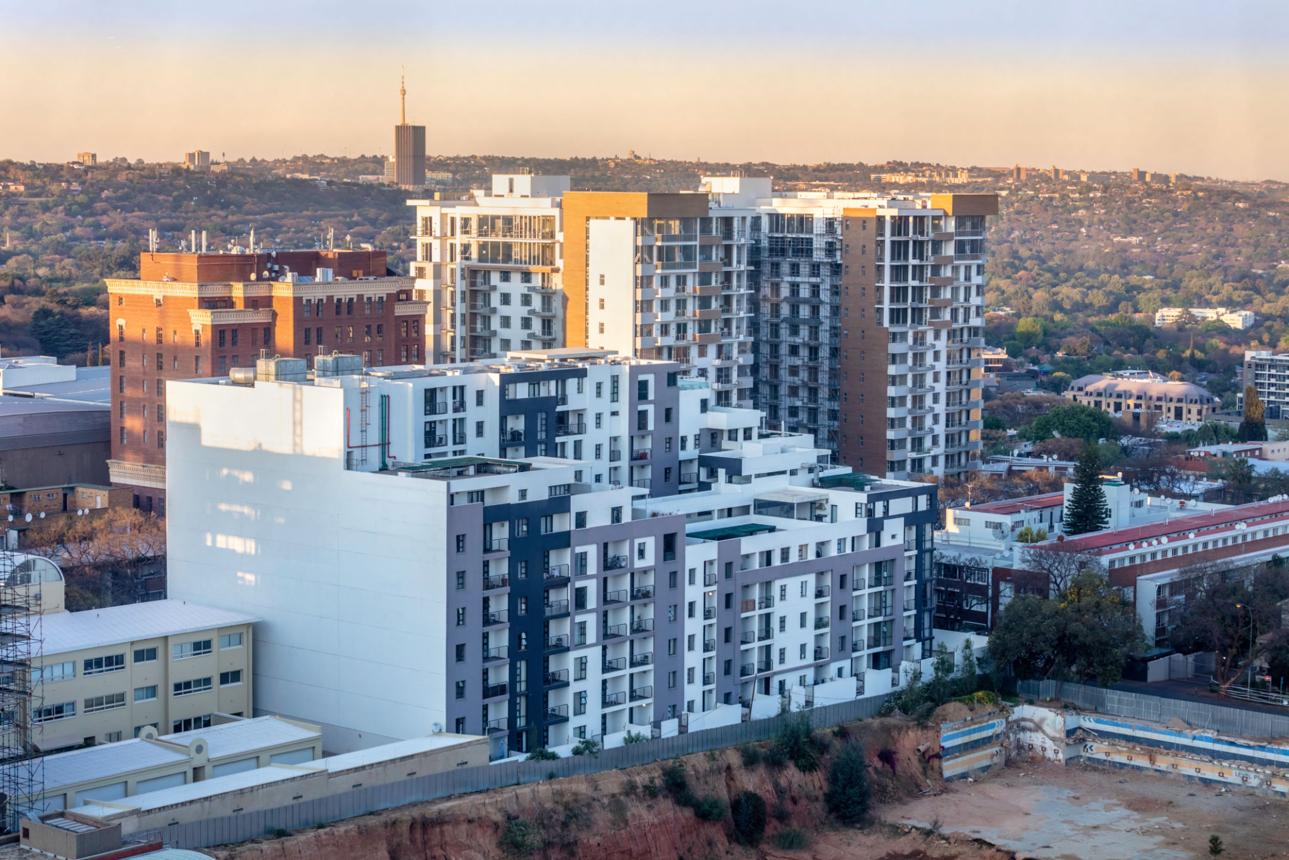
“South Africa’s residential rental market is experiencing stronger national rental growth, yet some landlords are reducing advertised rents because local competition, tenant affordability and property-specific demand determine what individual homes can realistically earn. Property professionals warn that competitive pricing, reliable maintenance and consistent occupancy can deliver better investment returns than insisting on an unrealistic rental price.”
South Africa’s Rental Market Faces a Pricing Reality Check as Landlords Cut Asking Rents Despite Stronger Growth
South Africa’s residential rental market is experiencing a significant pricing shift as stronger national rental growth increasingly contrasts with the challenges confronting individual landlords. Although rental growth accelerated nationally during the second quarter of 2026, some property owners are reducing advertised rental prices to attract tenants, highlighting the growing importance of affordability, local competition and realistic property valuations.
The development was examined in a report published by Property Professional on 2 November 2026, featuring insights from Michelle Dickens, commercial director of PayProp, and Paul Stevens, chief executive officer of Just Property. Their analysis highlights an increasingly important distinction between national rental market performance and the actual rental income individual properties can achieve.
National Rental Growth Does Not Guarantee Higher Rental Income
According to PayProp’s second-quarter 2026 Rental Index, South Africa’s national rental growth accelerated to 5.2%. The average monthly residential rental reached R9,715, reflecting improving rental market conditions compared with previous periods.
Nevertheless, these figures do not necessarily indicate that every landlord can increase rental prices.
Property professionals increasingly emphasise that rental performance differs considerably between provinces, municipalities, suburbs and individual streets. Consequently, national averages provide useful information about the direction of the market but cannot independently determine the rental value of a particular property.
Dickens explained that rental growth statistics remain important indicators of market health, investor confidence and housing trends. However, landlords should interpret these figures as broader economic indicators rather than direct pricing recommendations.
This distinction becomes particularly important when neighbouring properties experience different levels of demand.
A well-maintained apartment near employment opportunities, transport infrastructure and shopping facilities may attract considerable interest. Meanwhile, a similar property in an oversupplied neighbourhood could struggle to secure a tenant at the same rental price.
Therefore, landlords increasingly need to understand the conditions affecting their immediate rental markets rather than relying exclusively on national property statistics.
Why Some Landlords Are Reducing Asking Prices
One of the principal reasons landlords are lowering asking rents is competition between properties targeting similar tenants.
When several apartments or houses become available within the same neighbourhood, prospective tenants can compare prices, amenities, security arrangements and maintenance standards before deciding where to live.
This competition places pressure on landlords whose properties are priced above comparable accommodation.
Stevens explained that rental professionals frequently encounter landlords who believe their properties deserve higher rental prices because of renovations, improvements or personal investment.
However, tenants evaluate accommodation according to their own priorities and financial circumstances.
An owner may believe a renovated kitchen justifies a substantial rental increase. Nevertheless, prospective tenants may compare that property with several alternatives offering similar facilities at lower prices.
Ultimately, the rental value depends on what tenants are willing and able to pay.
Property professionals therefore increasingly recommend objective rental assessments based on comparable listings, actual tenant responses and current market conditions.
Affordability Remains Central to Rental Demand
Affordability continues to influence residential rental decisions throughout South Africa.
Households must balance housing expenditure against food, transport, electricity, healthcare, education and other essential expenses.
Consequently, rental increases that exceed household income growth can encourage tenants to reconsider their accommodation arrangements.
Some households may move into smaller properties, share accommodation, relocate closer to employment opportunities or search for homes in less expensive neighbourhoods.
These decisions influence rental demand and create different market conditions across locations.
For landlords, understanding the financial circumstances of prospective tenants is becoming increasingly important.
A property priced within the realistic budget of its target tenant group may attract stronger interest and achieve faster occupancy than an otherwise comparable property advertised at an excessive rental.
This is particularly relevant to student accommodation, shared housing, family homes and residential properties targeting young professionals.
Each category attracts tenants with different affordability requirements, lifestyle expectations and housing preferences.
Location and Property Features Influence Rental Value
Location remains a fundamental factor in determining rental performance.
Properties situated near employment centres, schools, universities, public transport, shopping facilities and essential services often attract particular tenant groups.
Security also remains an important consideration.
Tenants may prefer accommodation with controlled access, secure parking, reliable building management and neighbourhood safety.
Similarly, property condition can influence whether prospective tenants consider a rental price reasonable.
Modern kitchens, functional bathrooms, energy efficiency, backup electricity, internet connectivity and outdoor space may improve a property’s competitiveness.
However, landlords should distinguish between improvements that increase attractiveness and improvements that genuinely justify higher rental income.
Spending substantial amounts on renovations does not automatically guarantee a corresponding rental increase.
Instead, property owners should evaluate whether the investment addresses tenant priorities and improves the property’s position against competing accommodation.
The Financial Cost of Keeping Properties Vacant
One of the strongest arguments for competitive rental pricing is the financial impact of vacancy.
Stevens illustrated this challenge using a property advertised at R15,000 monthly that could potentially secure a tenant at R14,000.
At the lower rental, the landlord could receive R168,000 over twelve months, assuming uninterrupted occupation.
By contrast, insisting on the additional R1,000 monthly could result in substantial losses if the property remains vacant.
A single month without rental income would cost R14,000, equivalent to fourteen months of the additional R1,000 monthly rental.
Two months of vacancy would require twenty-eight months of that premium to recover, excluding advertising, maintenance, administration and other expenses.
This example demonstrates why landlords should consider annual rental income rather than focusing exclusively on advertised monthly prices.
A property consistently occupied at a competitive rental may generate stronger financial performance than one repeatedly vacant because its owner insists on achieving an unrealistic price.
Rental Agents Face Growing Expectations
The changing market also places additional responsibilities on rental agents and property managers.
Professionals must increasingly provide evidence-based rental recommendations and explain why particular prices may or may not attract prospective tenants.
This requires understanding local competition, tenant preferences, affordability constraints and property-specific advantages.
Agents must also communicate realistic expectations to landlords who may have developed their pricing assumptions during stronger market conditions.
Transparent communication becomes particularly important when owners are reluctant to reduce rental prices.
Property professionals can assist by presenting comparable properties, viewing activity, tenant enquiries and market feedback.
These assessments help landlords make informed decisions about pricing, improvements and tenant retention.
Johannesburg Infrastructure Challenges Add Another Dimension
Rental pricing is also influenced by broader property operating conditions.
In Johannesburg, unreliable electricity, water supply interruptions and municipal service problems have created additional challenges for residential property owners.
These difficulties can affect tenant satisfaction, building maintenance and residential investment confidence.
Some landlords have invested in backup electricity, water storage and alternative service arrangements to maintain acceptable living conditions.
However, these improvements increase operating expenses and may not always translate into higher achievable rentals.
Consequently, landlords must carefully balance service improvements, rental affordability and investment returns.
The broader infrastructure environment illustrates why rental performance cannot be understood through pricing statistics alone.
What the Rental Market Means for Tenants
For tenants, the changing market creates opportunities to evaluate accommodation more carefully.
Prospective renters can compare properties within the same neighbourhood, assess included services and negotiate where advertised prices appear inconsistent with comparable accommodation.
Existing tenants may also benefit from reviewing market conditions before lease renewals.
However, national rental growth remains positive, meaning that affordability challenges are not necessarily accompanied by declining rents everywhere.
Some neighbourhoods continue to experience strong demand, limited housing availability and rising rental prices.
The experience of tenants therefore depends substantially on location, household budgets and the type of accommodation required.
The Outlook for South Africa’s Rental Property Market
South Africa’s rental market is increasingly characterised by differences between national trends and local property performance.
Although rental growth indicates improving conditions across the broader market, individual landlords must respond to competition, affordability and changing tenant preferences.
Property owners who understand their target markets, maintain their properties and price accommodation competitively may be better positioned to secure reliable tenants.
Meanwhile, landlords who depend exclusively on national averages or historical rental expectations risk prolonged vacancies and reduced income.
The emerging lesson is clear: successful rental investment increasingly requires accurate local market assessments, professional property management and realistic financial planning.
As South Africa’s housing market continues to evolve, landlords will need to prioritise sustainable rental income, tenant stability and property competitiveness rather than simply pursuing the highest advertised rental price.



