




“Moody’s Ratings has described South Africa’s latest Medium-Term Budget Policy Statement as positive for the country’s credit profile, pointing to continued fiscal consolidation and tighter monetary policy despite rising oil prices. However, weaker-than-expected nominal GDP growth remains a concern, highlighting the challenge of improving public finances while creating stronger economic growth.”
South Africa’s Fiscal Progress Wins Moody’s Approval, but Weak Growth Remains a Major Economic Challenge
Introduction: A positive assessment amid economic uncertainty
South Africa has received an encouraging signal from international credit-rating agency Moody’s Ratings following the government’s presentation of its 2026 Medium-Term Budget Policy Statement. The assessment indicates that the country’s efforts to strengthen public finances, contain borrowing requirements and maintain monetary discipline are helping improve perceptions of its creditworthiness. Nevertheless, the positive assessment comes against a difficult economic background characterised by subdued growth, rising energy costs and uncertainty in international markets.
The development is important because the condition of South Africa’s public finances affects the government’s ability to fund infrastructure, provide essential services, support vulnerable households and respond to unexpected economic shocks. It also influences the cost at which the state borrows money and the confidence investors place in the country.
However, a positive credit assessment does not automatically mean that South Africa has secured a credit-rating upgrade or that its economic problems have been resolved. Instead, it suggests that recent fiscal developments are moving in a direction that could strengthen the country’s financial position if the government sustains its commitments.
The central question is whether improved fiscal discipline can eventually translate into faster economic growth, greater investment and more employment opportunities.
Government’s fiscal strategy begins to attract recognition
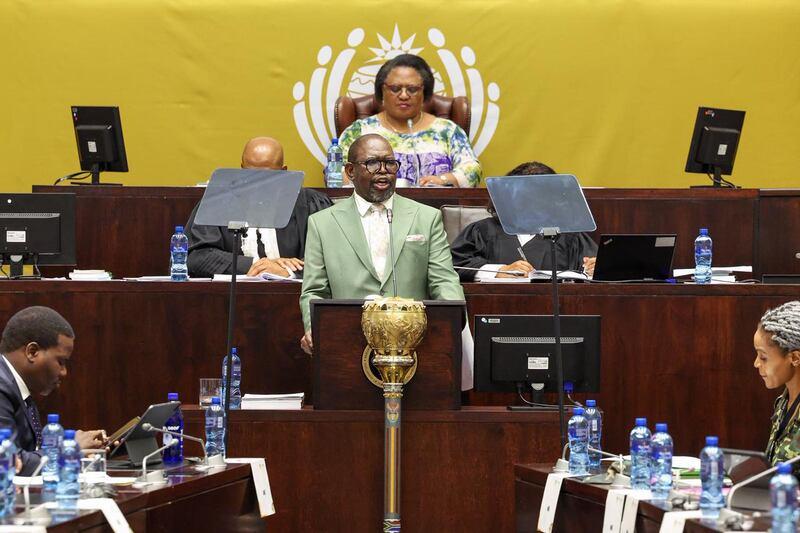
Finance Minister Enoch Godongwana presented the Medium-Term Budget Policy Statement on 21 October 2026. The statement updated the government’s fiscal and economic projections and outlined its priorities for managing expenditure, revenue, borrowing and infrastructure investment over the medium term.
Moody’s assessment, reported on 26 October, highlighted the importance of continued fiscal consolidation and tighter monetary policy. At the same time, the agency identified weaker nominal gross domestic product growth than anticipated in February as an important consideration for the country’s economic outlook.
Fiscal consolidation involves improving the relationship between government revenue and expenditure so that public borrowing and debt become more manageable over time. This may require stronger revenue collection, more disciplined spending, reductions in waste and better prioritisation of public investment.
For South Africa, the challenge has been particularly significant because debt-service costs consume resources that could otherwise support infrastructure, education, healthcare and other public priorities.
The government has therefore sought to demonstrate that it can meet its financial obligations while maintaining essential services. According to the finance minister’s statement, the strategy focuses on macroeconomic stability, structural reforms, stronger state capacity and investment in growth-enhancing infrastructure.
These measures matter because investors generally assess not only a government’s current debt levels but also its ability to manage future financial obligations. A credible fiscal framework can help reduce uncertainty about future borrowing, taxation and government spending.
Nevertheless, maintaining confidence requires consistent implementation. Announcements and forecasts must eventually be supported by actual revenue performance, expenditure control and measurable improvements in economic activity.
Slower economic growth remains the biggest weakness
Despite the encouraging assessment from Moody’s, South Africa continues to face a serious growth challenge.
National Treasury reduced its forecast for real economic growth in 2026 to 1.2%, down from the 1.6% projected in February. The government expects growth to improve to 1.6% in 2027 and reach 2% by 2029. These projections nevertheless indicate that the economy is expected to expand relatively slowly over the medium term.
Real GDP growth measures the increase in the volume of goods and services produced after adjusting for inflation. Nominal GDP, by contrast, measures economic output using current prices. Both measures are important when assessing government finances.
When real growth remains weak, businesses may struggle to expand, households may experience limited improvements in income and employers may be reluctant to create additional jobs. Weak economic activity can also constrain tax revenue, making it more difficult for government to reduce borrowing without cutting productive spending.
The distinction between real and nominal GDP is particularly relevant to Moody’s assessment. Although rising prices can increase nominal economic output, this does not necessarily mean that the country is producing substantially more goods and services or becoming more productive.
If nominal GDP grows more slowly than expected, the government’s debt and deficit ratios can also develop differently from earlier projections. This can complicate fiscal planning even when policymakers remain committed to reducing debt.
South Africa consequently faces a dual objective: maintaining control over public finances while implementing reforms that expand productive capacity and support sustainable growth.
Rising oil prices create additional pressure
International energy prices represent another major risk to South Africa’s economic outlook.
The country is exposed to global oil-market movements because it imports much of its petroleum requirements. Higher international prices can increase the cost of fuel, transport and production, putting pressure on households and businesses.
The 2026 budget statement identified the conflict in the Middle East and disruptions to oil supplies as important risks to the global and domestic economic outlook. Treasury also warned that El Niño and its potential effect on production costs and output could weaken growth further.
Higher fuel costs can affect the economy through several channels. Transport companies may face larger operating expenses, agricultural producers may pay more to move inputs and products, and manufacturers may experience higher distribution costs.
Businesses often pass at least part of these increases on to consumers. Consequently, the original increase in fuel prices can spread into the wider economy, affecting the cost of food, goods and services.
For households, this can reduce disposable income because more money must be spent on essential items such as transport and electricity-related expenses. Families may then reduce spending on other goods and services, weakening demand across the economy.
Higher energy prices can also increase the government’s political and economic pressure to provide relief. However, broad fuel subsidies or levy reductions can reduce public revenue, illustrating the difficult balance between protecting consumers and maintaining fiscal discipline.
The government has announced temporary fuel-levy relief worth R10 billion. The measures provide for a R3-per-litre diesel levy reduction and a R1.50-per-litre petrol levy reduction from 4 November to 1 December 2026, followed by lower relief until 5 January 2027.
The relief is intended to cushion households and businesses against elevated fuel costs. Its longer-term economic benefit will depend on international oil prices, the effect on domestic inflation and whether the government can maintain its broader fiscal objectives.
Monetary policy and the fight against inflation
Monetary policy is another important part of the economic picture.
The South African Reserve Bank increased its policy rate to 7.25% in September 2026, citing inflation risks associated with rising fuel prices and global economic uncertainty. The central bank has emphasised the importance of returning inflation to its 3% target over time.
Interest-rate decisions affect borrowing costs throughout the economy. Higher rates can make loans more expensive for households and companies, potentially slowing consumption, property activity and investment.
At the same time, monetary tightening can help contain inflation by limiting excessive demand and supporting confidence in the currency. If inflation expectations remain elevated, the central bank may be reluctant to reduce rates even when economic growth is weak.
This creates a difficult policy trade-off. Lower interest rates could support economic activity, but reducing rates too quickly while fuel and other prices are rising could make it harder to bring inflation under control.
For the government, credible fiscal policy can complement the central bank’s efforts. If investors believe that public finances are being managed responsibly, borrowing conditions may improve over time. However, monetary and fiscal policies cannot fully offset external shocks such as a sustained increase in international oil prices.
The broader challenge is to protect price stability without placing unnecessary pressure on an economy that already needs stronger investment and employment growth.
Public debt, borrowing costs and investor confidence
One of the main reasons credit-rating assessments matter is their relationship with government borrowing costs. When investors believe a country is managing its finances responsibly, they may become more willing to hold its government bonds. This can support demand for government debt and potentially reduce the premium investors require to compensate for risk.
South Africa’s fiscal position has been under pressure from substantial debt obligations and high interest payments. Reducing these pressures could create more room for productive expenditure, although the benefits depend on actual borrowing costs and the pace of economic recovery.
Moody’s positive assessment is therefore an encouraging development, but it should not be interpreted as a guaranteed rating upgrade. Credit-rating decisions depend on a broader evaluation of fiscal performance, economic growth, institutional strength and the government’s capacity to meet its obligations.
The government’s medium-term budget also projects an improvement in the budget deficit, which Treasury expects to narrow to 3.9% of GDP in 2026/27 from the 4.0% forecast in February. It anticipates a further reduction to 2.5% by 2030.
If these improvements materialise, they could strengthen the country’s fiscal credibility. However, weaker growth, higher borrowing costs or unexpected spending pressures could undermine the projections.
Investors will therefore need to monitor actual budget outcomes rather than relying exclusively on policy announcements.
Infrastructure investment is essential for sustainable growth
Although fiscal discipline is important, controlling public expenditure alone cannot deliver the economic expansion South Africa needs.
The country must also address structural constraints that limit the ability of businesses to produce goods, transport products and expand their operations. Infrastructure investment, particularly in electricity, water, transport and logistics, is essential to improving productivity and attracting private capital.
The government has identified growth-enhancing infrastructure as one of the four pillars of its economic strategy. Its budget statement also highlighted efforts to improve infrastructure project preparation, strengthen implementation and encourage public-private partnerships.
Better infrastructure can support economic growth in several ways. Reliable electricity can reduce interruptions to production, while efficient ports and rail networks can help exporters reach international markets. Improved water systems can support households, agriculture and manufacturing.
Nevertheless, infrastructure spending must be carefully managed. Projects that are poorly planned, delayed or inadequately maintained can consume public resources without delivering the intended economic benefits.
The government must therefore focus not only on how much money it allocates but also on whether projects are completed on time, operate effectively and generate measurable economic returns.
Private-sector participation could help mobilise additional investment and technical expertise. However, this requires clear regulations, credible procurement processes and appropriate risk-sharing arrangements.
If these reforms are implemented successfully, infrastructure improvements could help South Africa move beyond a pattern of low growth and create stronger conditions for private investment.
Revenue collection and the quality of government spending
Improved revenue collection has also supported the government’s fiscal position.
Treasury revised its gross tax revenue estimate for 2026/27 upwards by R17.1 billion compared with the February estimate, reflecting stronger-than-expected collections, including from corporate income tax, dividends tax and value-added tax. The government cautioned, however, that part of the improvement reflected higher commodity prices and could dissipate over time.
This distinction is important. Revenue gains linked to temporary commodity-price increases may not be sufficient to support permanent increases in expenditure.
A more durable improvement would require stronger economic activity, improved tax compliance and an expanding base of profitable businesses and employed workers.
The government must also ensure that public funds are spent effectively. Better procurement, reduced waste, stronger financial oversight and improved performance by public institutions can increase the benefits delivered by each rand of expenditure.
These reforms are particularly important when fiscal resources are limited and social needs remain substantial.
Outlook: Turning fiscal credibility into economic opportunity
South Africa’s positive assessment from Moody’s represents progress in the effort to restore confidence in the country’s public finances. Continued fiscal consolidation, a clearer medium-term strategy and a commitment to macroeconomic stability may help strengthen the country’s financial position.
However, the benefits will depend on whether the government can translate these improvements into tangible economic outcomes.
The 1.2% growth forecast for 2026 highlights the scale of the challenge. Persistent unemployment, infrastructure constraints, high borrowing costs and external energy-price shocks can continue to limit economic performance even when fiscal indicators improve.
Over the coming months, investors and policymakers will need to monitor inflation, economic growth, government borrowing, revenue collection and the implementation of structural reforms. The effects of temporary fuel-levy relief and developments in international energy markets will also influence the economic outlook.
Ultimately, a stronger credit profile is a means to an end rather than an end in itself. Its greatest value would be demonstrated through more affordable financing, greater productive investment, expanding businesses and improved employment opportunities.
South Africa has made progress in establishing a more credible fiscal framework, but sustainable prosperity will require a broader recovery in economic activity. The government’s task is to preserve the gains in public-finance management while creating the conditions for stronger, more inclusive growth.
Conclusion: Moody’s positive assessment provides encouragement for South Africa’s fiscal strategy, but the country’s economic success will depend on implementation. If the government can sustain fiscal discipline, improve infrastructure, control inflation and encourage private investment, it may be better positioned to turn greater financial credibility into lasting economic growth. If growth remains weak and external shocks persist, however, the benefits of fiscal consolidation could be more limited than hoped.



