




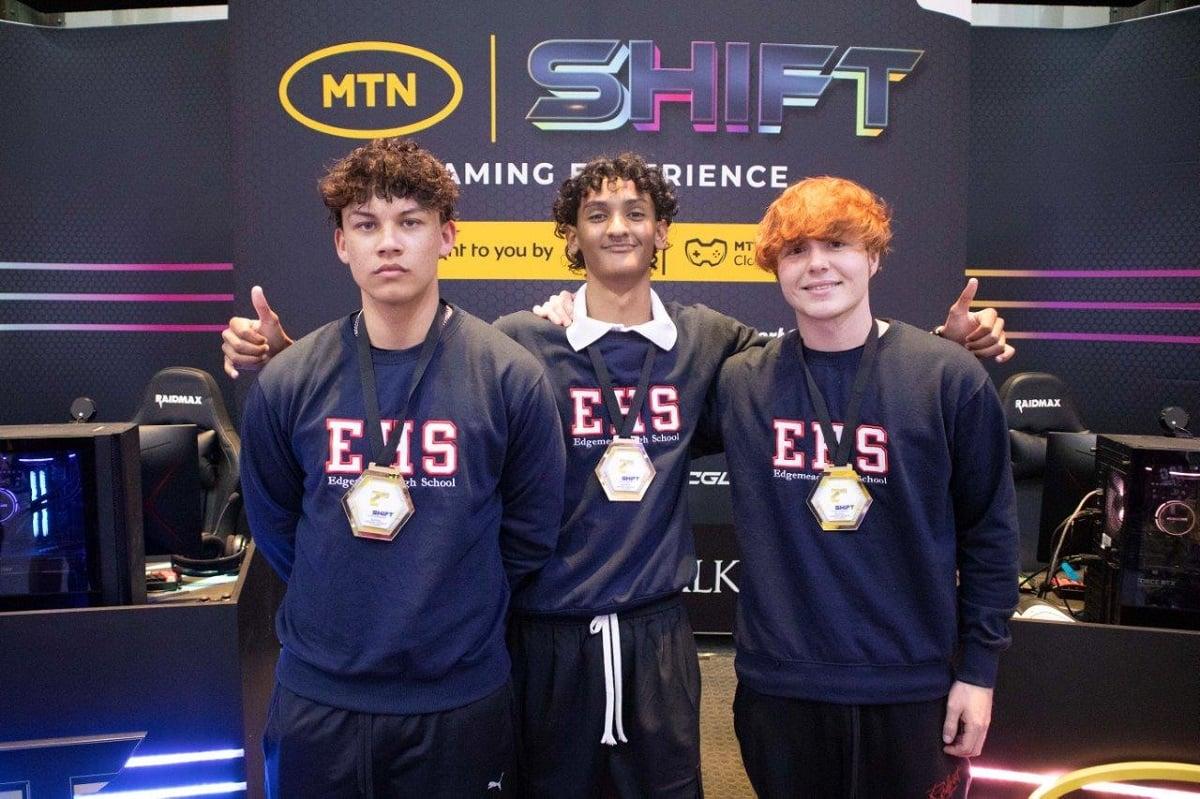
“Curro Durbanville High School’s CDV Wolves Prime have emerged as an example of the potential of organised school esports after winning major Rocket League school competitions in 2025 and 2026. Their achievements highlight how structured training, school support, tournament participation and investment in gaming facilities can help develop South Africa’s next generation of competitive players.”
South African school esports gains momentum as Curro Durbanville’s Rocket League champions set their sights on further success
South Africa’s esports industry continues to demonstrate its potential as a competitive sporting and educational activity, with school tournaments providing an important pathway for young players. One of the clearest recent examples is Curro Durbanville High School’s Rocket League team, the CDV Wolves Prime, whose consecutive championship achievements have drawn attention to the growing role of organised gaming in South African schools. Their progress illustrates how preparation, teamwork, coaching and institutional support can help young competitors develop their skills in an increasingly professional environment.
The story is significant because esports is no longer limited to informal gaming sessions among friends. Competitive gaming increasingly involves scheduled training, tournament qualification, team management, strategic preparation and performance under pressure. For young South Africans interested in pursuing esports, school competitions can offer an accessible starting point from which they can build experience, confidence and an understanding of high-level competition.
A championship record built through preparation
Curro Durbanville’s recent achievements provide a compelling example of this development. According to Cinga eSports, the school’s CDV Wolves Prime won the Rocket League final of the Telkom VS Gaming High School Esports League at Comic Con Africa in 2025. The team received R45,000 in prize money, marking an important achievement for the school and its competitive gaming programme.
The team continued its success in 2026, winning the Rocket League schools title at the African Gaming Championship, held at GrandWest in Cape Town from 16 to 19 July. The back-to-back achievements demonstrate the importance of maintaining performance over multiple competitive seasons rather than relying on a single successful tournament.
Nevertheless, winning consecutive championships requires more than individual talent. Rocket League is a team-based game in which players control rocket-powered vehicles to move a ball into an opponent’s goal. Success depends on positioning, timing, accurate aerial control, defensive awareness and coordination between teammates.
A team must constantly decide when to attack, when to defend and when to support a teammate. One poorly timed challenge can leave the goal exposed, while a coordinated passing play can create a scoring opportunity within seconds. These demands make communication and decision-making essential parts of competitive performance.
The CDV Wolves Prime example therefore highlights the importance of practising the game as a team sport, with players learning to anticipate one another’s movements and respond collectively to changing situations.
Training and discipline behind competitive gaming
The team’s preparation offers another important lesson for aspiring esports athletes. Cinga eSports reported that player Seth Solomons had spent approximately 1,000 hours preparing for competitions. That figure illustrates the substantial time that dedicated competitors may invest in improving their performance.
However, practice alone does not automatically produce championship results. Effective preparation requires players to identify weaknesses, review mistakes, practise specific mechanics and develop strategies for different opponents.
In Rocket League, this might involve improving aerial accuracy, learning more effective rotations, managing boost resources and understanding how to recover quickly after an unsuccessful attack. Players must also develop the ability to remain composed when conceding goals or competing in closely contested matches.
Structured training can help teams transform individual ability into collective performance. Coaches and team managers can establish practice schedules, set development targets and encourage players to learn from defeats instead of becoming discouraged.
This approach also helps young competitors understand that improvement is a gradual process. Consistent effort, feedback and reflection can be more valuable than simply playing for long hours without a clear objective.
For South African schools considering esports programmes, the lesson is straightforward: competitive gaming benefits from the same commitment to preparation and organisation that supports other school sporting activities.
The role of schools in developing esports talent
Schools are well positioned to introduce competitive gaming to young people because they already provide structured environments for learning, teamwork and extracurricular participation.
A school esports programme can give students opportunities to practise together, represent their institution and develop relationships with teammates who share similar interests. It can also provide a framework for balancing gaming with academic responsibilities.
The achievements of Curro Durbanville demonstrate how school representation can help make esports more visible to parents, educators and the wider community. When students compete under their school’s name, their results can become a source of collective pride rather than an activity confined to individual gaming accounts.
The wider South African school esports ecosystem includes competitions such as the Telkom VS Gaming High School Esports League and the Nitro African Schools League. Cinga eSports also reported that Curro schools achieved success in other gaming categories at the 2026 African Gaming Championship, including Minecraft PvP and Valorant.
These competitions can help introduce students to different genres, allowing them to discover where their interests and abilities are best suited.
For example, Rocket League emphasises rapid coordination and spatial awareness, whereas tactical shooters require communication, positioning and careful resource management. Other competitive games demand strategic planning, creative problem-solving or individual mechanical precision.
Providing opportunities across several titles can make school esports more inclusive and help students find a suitable competitive environment.
Accessibility remains an important challenge
Despite its potential, esports development depends on access to suitable equipment, reliable internet connectivity and safe spaces in which players can compete.
Gaming computers, consoles, controllers and high-quality displays can be expensive. In addition, schools need appropriate networking arrangements, technical support and suitable spaces for training and tournaments.
These costs may prevent talented students from participating, particularly where schools have limited extracurricular budgets.
School competitions can help address some of these barriers when organisers and sponsors provide equipment or financial support. Cinga eSports reported that hardware was supplied to two schools at the 2026 African Gaming Championship, illustrating how practical assistance can help institutions participate even when they do not have all the necessary equipment.
Schools, tournament organisers and corporate partners can work together to develop shared gaming facilities, equipment-loan arrangements and affordable competition opportunities. Community venues may also provide additional places for young people to practise and meet other competitors.
The long-term objective should be to create a pathway in which students can participate, improve and compete without facing unnecessary financial obstacles.
A developing competitive gaming ecosystem
The progress of school esports also connects with broader developments across South Africa’s gaming industry.
Mind Sports South Africa (MSSA), the country’s recognised governing body for mind sports, including esports, continues to organise national selection processes and support participation in international competitions.
In October 2026, MSSA announced supplementary national team trials for Counter-Strike 2 Women and Dota 2. The trials were intended to provide eligible players with opportunities to compete for national selection ahead of the 2026 IESF World Esports Championship in Indonesia, scheduled for 15–20 December.
These national initiatives and school competitions serve different purposes, but they contribute to a connected ecosystem. School tournaments can introduce young people to organised competition, while national selection processes create opportunities for eligible and experienced players to represent South Africa.
A sustainable ecosystem requires more than tournament victories. It also needs trained coaches, capable organisers, reliable competition rules, sponsorship, player development and opportunities for competitors to progress.
Schools can help build the foundation by introducing students to teamwork and structured practice. Clubs can provide additional competitive experience, while national organisations can establish selection procedures and coordinate representation at international events.
This progression is not automatic, and success at school level does not guarantee a professional career. Nevertheless, a more organised pathway can help players understand the opportunities available and the commitment required to pursue them.
Inclusion and the future of school esports
Another important consideration is inclusion. Esports can bring together students with different sporting backgrounds, interests and physical abilities. However, participation is not automatically inclusive simply because the activity takes place on a screen.
Schools and organisers must consider affordability, accessibility, age-appropriate competition, respectful behaviour and protection against harassment.
Female players also need meaningful opportunities to compete, develop their skills and access leadership roles. MSSA’s supplementary trials for a women’s Counter-Strike 2 category demonstrate the importance of ensuring that eligible competitors have a clear route into national selection.
Schools can support inclusion by establishing transparent team-selection policies, maintaining appropriate supervision and addressing discriminatory behaviour.
They should also encourage students to balance competitive gaming with sleep, physical activity, schoolwork and other responsibilities. Training programmes are most effective when they support students’ overall development rather than encouraging excessive screen time.
Parents and teachers can contribute by treating esports as a structured extracurricular activity with clear expectations and appropriate boundaries.
Commercial opportunities and sponsorship
The development of school esports may also create opportunities for businesses and sponsors.
Technology companies, telecommunications providers, gaming retailers and event organisers can support competitions through equipment, connectivity, tournament funding and technical expertise. Schools can benefit from these partnerships, while sponsors can engage with young gaming audiences through appropriate and responsible initiatives.
However, sponsorship arrangements should prioritise educational value, transparency and student welfare. Any marketing directed at minors requires particular care, and schools should maintain control over how commercial partnerships operate.
Organisers can also develop opportunities for students interested in careers beyond competitive play. Tournament production, commentary, broadcasting, event management, graphic design, marketing and technical support all contribute to the esports industry.
This broader approach recognises that not every student needs to become a professional player to benefit from participation. Some may discover skills and interests that lead towards technology, media or creative careers.
What comes next for the CDV Wolves Prime?
Following their reported championship successes, Curro Durbanville’s Rocket League team provides a useful example for other South African schools seeking to establish competitive gaming programmes.
Cinga eSports reported on 25 October 2026 that the team had qualified again to defend its title. However, the report did not confirm the outcome of that next title defence. Its latest competitive result should therefore not be confused with a new championship victory announced on 27 October.
The next stage for the team will depend on its continued preparation, performance in subsequent competitions and ability to adapt to opponents who have studied its playing style.
For other schools, the challenge is to turn individual interest in gaming into a sustainable programme. This means providing access to equipment, identifying committed students, creating regular training schedules and finding suitable competitions.
It also means recognising that development takes time. A school entering its first tournament may not immediately challenge established champions, but participation can provide valuable experience and reveal areas for improvement.
Conclusion
Curro Durbanville High School’s Rocket League achievements highlight the growing potential of organised school esports in South Africa. The CDV Wolves Prime have demonstrated how preparation, teamwork and institutional support can translate into success across multiple competitions.
Their story also reveals the broader work needed to strengthen the industry: affordable equipment, accessible facilities, effective coaching, inclusive participation and clear pathways from school competition to higher levels of play.
National initiatives, including MSSA’s selection processes for international competitions, further demonstrate the importance of structured opportunities for South African esports competitors.
Ultimately, the future of esports will depend not only on the achievements of individual teams but also on the quality of the systems that support them. By investing in young players, responsible competition and accessible facilities, South African schools and esports organisations can help create a stronger environment for the next generation of gaming talent.
The CDV Wolves Prime’s success provides an encouraging example of what structured school esports can achieve. Whether other institutions can build similar programmes will depend on sustained commitment from educators, families, tournament organisers, sponsors and the players themselves.



