




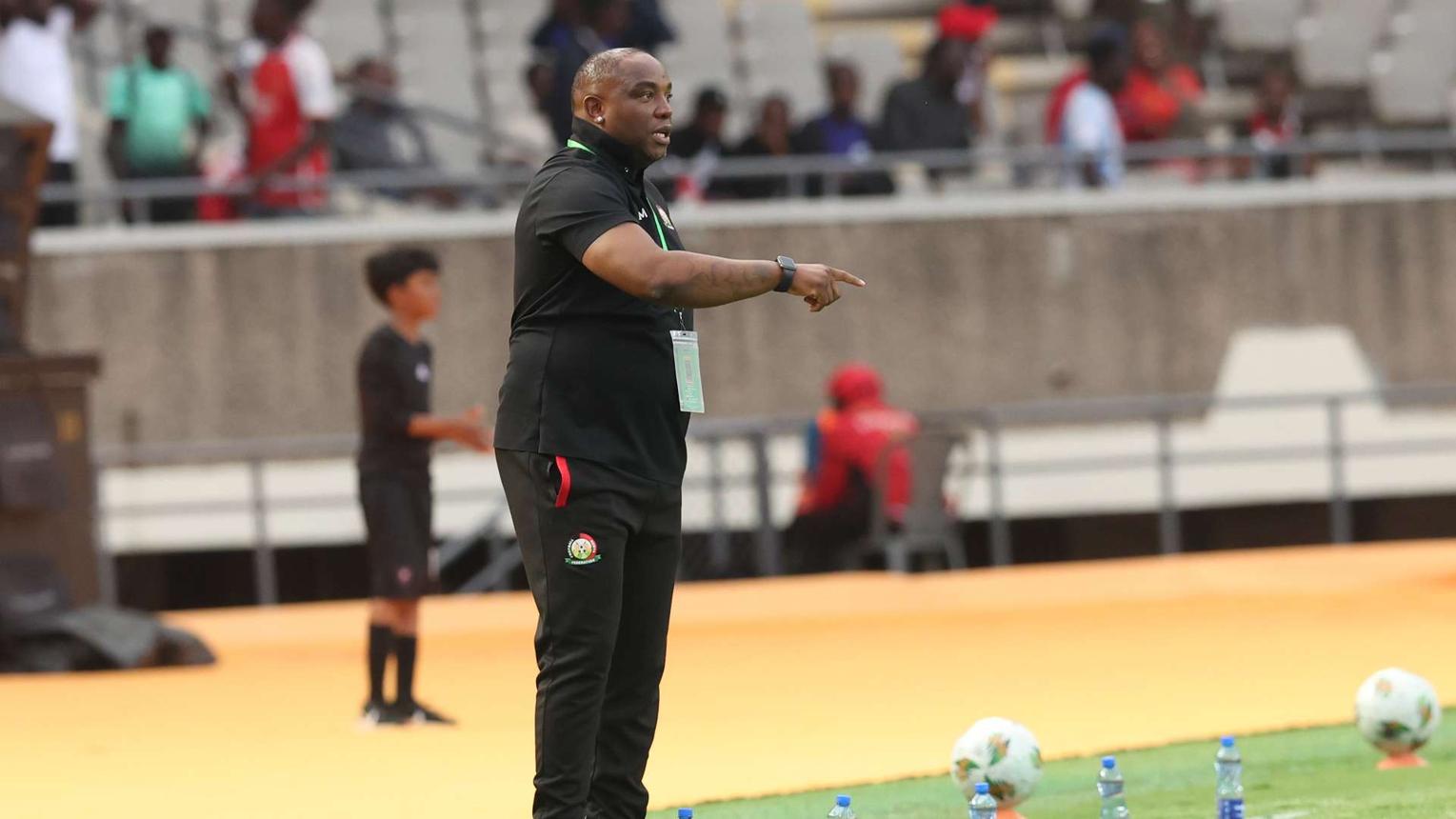
“Bafana Bafana coach Pitso Mosimane has warned South Africa against underestimating Kenya and its coach Benni McCarthy ahead of their two 2027 Africa Cup of Nations qualifying encounters, highlighting the danger of facing a team fighting to revive its campaign. South Africa will host Kenya in Soweto on 13 November before travelling to Nairobi on 17 November, with Mosimane emphasising respect, discipline and preparation despite Bafana’s strong start to qualification.”
Pitso Mosimane Warns Bafana Bafana Against Underestimating Benni McCarthy Ahead of Crucial Kenya AFCON Qualifiers
Mosimane Emphasises Respect as Bafana Prepare for Kenya Double-Header
South Africa’s preparations for the 2027 Africa Cup of Nations qualifiers have taken on additional significance after Bafana Bafana head coach Pitso Mosimane issued a strong warning against underestimating Kenya and its coach, Benni McCarthy. With two consecutive encounters scheduled against the Harambee Stars, Mosimane believes South Africa must approach the fixtures with discipline, humility and tactical awareness rather than allowing their impressive opening results to create complacency.
The first encounter will take place at Orlando Stadium in Soweto on Friday, 13 November, before the teams travel to Nairobi for the return fixture on Tuesday, 17 November. The double-header presents South Africa with an important opportunity to strengthen their position in the qualifying campaign while testing their ability to perform consistently against a determined opponent.
According to reporting published by AfricaSoccer on 10 November, Mosimane specifically highlighted McCarthy’s competitive personality, coaching experience and determination as reasons South Africa should remain cautious.
Bafana Bafana Enter the Fixtures With Confidence
South Africa enter the November international window in a strong position following their impressive opening performances in the 2027 AFCON qualifying campaign.
Bafana Bafana collected six points from their opening two qualifying matches, establishing themselves as early leaders in Group D. Their victories over Guinea and Eritrea demonstrated the team’s attacking potential and growing confidence under Mosimane’s leadership.
The national team defeated Guinea 2-1 in Johannesburg before delivering a commanding 5-0 performance against Eritrea. Those results provided an encouraging foundation for South Africa’s continental ambitions.
However, Mosimane understands that international football can quickly change direction. A strong start does not automatically guarantee qualification, particularly when opponents possess experienced players and considerable motivation.
South Africa’s objective is therefore to maintain their momentum while improving their consistency across both matches against Kenya.
The upcoming fixtures also offer an opportunity for Bafana to demonstrate that their positive results are part of a sustainable competitive improvement rather than a temporary period of success.
Mosimane Highlights McCarthy’s Competitive Character
One of the central themes of Mosimane’s warning was his respect for McCarthy as both a former international footballer and a coach.
McCarthy remains one of South Africa’s most recognisable football figures, having represented Bafana Bafana during an important period in the country’s international football history.
His experience includes playing at the highest levels of European football and winning the UEFA Champions League with Porto.
As Kenya’s coach, McCarthy now occupies a different position in the rivalry, attempting to guide the Harambee Stars through a demanding qualifying campaign.
Mosimane believes McCarthy’s competitive instincts and determination could become particularly influential when Kenya faces South Africa.
The Bafana coach explained that teams under pressure sometimes produce unexpected performances because players become especially motivated to protect their coach’s position or reputation.
Such circumstances can create difficult challenges for opponents who approach matches believing that the result should be straightforward.
Mosimane’s comments therefore represent more than a diplomatic acknowledgement of McCarthy’s achievements. They also reflect a practical understanding of the psychological dimensions of international football.
Kenya’s Difficult Qualifying Position Could Make Them Dangerous
Kenya’s position in Group D provides additional context for Mosimane’s concerns.
The Harambee Stars have struggled during the opening stages of qualification, collecting only one point from their first two matches according to AfricaSoccer’s reporting.
Their difficult beginning places considerable pressure on the team to improve its results.
Nevertheless, a challenging qualifying position does not necessarily make Kenya an easy opponent.
Teams facing elimination risks or declining confidence can respond with renewed determination, particularly when competing against a regional football rival.
Kenya also possesses players with experience in several international leagues, including England, Spain, France and other European football environments.
That international exposure could provide McCarthy with valuable tactical options and individual quality.
South Africa must consequently avoid treating Kenya’s early results as a reliable indication of its actual competitive capacity.
Soweto Encounter Provides Important Home Advantage
The opening fixture in Soweto is expected to attract considerable attention from South African football supporters.
Orlando Stadium provides Bafana Bafana with an opportunity to benefit from familiar surroundings and enthusiastic local support.
Playing at home can provide important advantages, including crowd encouragement, reduced travel demands and greater familiarity with the match environment.
However, home advantage must be converted into effective football.
South Africa will need to manage possession intelligently, maintain defensive organisation and demonstrate patience when Kenya attempts to disrupt the rhythm of the game.
The ability to score early could influence the tactical direction of the contest, but Mosimane’s team must remain prepared for different match scenarios.
If Kenya adopts a defensive approach, Bafana may need to demonstrate creativity and precision in the final third.
Conversely, if the visitors attack aggressively, South Africa could find opportunities to exploit spaces behind their defensive structure.
The first match is therefore likely to provide an important tactical examination for both coaching teams.
The Nairobi Return Match Adds Another Challenge
The second fixture in Nairobi introduces a different set of circumstances.
South Africa will have to adapt to an away environment, including Kenyan supporters, unfamiliar surroundings and potentially different match conditions.
Away fixtures in African football frequently require additional concentration and physical resilience.
The return encounter also means that the outcome of the Soweto match could influence the tactical decisions made by both teams.
If South Africa wins the opening match, Mosimane may have greater flexibility in managing the second fixture.
If Kenya secures a positive result in Soweto, the pressure could shift significantly towards Bafana during the return encounter.
This possibility makes the double-header particularly important for the overall qualifying campaign.
Rather than concentrating exclusively on one match, South Africa must develop a strategy capable of delivering consistent performances across both encounters.
Squad Selection and Player Opportunities
Mosimane’s squad selection has also attracted attention ahead of the international window.
The inclusion of Lyle Foster represents an important opportunity for the striker to demonstrate his value to the national team.
According to TimesLIVE reporting on 10 November, Mosimane has challenged Foster to make the most of his return to the squad.
The coach acknowledged the striker’s previous contributions to South Africa’s World Cup qualification campaign while emphasising that past achievements cannot automatically guarantee future selection.
Foster has recently joined Houston Dynamo in Major League Soccer on loan from Burnley and has been working to regain his strongest competitive form.
His return provides Bafana with another attacking option, particularly if the team requires additional movement, physical presence or finishing ability in the final third.
The international window could therefore become an important opportunity for Foster to rebuild confidence and strengthen his position within the national team.
Other squad members will also be expected to demonstrate their readiness, particularly as South Africa balances immediate qualifying requirements with longer-term squad development.
Tactical Discipline Will Remain Essential
The most important message emerging from Mosimane’s comments is the need for tactical discipline.
South Africa cannot afford to approach Kenya solely on the basis of previous results or individual reputations.
The coaching staff must prepare for a team capable of defending aggressively, counterattacking quickly and exploiting mistakes.
Defensive concentration will be especially important during transitions.
Bafana must also ensure that their attacking players maintain effective positioning and communication, particularly when attempting to break down a compact defensive structure.
The midfield could become a decisive area in both encounters.
Winning second balls, controlling possession and limiting Kenya’s opportunities to counterattack may determine how successfully South Africa manages the matches.
Mosimane’s experience in continental competitions provides him with valuable insight into these challenges.
His emphasis on respect and preparation suggests that the coaching team is determined to prevent complacency from undermining the national team’s objectives.
A Significant Test for South African Football
The upcoming Kenya encounters represent an important opportunity for South African football to demonstrate continued progress.
Bafana Bafana’s recent performances have strengthened expectations among supporters, while the team’s participation in the 2026 FIFA World Cup has provided additional international experience.
Maintaining those standards requires consistent results and effective management of challenging fixtures.
The matches against Kenya will also attract attention because of the involvement of two prominent South African football figures in different coaching positions.
Mosimane and McCarthy represent contrasting but influential experiences within the country’s football development.
Their meeting provides an opportunity to examine how coaching philosophy, tactical preparation and player motivation influence international competition.
Beyond the immediate results, the encounters could provide valuable lessons for South Africa’s future continental campaigns.
Conclusion: Respect, Preparation and Results
Pitso Mosimane’s warning ahead of the Kenya qualifiers reflects a clear understanding of the challenges facing Bafana Bafana.
South Africa enter the double-header with confidence after collecting six points from their opening qualifying matches. Nevertheless, Kenya’s difficult position and McCarthy’s competitive character mean the Harambee Stars cannot be dismissed.
The Soweto fixture on 13 November and the Nairobi return on 17 November will test South Africa’s tactical discipline, squad depth and ability to maintain concentration under pressure.
For Mosimane, the message remains straightforward: respect the opposition, prepare thoroughly and allow performances on the pitch to determine the outcome.
For South African supporters, the double-header represents another important opportunity to watch Bafana Bafana strengthen their pursuit of qualification for the 2027 Africa Cup of Nations.



