




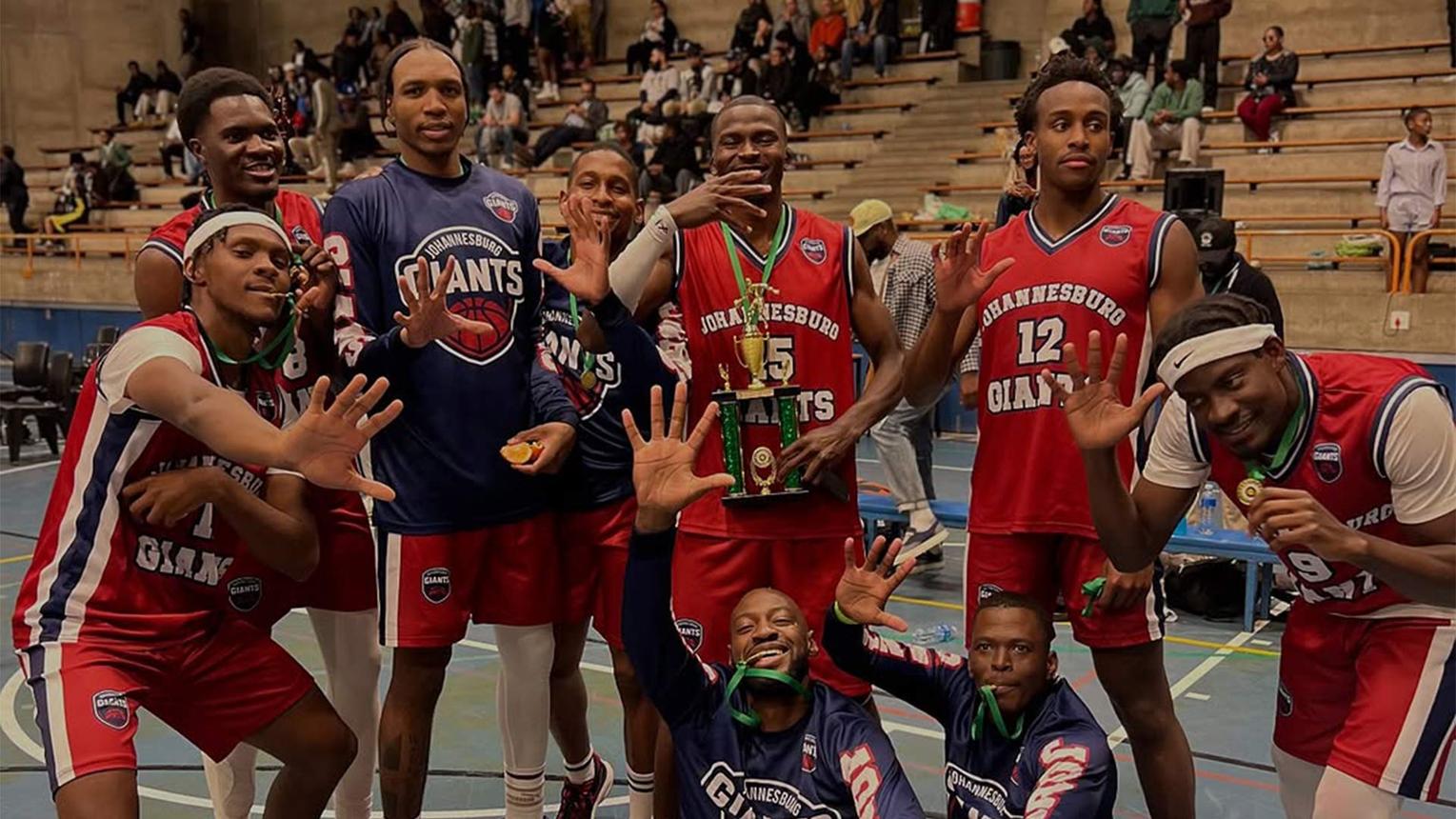
“South African basketball is facing a significant governance dispute after Basketball South Africa challenged the selection of Soweto Panthers as the country’s representative for the Road to BAL 2027, maintaining that Johannesburg Giants earned the qualification through the national championships. The controversy has highlighted longstanding disagreements between the federation and the Basketball National League, raising concerns about transparency, institutional authority and the future of South African basketball on the continental stage.”
South African Basketball Faces Governance Crisis as Road to BAL 2027 Representation Dispute Intensifies
South African basketball has entered a critical period following a dispute over the country’s representative in the Road to Basketball Africa League (BAL) 2027 qualification competition. The disagreement between Basketball South Africa (BSA), the Basketball National League (BNL) and FIBA Africa has raised important questions about sporting authority, competition legitimacy and the future development of basketball in the country.
The controversy centres on two prominent clubs, Soweto Panthers and Johannesburg Giants, whose competing claims to represent South Africa internationally have exposed deeper institutional divisions within the domestic basketball system.
Competing Claims Over South Africa’s Continental Representative
The dispute intensified in October 2026 after the Basketball National League announced Soweto Panthers as South Africa’s representatives for the Road to BAL 2027. The announcement followed the Panthers’ success in the 2026 BNL competition, which the league presented as a qualification achievement earned through sporting performance.
The league subsequently welcomed confirmation from FIBA Africa concerning the Panthers’ registration for the continental qualification cycle. According to the BNL, the development represented an important opportunity for South African basketball to compete for a place in Africa’s premier professional club competition.
However, Basketball South Africa strongly rejected the appointment.
The federation argued that Johannesburg Giants were the legitimate national champions following the Basketball South Africa National Clubs Championship. BSA maintained that the Giants had already been confirmed as South Africa’s representative through its own official competition structures.
Consequently, the disagreement developed into a dispute over which competition and organisation should determine the country’s representative.
Johannesburg Giants’ National Championship Achievement
Johannesburg Giants strengthened their sporting credentials by winning the Basketball South Africa National Clubs Championship in October 2026.
The team completed the competition unbeaten, recording four victories and securing consecutive national championship titles. Their decisive performance came against MBB, whom they defeated 99-57 at Johannesburg’s Mandeville Complex.
The Giants demonstrated impressive offensive depth during the tournament. Dylan Whitbread led the scoring against MBB with 20 points, including four successful three-point attempts. Joshua Ozabor contributed 19 points, while championship Most Valuable Player Aviwe Mahlong added 15. Yanick Kasilembo also reached double figures with 12 points.
The championship was particularly significant because the Giants had already participated in the Basketball Africa League earlier in 2026. Although their BAL debut campaign ended without a victory, their experience at continental level provided valuable exposure to professional competition.
The national championship therefore represented more than another domestic trophy. It was an opportunity to strengthen the club’s competitive position and pursue another continental qualification campaign.
Soweto Panthers’ Opportunity and Sporting Achievement
Soweto Panthers also entered the qualification debate with a substantial sporting achievement.
The club’s success in the Basketball National League provided a pathway towards international competition, with the league announcing the Panthers as its representatives following their championship victory.
The opportunity is particularly meaningful for a club established in Meadowlands, Soweto, in 1986. Over several decades, the Panthers have developed a presence in South African basketball and contributed to the sport’s community and competitive structures.
Participation in the Road to BAL could offer the club greater visibility, stronger competition and opportunities to attract commercial partners.
Nevertheless, the controversy surrounding the appointment has complicated preparations. While the BNL welcomed the confirmation, BSA questioned the legitimacy of the process and insisted that its own national championship should determine the country’s representative.
The resulting uncertainty has created a situation in which sporting achievement alone has not settled the question of international participation.
Federation and League Relationship Under Strain
The disagreement cannot be understood without examining the longstanding relationship between Basketball South Africa and the Basketball National League.
According to correspondence cited by Eyewitness News, BSA formally notified the BNL in June 2024 that its licensing agreement would not be renewed. The federation stated that the contractual relationship had ended in September 2023.
BSA also indicated that it no longer supported or endorsed programmes organised by the league and requested that its branding and FIBA logos not be used in BNL activities.
The breakdown created competing organisational structures within South African basketball.
While the BNL continued organising competitions and developing clubs, BSA maintained that national basketball governance and international representation should operate through recognised federation structures.
This institutional disagreement has become particularly consequential because the Road to BAL is not merely a domestic competition. It is a continental qualification pathway involving international sporting regulations, eligibility requirements and administrative confirmation.
The dispute consequently extends beyond a disagreement between two clubs.
Governance Reform and the Future of Basketball South Africa
The controversy has also emerged during a broader governance reform process involving South African sports authorities.
Earlier in 2026, the Department of Sport, Arts and Culture, FIBA Africa and the South African Sports Confederation and Olympic Committee engaged in efforts to address basketball governance challenges.
The initiative sought to strengthen administration, improve accountability and establish sustainable structures for the sport’s development.
Sports Minister Gayton McKenzie was involved in engagements with stakeholders, while the reform process included efforts to develop a roadmap for a properly governed national basketball federation.
These initiatives were intended to improve confidence in basketball administration and create stronger foundations for athlete development.
However, the competing claims surrounding the Road to BAL demonstrate how difficult institutional reform can become when different organisations disagree over authority and legitimacy.
A sustainable solution will require clear responsibilities, transparent competition procedures and confidence among clubs, players, officials and administrators.
Why the Dispute Matters to Players and Supporters
For basketball players, the controversy creates uncertainty about opportunities to compete internationally.
Continental competition can provide exposure to higher standards of play, professional coaching, improved facilities and potential career opportunities.
South African players who participate in the BAL qualification pathway may gain experience against stronger African clubs and increase their visibility to professional teams.
The dispute also has implications for supporters.
Basketball communities across Johannesburg, Soweto and other regions have invested time and enthusiasm in their clubs. Supporters naturally expect domestic championships to provide clear sporting pathways.
When competing organisations announce different representatives, confidence in the competition system can suffer.
The uncertainty could also affect sponsors and commercial partners, who generally prefer predictable structures, reliable competition schedules and clear organisational accountability.
FIBA Africa’s Role in Resolving the Controversy
FIBA Africa occupies an important position in the dispute because the Road to BAL is governed by continental competition requirements.
Basketball South Africa has indicated that it intends to pursue formal objections through relevant FIBA structures.
The federation has argued that national representation must comply with the authority and procedures established under applicable FIBA regulations.
Meanwhile, the BNL has welcomed the confirmation of Soweto Panthers and described the decision as an important step towards advancing South African basketball.
The central challenge is determining how the competing claims should be assessed fairly and transparently.
A credible resolution would need to consider the applicable competition regulations, eligibility requirements, national federation responsibilities and the procedures followed during the qualification process.
The responses of all involved organisations remain important to understanding the full circumstances.
Opportunities for South African Basketball Beyond the Dispute
Despite the controversy, South African basketball possesses significant opportunities for growth.
Domestic competitions continue to provide platforms for emerging players, established athletes and coaches to develop their abilities.
The country’s participation in the Basketball Africa League has also demonstrated that South African clubs can compete within an increasingly professional continental environment.
The Johannesburg Giants’ previous BAL experience and national championship success illustrate the potential of domestic teams to pursue international opportunities.
Likewise, Soweto Panthers’ championship achievement reflects the contribution of community-based clubs to the country’s basketball ecosystem.
The long-term development of the sport will depend on stronger coordination between clubs, administrators, sponsors, schools and development programmes.
Improved governance could help create more consistent competition structures and encourage greater investment in basketball infrastructure.
The Road Ahead
The immediate priority is resolving the dispute over South Africa’s representative for the Road to BAL 2027.
However, the broader challenge is rebuilding confidence in basketball governance.
A transparent resolution could help clarify competition responsibilities and establish a more reliable pathway for future national champions.
Conversely, prolonged disagreement could deepen divisions and create further uncertainty for clubs seeking international participation.
South African basketball stakeholders therefore face an important opportunity to prioritise institutional stability, sporting fairness and athlete development.
Ultimately, the future of the game will depend not only on which club represents the country internationally, but also on whether the organisations responsible for basketball can establish a credible and sustainable governance framework.
The Road to BAL dispute has become a defining moment for South African basketball. Resolving it fairly could strengthen the sport’s foundations and help ensure that domestic success translates into meaningful opportunities on the African continent.



