




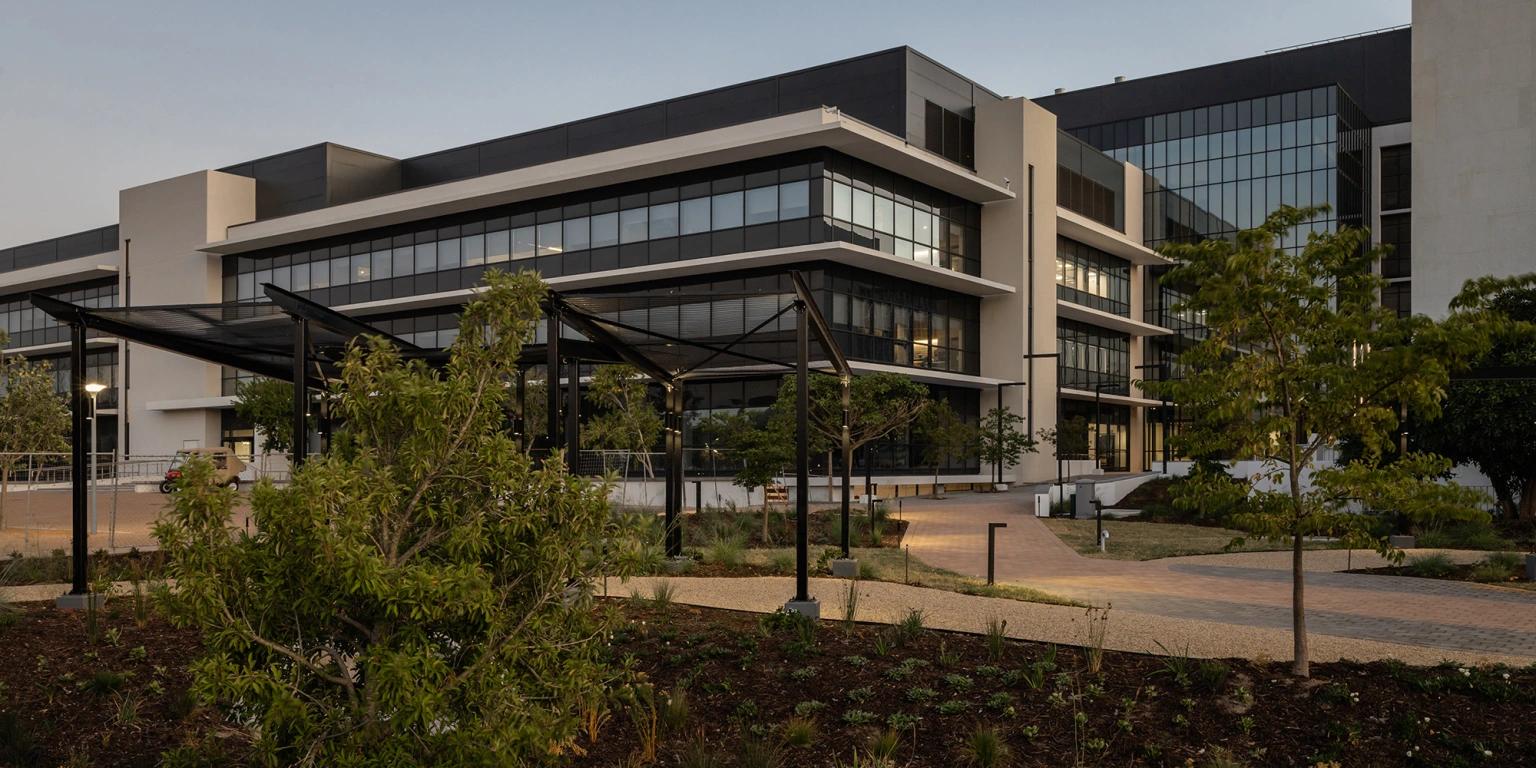
“South Africa has launched the AI Research Foundations (AIRF) initiative at Stellenbosch University, supporting a pan-African programme designed to train 30,000 students across 30 universities in Ghana, Kenya, Nigeria and South Africa. The initiative will equip university lecturers with advanced artificial intelligence research and teaching skills, with Google.org funding and academic implementation support from AIMS South Africa.”
South Africa launches pan-African AI education programme targeting 30,000 students
South Africa has taken a significant step towards strengthening artificial intelligence education and research across Africa following the launch of the AI Research Foundations (AIRF) initiative at Stellenbosch University. The programme seeks to develop advanced artificial intelligence skills among university students, lecturers and researchers across Ghana, Kenya, Nigeria and South Africa, with an ambitious target of reaching 30,000 students through a network of 30 universities.
The South African launch took place on 9 November 2026 at the Biomedical Research Institute on Stellenbosch University’s Tygerberg campus in Cape Town. The initiative marks an important development in efforts to expand access to advanced artificial intelligence education and establish stronger research capabilities within African higher education institutions.
Hosted by the university’s Centre for Epidemic Response and Innovation (CERI), in collaboration with the African Institute for Mathematical Sciences (AIMS) South Africa, the launch introduced a programme designed to move beyond introductory AI awareness towards practical technical education and research development.
The initiative is supported by Google.org, with Nigeria’s FATE Foundation serving as the principal grant holder. AIMS South Africa is responsible for academic implementation, while Google DeepMind developed the curriculum with teaching expertise and resources contributed by University College London.
Building advanced artificial intelligence capabilities
Artificial intelligence is increasingly influencing scientific research, business operations, education, healthcare and public administration. However, meaningful participation in this technological transformation requires more than the ability to operate existing AI applications.
Researchers and technical professionals must understand how artificial intelligence systems work, how models are developed, how training data influences their performance and how these technologies can be applied responsibly.
The AIRF programme responds to this need by offering advanced technical learning opportunities covering deep learning, neural networks, generative language models and transformers.
Participants will receive practical instruction in building and fine-tuning language models while exploring responsible AI development principles. The curriculum is intended to help learners develop a stronger understanding of artificial intelligence rather than relying exclusively on commercially available applications.
According to programme information published by ED News Africa, the initiative incorporates research applications relevant to African scientific and societal challenges. Its curriculum has been developed with contributions from African educators and learners, providing opportunities to connect advanced AI concepts with local research priorities.
The courses are also available free of charge through Google Skills, providing an additional opportunity for technical students, researchers and interested learners to access AI education resources.
South African universities prepare to strengthen AI teaching
The South African component targets ten universities, with the initial workshop bringing together lecturers and researchers from several institutions.
Participants include representatives from Stellenbosch University, the University of Venda, the University of Mpumalanga, the University of the Free State and the University of the Western Cape.
The five-day training workshop, running from 9 to 13 November, focuses on preparing educators to introduce advanced AI courses within their respective institutions.
The programme’s Train the Trainer model is central to its implementation strategy. Rather than concentrating exclusively on individual student training, the initiative equips university lecturers and researchers with the knowledge and resources required to teach artificial intelligence to additional learners.
This approach could increase the programme’s reach considerably. Lecturers who complete the training can introduce new learning opportunities, support student research projects and contribute to the development of AI teaching resources within their universities.
Workshop activities include technical instruction, practical lecturing experience, teaching-material development and discussions on applying artificial intelligence research to local challenges.
Participants are also expected to receive continued support after the workshop, helping them deliver courses and supervise projects as the initiative expands.
A continental partnership for AI research
The AIRF programme brings together universities, research institutions, technology organisations and education partners across four African countries.
Its continental structure is intended to strengthen cooperation between institutions while creating opportunities for advanced AI learning in different national environments.
The initiative targets 30 universities, including ten in South Africa. Its overall ambition is to train 30,000 students, representing a substantial investment in future scientific and technical talent.
The programme builds on earlier training activities in other participating countries. Workshops have already taken place in Ghana, Nigeria and Kenya, while South Africa’s launch marks another stage in the continental rollout.
The partnerships provide an opportunity to combine international curriculum development expertise with African research priorities and university teaching experience.
For African institutions, this arrangement could help reduce barriers to advanced AI education while strengthening the capacity to develop research programmes locally.
Preparing African researchers for scientific innovation
Artificial intelligence is becoming an important tool in scientific discovery, including the analysis of complex datasets, the identification of patterns and the development of predictive models.
In healthcare, AI can support researchers analysing disease information, genomic data and epidemiological trends. In agriculture, researchers can investigate applications involving crop monitoring, weather information and agricultural productivity.
Education and public administration also present opportunities for responsible AI applications, particularly where institutions need to analyse large volumes of information or improve access to services.
However, the successful application of AI requires technical knowledge, reliable data, research expertise and appropriate safeguards.
The AIRF initiative seeks to address these requirements by introducing students and researchers to foundational AI concepts and practical model development.
At the South African launch, Prof Francesco Petruccione, director of the National Institute for Theoretical and Computational Sciences, emphasised the importance of scientific quality.
His remarks highlighted the need to use AI to improve scientific research rather than simply increase the volume of research activity.
The programme’s focus on building and fine-tuning language models is particularly relevant as generative AI becomes increasingly influential in research and professional environments.
Understanding these technologies can help researchers evaluate their strengths, identify limitations and develop applications appropriate to their fields.
African context and responsible AI development
One of the initiative’s distinctive features is its emphasis on African cultural and research contexts.
Prof Ulrich Paquet, AI director at AIMS South Africa, described the programme as a coordinated effort to advance artificial intelligence research and development across the continent.
The curriculum incorporates African perspectives while introducing advanced technical concepts associated with contemporary AI research.
This approach is important because AI systems developed elsewhere may not automatically address the linguistic, economic, cultural and institutional realities experienced across African countries.
Local research capacity can help identify these limitations and develop more relevant applications.
Responsible AI development is another central component of the programme.
As artificial intelligence systems become more widely used, questions involving privacy, fairness, accountability, transparency and reliability require increasing attention.
Researchers and developers must understand how AI models can produce inaccurate information, reproduce biases or perform poorly when applied outside their original training environments.
The programme’s inclusion of responsible AI principles provides an opportunity to introduce these considerations alongside technical learning.
Stellenbosch University’s contribution
The launch reinforces Stellenbosch University’s role in supporting scientific research, innovation and advanced technical education.
Through CERI and its partnership with AIMS South Africa, the university is contributing to efforts to strengthen African research capabilities.
Prof Tulio de Oliveira, director of CERI, welcomed the initiative and highlighted the importance of providing university researchers and students with advanced AI training.
The programme also presents opportunities to connect artificial intelligence with research involving healthcare and societal challenges.
Such connections could become particularly valuable as African institutions seek to develop technologies addressing locally significant problems.
The participation of universities from different regions of South Africa could further support collaboration between institutions with varying research resources and technical expertise.
Funding and implementation
Google.org is providing financial support for the programme, while FATE Foundation coordinates the grant and AIMS South Africa contributes academic implementation expertise.
Google DeepMind developed the curriculum, and University College London contributed educational expertise and teaching resources.
The programme’s success will ultimately depend on effective implementation across participating universities.
Institutions will need to integrate training into existing academic structures, provide access to computing resources and support lecturers as they introduce advanced AI courses.
Students will also require opportunities to practise their skills through research assignments, technical projects and supervised experimentation.
The Train the Trainer model offers a foundation for expanding access, but continued institutional support will remain essential.
What the programme means for South Africa
South Africa’s participation in AIRF reflects the growing importance of artificial intelligence education within the country’s broader scientific and technological development.
Advanced AI skills can support research institutions, technology companies, public organisations and emerging businesses seeking to develop or adopt AI-based solutions.
Strengthening university capabilities could also contribute to a larger pool of researchers, engineers and technical professionals.
Nevertheless, education alone cannot guarantee successful AI innovation.
Research infrastructure, reliable electricity, computing capacity, funding, quality data and access to opportunities will remain important factors influencing the development of the country’s AI ecosystem.
The programme represents one contribution towards addressing these broader requirements.
Looking ahead
The immediate priority for AIRF is to translate the training workshops into sustained university-level teaching and research activity.
The initiative’s target of 30,000 students across 30 universities provides a measurable ambition against which implementation can be assessed.
Future progress will depend on how many lecturers successfully introduce AI courses, how many students complete training and whether participating institutions develop practical research projects.
The programme could also create opportunities for stronger collaboration between African universities and international research organisations.
For South Africa, the initiative offers an opportunity to strengthen its contribution to African AI research while developing technical expertise among students and academics.
Ultimately, the value of the programme will be measured not simply by the number of people trained, but by the knowledge, research capabilities and practical innovations that emerge from their education.
The launch at Stellenbosch University therefore represents more than a new training programme. It signals a growing commitment to developing African expertise in artificial intelligence and preparing universities to participate more actively in the next generation of scientific and technological innovation.
As the initiative expands across Ghana, Kenya, Nigeria and South Africa, its central challenge will be turning advanced AI education into lasting research capacity, practical solutions and opportunities for future generations of African scientists and innovators.



