




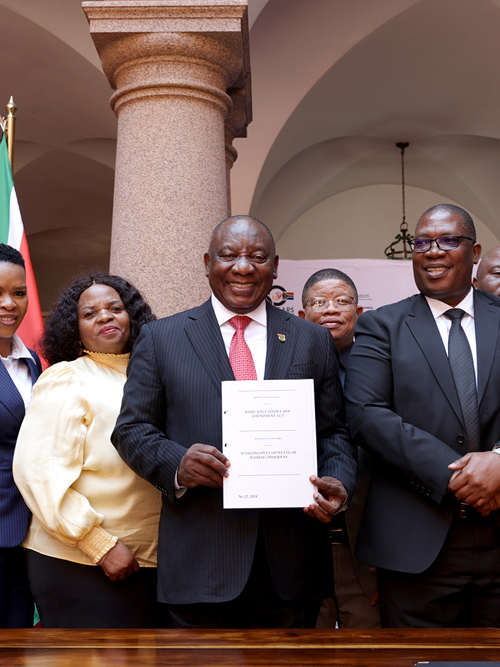
“President Cyril Ramaphosa has signed the Public Service Commission Act into law, repealing the 1997 Act and granting the commission independent powers to oversee local government, state-owned companies, and public entities. The reform is hailed as a turning point in rebuilding state capacity after years of patronage and weak vetting.”
South Africa has entered a new chapter in its governance journey with the signing of the Public Service Commission Act into law on September 16, 2026. This reform, championed by President Cyril Ramaphosa, represents one of the most significant institutional changes in decades, aimed at restoring professionalism, accountability, and independence in the country’s public service. The Act repeals the outdated 1997 legislation and redefines the role of the Public Service Commission (PSC), transforming it from a government department into an independent watchdog with expanded powers.
Background: Why Reform Was Needed
For years, South Africa’s public service has been plagued by patronage networks, weak vetting processes, and declining professionalism. State-owned enterprises (SOEs) such as Eskom and Transnet have faced governance crises, while municipalities have struggled with corruption and inefficiency. The PSC, previously limited in scope and dependent on government structures, lacked the teeth to enforce accountability. This vacuum contributed to declining trust in institutions and poor service delivery.
Key Provisions of the Act
The Public Service Commission Act introduces several groundbreaking changes:
- Independent Secretariat: The PSC is no longer a government department but an autonomous body reporting directly to Parliament.
- Expanded Oversight: Its mandate now covers local government, SOEs, and public entities, ensuring broader accountability.
- Proactive Investigations: The PSC can initiate probes without waiting for formal complaints, shifting from a reactive to a proactive watchdog.
- Phased Rollout: Implementation will occur over 12 months, with full operational capacity expected within three years.
- Leadership Structure: The PSC chair, appointed by the President, will oversee operations but under parliamentary scrutiny to safeguard independence.
Political and Governance Implications
This reform is part of Ramaphosa’s broader push to rebuild state capacity after years of decline. Analysts argue that the Act could help stabilize governance by:
- Strengthening Accountability: SOEs and municipalities, often at the center of corruption scandals, will face stricter oversight.
- Reducing Political Interference: By granting independence to the PSC, the law minimizes risks of manipulation by ruling parties.
- Restoring Public Trust: Citizens may regain confidence in institutions if investigations are seen as impartial and effective.
Expert Reactions
Professor Somadoda Fikeni, PSC chair, described the reform as an opportunity to “redeem ourselves” after years of decline. Civil society organizations welcomed the move, noting that independent oversight is critical for combating corruption. However, some critics remain cautious, warning that independence on paper must translate into real-world enforcement.
Challenges Ahead
Despite optimism, several challenges loom:
- Implementation Capacity: Rolling out the expanded mandate across municipalities and SOEs will require resources and skilled personnel.
- Political Resistance: Some entrenched interests may resist oversight, especially in municipalities where patronage networks remain strong.
- Public Expectations: Citizens expect quick results, but institutional reforms often take years to show impact.
Broader Governance Context
The PSC reform complements other governance initiatives, including coalition stabilization measures and procurement modernization announced earlier this month. Together, these reforms signal a comprehensive attempt to modernize South Africa’s governance structures and address systemic weaknesses.
Conclusion
The Public Service Commission Act marks a watershed moment in South Africa’s governance landscape. By granting independence and expanding oversight, the law strengthens institutional resilience and sets the stage for rebuilding trust in the public service. While challenges remain, the reform underscores Ramaphosa’s commitment to tackling corruption and inefficiency head-on. If successfully implemented, it could reshape the governance trajectory of South Africa for decades to come.



