




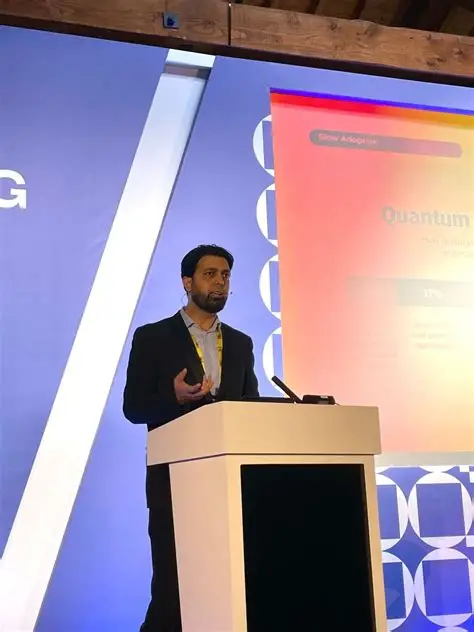
“The Singularity Summit South Africa 2026 has announced a major focus on quantum computing, with leading global experts set to explore its disruptive impact on industries ranging from healthcare to cybersecurity. The summit will also spotlight Africa’s growing role in sovereign AI and digital independence, positioning the continent as a key player in shaping the future of computing.”
Quantum Computing Emerges as Africa’s Next Frontier
Johannesburg is preparing to host one of the most significant technology gatherings in Africa this year: the Singularity Summit South Africa 2026. Scheduled for October 21–22, 2026 at the Sandton Convention Centre, the summit will spotlight quantum computing as the next great revolution in computing. With industries worldwide racing to understand and harness this technology, the summit’s focus signals South Africa’s ambition to be at the forefront of global innovation.
Quantum computing, unlike classical computing, leverages the principles of quantum mechanics to process information in ways that traditional systems cannot. This breakthrough promises to transform sectors such as healthcare, logistics, cybersecurity, and scientific discovery. Mark Jackson, a leading voice in the field, will headline discussions on how quantum computing could reshape business models, accelerate innovation, and redefine societal structures.
Africa’s Role in Sovereign AI
Beyond quantum computing, the summit will also emphasize sovereign AI—the idea that nations should develop and control their own artificial intelligence systems rather than relying solely on foreign technologies. Lavina Ramkissoon from the African Union will unpack Africa’s growing digital independence, stressing the importance of building AI ecosystems that reflect local values and priorities. This is particularly relevant as global debates intensify around data sovereignty, ethics, and governance.
Dr. Natalie Raphil, founder of Robots Can Think and ambassador for South Africa’s Women in AI community, will highlight the need for human-centred AI. Her focus will be on empowering women in technology and ensuring that AI development is inclusive, equitable, and socially responsible. Atenkosi Ngubevana will further expand on Africa’s evolving position within the global AI ecosystem, reinforcing the continent’s potential to lead in ethical and sovereign AI frameworks.
Leadership and Human Potential
The summit is not only about technology but also about leadership in an era defined by complexity and uncertainty. Celiwe Ross, Group Chief Human Capital and Corporate Affairs Officer at Old Mutual, will share insights on how leaders can navigate accelerated technological change. Her message underscores the importance of aligning human potential with technological progress, ensuring that innovation serves society rather than disrupts it.
Architectural and Societal Implications
Emerging technologies are also reshaping physical spaces. Architect DaeWha Kang from RIAAD will explore how quantum computing and AI influence spatial design and built environments, envisioning cities that integrate advanced computing into everyday life. This reflects a broader theme of the summit: technology is not isolated but deeply intertwined with culture, society, and human experience.
Why This Matters for South Africa
South Africa’s decision to spotlight quantum computing at such a high-profile summit is strategic. The country faces challenges such as energy constraints, digital divides, and regulatory hurdles, but it also has immense opportunities. By positioning itself as a hub for quantum and AI innovation, South Africa can attract investment, foster local talent, and strengthen its role in the global digital economy.
Moreover, the summit’s emphasis on sovereign AI aligns with Africa’s broader push for technological independence. As global powers compete for dominance in AI and quantum technologies, Africa’s ability to chart its own path will be crucial for economic resilience and cultural sovereignty.
Conclusion
The Singularity Summit South Africa 2026 is more than just a conference—it is a statement of intent. By placing quantum computing at the centre of discussions, the summit signals Africa’s readiness to engage with the most advanced technologies shaping the future. With voices from across the globe and the continent, the event will provide a platform to explore how quantum computing and AI can be harnessed responsibly, inclusively, and strategically.
As industries, governments, and societies grapple with the implications of these technologies, Johannesburg will serve as a stage where Africa asserts its role in the next computing revolution. The message is clear: quantum computing is no longer a distant concept—it is here, and Africa intends to be part of the story.



