




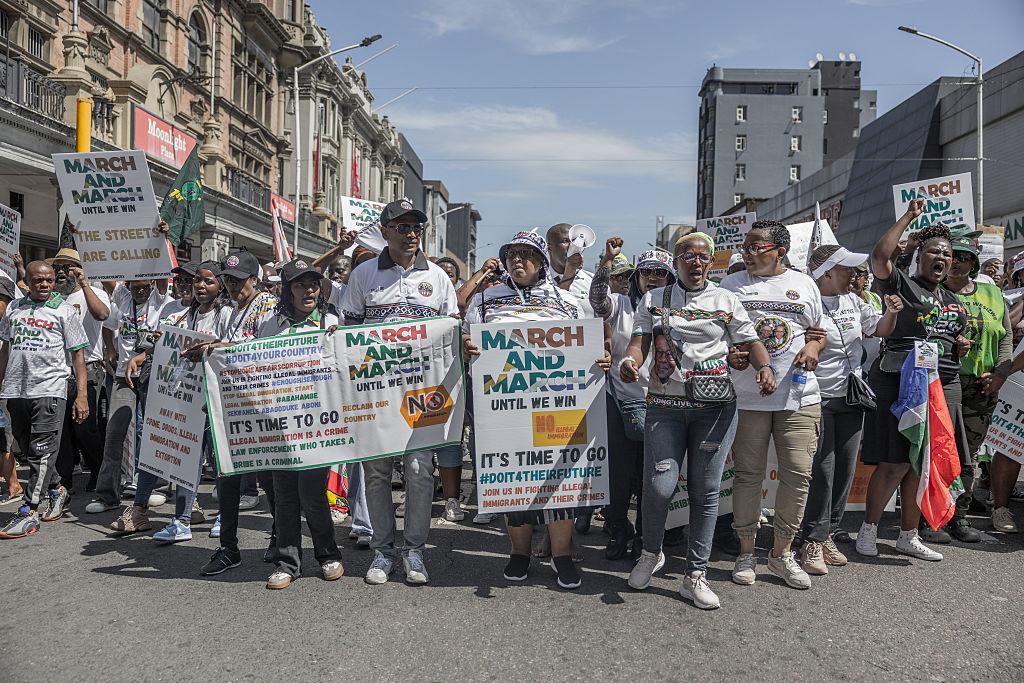
“South African President Cyril Ramaphosa has condemned looting, intimidation and attacks on businesses amid anti-immigration protests in Durban, warning that public grievances cannot justify violence or the targeting of foreign nationals. His response comes as the government deploys 510 South African National Defence Force members to KwaZulu-Natal to support police operations following escalating unrest, raising urgent questions about peaceful activism, immigration policy, constitutional rights and the protection of vulnerable communities.”
Activism and political tensions reach a critical point
South Africa’s ongoing debate over immigration, employment, public services and national identity has become a major political issue, with demonstrations in Durban placing renewed attention on the relationship between public activism, constitutional rights and public safety.
On Thursday, 29 October 2026, President Cyril Ramaphosa’s condemnation of violence associated with anti-immigration protests emerged as one of the day’s most significant developments in the activism and politics category. His remarks followed reports of looting, vandalism, intimidation and attacks on foreign nationals in Durban’s central business district.
The president’s response reflects the government’s challenge in addressing public concerns about immigration while preventing demonstrations from becoming opportunities for violence and criminal activity. The situation also raises questions about how political leaders, law enforcement agencies, community organisations and civil society can respond to public dissatisfaction without undermining democratic freedoms.
Reporting published on Thursday by TimesLIVE, The National, eNCA and The Citizen confirms that Ramaphosa has condemned the unrest and emphasised the importance of maintaining stability.
The developments make Durban an important focal point for understanding contemporary political activism in South Africa.
Ramaphosa draws a line between protest and criminality
Addressing the Durban Chamber of Commerce and Industry’s 170th anniversary gala dinner, Ramaphosa warned that violence and intimidation could not be justified by concerns about illegal immigration.
His message was directed at the broader situation surrounding the protests, during which businesses have experienced looting and damage. He argued that economic development depends on stability and that investment becomes difficult when communities face fear, intimidation and division.
The president also warned against people exploiting public sentiment about immigration to create hostility between communities or provide cover for criminal behaviour.
These statements highlight a central distinction in democratic politics: the right to express dissatisfaction does not provide permission to assault people, destroy property or threaten livelihoods.
South Africa’s Constitution protects freedom of expression, peaceful assembly, demonstration, picketing and petition. These freedoms enable citizens to challenge government decisions, demand improved services and advocate changes to public policy.
However, constitutional protections do not remove the responsibility to respect the rights and safety of others. Peaceful demonstrators, business owners, workers, residents and foreign nationals all have rights that public authorities must protect.
The president’s remarks therefore place responsibility on both government and protest organisers. Authorities must respond to legitimate concerns, while organisers and participants must ensure that demonstrations do not become vehicles for intimidation or violence.
The challenge is to preserve space for political activism while ensuring that criminal acts are investigated and prosecuted through lawful procedures.
The military deployment signals the seriousness of the unrest
The government’s response has extended beyond public statements.
Ramaphosa authorised the deployment of 510 members of the South African National Defence Force to KwaZulu-Natal to support police operations under Operation Prosper. The deployment is scheduled to continue until 30 November 2026, with an estimated cost of approximately R34 million.
The decision follows unrest connected to anti-immigration demonstrations in Durban and other parts of the country. Reports describe vehicles being set alight, businesses being looted and violence affecting foreign nationals.
The deployment is intended to support efforts to restore order and protect communities. Nevertheless, military involvement in a domestic security situation requires careful attention to the responsibilities of different institutions.
The South African Police Service remains central to ordinary law enforcement, investigations and the management of public gatherings. Military personnel supporting police operations must operate within their authorised mandate and applicable legal safeguards.
For civil society organisations, the deployment also raises important questions about proportionality. Authorities must ensure that public-order measures protect people without unnecessarily restricting peaceful assembly or discouraging legitimate criticism of government policy.
Effective security cannot be measured solely by the number of personnel deployed. It also depends on whether residents can safely operate businesses, access public services, attend work and participate in peaceful political activities.
The government must demonstrate that its response is both effective and accountable.
March and March and the politics of immigration
The demonstrations have been associated with the March and March movement, which has campaigned for stronger action against undocumented immigration.
Supporters of tougher immigration enforcement have raised concerns about border management, employment competition, crime and pressure on public services. These issues have become politically sensitive in a country facing persistent unemployment, inequality and difficulties in delivering services to many communities.
For some demonstrators, marching provides a way to communicate frustration that they believe has not been adequately addressed through conventional political channels.
Nevertheless, public concern about immigration should not be confused with evidence that foreign nationals collectively cause unemployment, crime or service-delivery failures. Such questions require reliable information and policies that address specific problems rather than attributing complex social challenges to entire groups of people.
Political activism becomes particularly contentious when campaign messages create divisions between citizens and non-citizens. Strong political rhetoric can influence public perceptions, especially when social media circulates unverified claims about immigration law or government decisions.
The responsibility of political leaders and campaign organisers is therefore significant. They can mobilise citizens around policy demands while clearly rejecting harassment, collective blame and attacks against people because of their nationality.
At the same time, government must provide credible information about immigration enforcement, border administration and the delivery of public services.
Without transparent explanations and accessible channels for public engagement, distrust can deepen and create opportunities for misinformation to spread.
The Constitutional Court ruling and the spread of misinformation
A major element of the controversy concerns a July 2026 Constitutional Court ruling on access to South Africa’s asylum application system.
According to reporting by Reuters and Daily Maverick, the ruling found that certain procedural barriers preventing people from lodging asylum applications were unconstitutional. The judgment required changes to how applications are received and assessed.
The ruling did not automatically grant refugee status, permanent residence or blanket legal protection to every undocumented migrant. Instead, it concerned access to a process through which claims for asylum can be considered.
In late September, the Department of Home Affairs issued a directive intended to implement the judgment. Following operational difficulties and violent protests in early October, the department withdrew that directive and said it would develop a new approach.
The events illustrate how a complicated legal decision can become a flashpoint for political mobilisation when its implications are misunderstood or misrepresented.
For activists, understanding the precise legal position is essential when developing campaigns and communicating demands. Protesters can challenge the government’s implementation of immigration policy, but the debate should be informed by the actual contents of court judgments and legislation.
For government, the episode highlights the need to communicate legal changes clearly and to ensure that administrative decisions can be implemented effectively.
Civil society organisations, journalists and community leaders can help by explaining what the court decided, what remains within the government’s authority and what procedures apply to asylum seekers.
Reliable public information cannot eliminate every disagreement, but it can reduce the risk that false claims become a trigger for violence.
Human rights and the protection of foreign nationals
The unrest has also raised serious concerns about the safety of migrants and foreign nationals living in South Africa.
The Associated Press reported that a foreign citizen was beaten to death during a march in Durban on 22 October. Police were investigating the killing, and the incident added to concerns about escalating anti-immigrant tensions.
Such incidents demonstrate why protecting human life must remain central to the political response. People should not be assaulted, threatened or deprived of their property because of their nationality or perceived immigration status.
South Africa’s constitutional framework protects fundamental rights, including equality, dignity and life. The legal protection of these rights is not simply a matter of political preference; it is a responsibility of the state.
The situation also has consequences beyond South Africa’s borders. Attacks on foreign nationals can damage relationships with neighbouring African countries, undermine regional cooperation and create fear among people who live, work or operate businesses in South Africa.
Government agencies should investigate reported attacks, identify suspects through lawful processes and provide appropriate protection for people at risk.
Community organisations can contribute by establishing communication channels between residents, local authorities, migrant communities and business associations. These channels can help identify threats, correct rumours and encourage peaceful ways of resolving disputes.
Importantly, accountability must be based on individual conduct and evidence. Criminal responsibility should not be assigned collectively to South Africans, migrants or any other group.
Protecting human rights and enforcing immigration laws are not mutually exclusive responsibilities. A credible system must be able to do both.
Economic consequences for Durban and KwaZulu-Natal
Durban is a major commercial centre, and instability in its central business district can affect workers, traders, transport operators, customers and investors.
Businesses depend on predictable operating conditions, safe access for employees and customers, functioning transport networks and confidence that property will be protected.
When shops close because of threats or violence, owners can lose income while employees risk losing wages. Smaller businesses may have limited resources to repair damage or remain closed for extended periods.
The effects can spread beyond the immediate protest area. Disrupted deliveries, reduced customer activity and concerns about personal safety can affect surrounding businesses and service providers.
Ramaphosa has emphasised KwaZulu-Natal’s importance to the national economy, including the strategic role of its ports and transport links. His comments connect public order with a wider economic recovery agenda.
However, stability requires more than security deployments. It also depends on effective municipal services, credible economic opportunities, responsive institutions and confidence that grievances will receive serious attention.
Residents who experience unemployment, unreliable services or limited opportunities need accessible ways to raise those concerns and obtain meaningful responses.
Government can strengthen confidence by publishing clear information about its actions, engaging affected communities and demonstrating measurable progress on public services and economic development.
Business associations and civil society organisations can also support constructive dialogue between authorities, residents and affected traders.
Protecting livelihoods should be a shared objective, regardless of whether people agree on immigration policy.
The role of activism in a democratic society
The Durban unrest presents a broader question about the purpose and limits of political activism.
Activism is an important feature of democratic life. It allows people to organise around shared concerns, draw attention to government failures, demand accountability and campaign for changes in law or policy.
Peaceful demonstrations can bring overlooked problems into public discussion and encourage officials to respond to communities that feel excluded from decision-making.
However, activism is most effective when its demands are clearly defined, its information is reliable and its methods respect the rights of others.
Campaigns that encourage intimidation or violence risk undermining their own credibility. They can also divert attention from policy questions towards criminal investigations and emergency security measures.
Organisers can reduce these risks by communicating clear rules for peaceful conduct, discouraging threats, cooperating with lawful crowd-management arrangements and correcting misleading information.
Government also has obligations. Authorities should facilitate peaceful gatherings, explain their decisions, investigate alleged abuses and engage seriously with legitimate demands.
Suppressing lawful criticism would not resolve the underlying issues. Equally, allowing violence to continue would undermine the freedoms that enable democratic activism in the first place.
A sustainable response requires both the protection of peaceful political participation and consistent enforcement of laws against violence.
What happens next?
As of 29 October, the immediate priorities are public safety, the investigation of reported crimes, protection for affected businesses and residents, and efforts to prevent further escalation.
The military deployment is scheduled to continue through the end of November. Authorities will need to demonstrate that security operations are proportionate, effective and consistent with the law.
The immigration debate will also require a clearer administrative response following the withdrawal of the earlier Home Affairs directive. Any revised process must address the Constitutional Court’s requirements while ensuring that asylum applications can be handled through workable procedures.
Public communication will be crucial. Government agencies should explain the legal framework, distinguish asylum procedures from the granting of refugee status and respond to misinformation promptly.
Political parties and movement leaders should clarify their policy demands and reject violence against individuals or businesses.
Meanwhile, civil society organisations can support dialogue, document human-rights concerns and help communities access reliable information.
These measures cannot resolve every disagreement about immigration, but they can create conditions in which disputes are addressed through institutions rather than intimidation.
Conclusion: Protecting democracy while addressing public grievances
The latest developments in Durban underline the difficult balance South Africa must maintain between political activism, public order, immigration enforcement and human rights.
Ramaphosa’s condemnation of looting and intimidation sends a clear message that public grievances do not justify attacks on people or property. The deployment of 510 military personnel reflects the government’s concern about continued unrest, while also placing renewed attention on the need for accountable and lawful security measures.
At the same time, the underlying political questions cannot be resolved through security operations alone. Immigration administration, public-service delivery, employment opportunities and trust in government institutions require sustained policy attention.
Peaceful activism must remain protected because it enables citizens to challenge authorities and participate in democratic decision-making. However, that protection must coexist with the responsibility to prevent violence and safeguard the dignity and rights of everyone living in South Africa.
Ultimately, the country’s response will be judged not only by whether order returns to Durban, but also by whether government institutions address legitimate grievances, protect vulnerable communities and maintain the constitutional principles that underpin democracy.



