




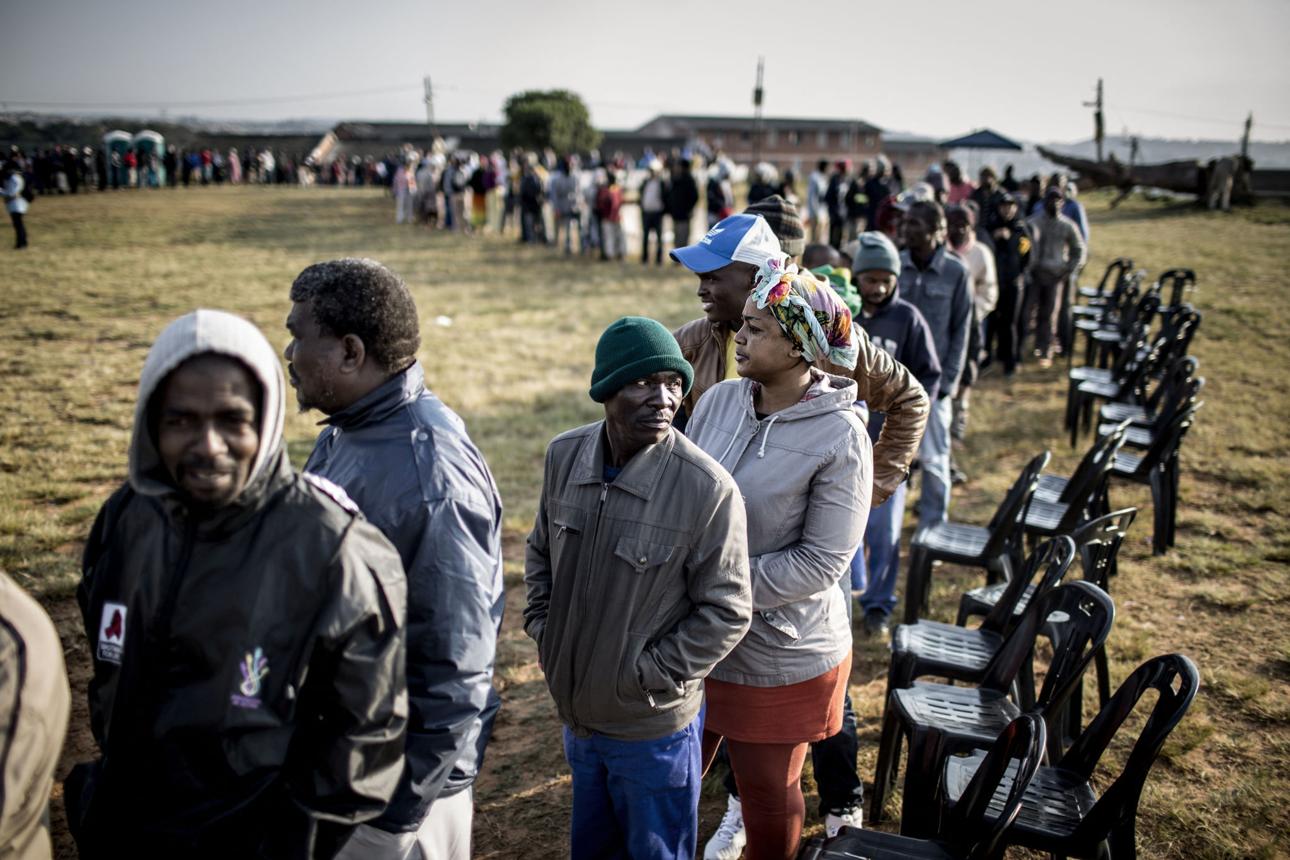
”South African public opinion ahead of the November 4, 2026, local government elections reflects mounting frustration with municipal service delivery, political instability and the perceived failure of elected leaders to meet residents’ expectations. Recent polling indicates that voter preferences are changing, coalition government remains a significant possibility, and public confidence will depend increasingly on whether political parties can demonstrate practical improvements in people’s daily lives.”
Growing public frustration puts local government under scrutiny
South Africa’s approaching local government elections are emerging as a significant test of public confidence in political leadership, with voters increasingly focused on service delivery, municipal accountability and the practical consequences of their electoral choices.
As communities prepare to vote on November 4, public opinion suggests that political parties face a demanding challenge: convincing residents that a change in leadership, a new coalition or the continuation of an existing administration can produce tangible improvements.
Recent reporting by eNCA on October 29 highlighted residents’ hopes for change in Knysna, where concerns include political instability, service delivery difficulties, housing, water and sanitation. The report illustrates how national political debates intersect with the everyday experiences of residents in individual municipalities.
The significance of this debate extends beyond individual political parties. Local governments are responsible for services that directly affect household welfare, business activity and community development. When residents experience persistent interruptions or declining standards, dissatisfaction can become a wider judgment about the competence and accountability of political institutions.
Consequently, the coming elections will test not only party popularity but also whether political leaders can persuade voters that democratic participation remains an effective means of demanding change.
Polling reveals a changing political landscape
Recent polling published by The Common Sense on October 27 provides an important indication of the changing political environment. Its national survey placed the African National Congress (ANC) at 32% support, the Democratic Alliance (DA) at 26%, the uMkhonto weSizwe Party (MKP) at 12% and the Economic Freedom Fighters (EFF) at 8%.
These figures suggest a fragmented electorate in which no single party commands the level of support historically associated with overwhelming ANC dominance.
However, the findings must be interpreted carefully. The survey reflects voter preferences during a particular period and should not be treated as a prediction of the final election results. Actual outcomes will depend on turnout, local political circumstances, campaign developments and the choices voters make on election day.
Nevertheless, the figures highlight the importance of understanding why people support particular parties and whether their preferences are connected to evaluations of municipal performance.
For the ANC, the results indicate continued pressure to demonstrate that its record in government justifies continued electoral support. For the DA, the polling presents opportunities to expand its influence while also raising expectations about its ability to govern effectively.
Meanwhile, the MKP and EFF may benefit from political dissatisfaction in particular constituencies, although their eventual influence will vary considerably between municipalities.
Service delivery remains central to public opinion
Among the most important influences on public attitudes is the quality of essential municipal services.
Residents depend on functioning water systems, reliable sanitation, maintained roads, electricity infrastructure where municipalities are responsible for distribution, and regular refuse collection. When these services deteriorate, the consequences extend into household finances, public health, education and local economic activity.
In Knysna, the latest eNCA report describes residents seeking improved services and greater stability from the next council. The concerns demonstrate why local government elections can become judgments on the everyday performance of political institutions rather than simply contests between party brands.
A municipality struggling with infrastructure maintenance may also find it harder to attract investment, support small businesses and maintain public confidence. Residents may consequently evaluate their leaders according to practical results rather than campaign promises alone.
This creates a challenge for political parties. Announcing new projects or promising improved management may attract attention, but credibility ultimately depends on implementation, transparency and sustained service delivery.
Public frustration does not automatically translate into support for an opposition party. Some residents may change their votes, while others may abstain, support independent candidates or remain loyal to an incumbent because they distrust the available alternatives.
Understanding these differences is essential to interpreting public opinion accurately.
Coalition politics could shape the next phase of local government
South Africa’s fragmented political environment means that coalition negotiations could be decisive in municipalities where no party secures an outright majority.
Reuters reported on October 26 that Johannesburg, Tshwane, eThekwini and Ekurhuleni are among the important metropolitan battlegrounds, with different parties competing for influence amid concerns about service delivery and unstable governing arrangements.
In Johannesburg, successive changes in mayoral leadership have reinforced questions about political stability. In Tshwane, smaller parties may exercise considerable influence over the formation of a governing majority. In eThekwini, the MKP presents a substantial challenge to the ANC, while Cape Town remains a stronghold for the DA.
These contrasting situations demonstrate that public opinion cannot be understood through a single national figure alone. Local histories, community expectations, party organisation and governing records all influence voters’ decisions.
A separate survey reported by The Common Sense on October 20 found that approximately 70% of respondents supported ANC-DA cooperation in municipalities where neither party could govern alone and together they could form a majority.
This finding suggests that many voters may prioritise stability over strict party rivalry when choosing between possible coalition arrangements.
However, willingness to accept cooperation does not guarantee that coalition partners will agree on budgets, appointments, policy priorities or long-term development plans. The public will ultimately judge these arrangements by their ability to govern effectively.
Public trust depends on visible accountability
Political trust is closely connected to whether institutions are seen to act in the public interest.
When allegations of corruption, mismanagement or ineffective administration persist, residents may question whether public resources are being used appropriately. Such concerns can weaken confidence even when political leaders introduce new programmes or announce additional investment.
Amnesty International South Africa has also highlighted service-delivery failures and accountability ahead of the elections, arguing that access to essential services is closely connected to people’s rights.
This perspective reinforces the importance of evaluating municipalities through transparent and measurable standards. Residents need information about how budgets are spent, which projects have been completed, why delays occur and what corrective measures are being taken.
Accountability should also extend across political parties. An opposition party seeking control of a municipality must explain not only what it criticises but also how it intends to finance and implement its proposed solutions.
Likewise, incumbents should provide evidence of progress rather than relying solely on explanations for previous difficulties.
Public confidence is unlikely to recover through communication campaigns alone. It requires institutions to demonstrate that complaints are investigated, resources are managed responsibly and service failures lead to corrective action.
Economic pressures influence voters’ expectations
Public opinion is also shaped by the wider economic environment.
Households facing rising living costs, uncertain employment prospects or limited access to economic opportunities may judge political performance partly through its effect on their financial security.
Small businesses similarly depend on functioning infrastructure, predictable municipal processes and safe commercial environments. Poor roads, water interruptions, unreliable waste collection and administrative delays can increase operating costs and discourage investment.
For this reason, municipal elections are closely connected to broader debates about economic development.
Political parties must explain how local government can support job creation, improve infrastructure, strengthen municipal finances and create conditions in which businesses can operate more effectively.
Nevertheless, municipalities cannot independently resolve every national economic challenge. Employment, inflation, interest rates and many major fiscal decisions involve national institutions and wider economic conditions.
Responsible analysis must therefore distinguish between problems that municipal authorities can directly address and those requiring coordination with provincial or national government.
Voters benefit when political campaigns make these distinctions clear and present realistic proposals supported by credible implementation plans.
Voter participation remains an important democratic question
Another major issue is whether dissatisfaction encourages citizens to participate in elections or discourages them from doing so.
Amnesty International South Africa cited historical declines in turnout at local government elections, from 57.94% in 2016 to 45.86% in 2021. These figures provide context for concerns about political disengagement, although they do not establish what turnout will be in November 2026.
For democratic institutions, low participation can make it more difficult to ensure that elected councils reflect the preferences of the wider community.
However, frustration can also motivate citizens to participate when they believe that voting offers a meaningful opportunity to replace ineffective leadership.
The challenge for election authorities and political organisations is to provide reliable information, encourage lawful participation and ensure that citizens understand how local elections influence municipal decision-making.
Public opinion research can help identify the concerns that matter most to voters, but it cannot replace participation itself. Surveys provide estimates of attitudes among respondents; election results reveal how eligible voters ultimately act, subject to turnout and electoral rules.
Polling must be interpreted with care
The latest public-opinion figures should not be treated as definitive evidence of what every South African believes.
The Common Sense report draws on a Social Research Foundation survey conducted by Victory Research using telephone interviews. The survey included 3,100 respondents between September 18 and October 12, 2026, with weighting intended to reflect the registered-voter population.
Although such methods can provide useful insights, all surveys have limitations. Results may be affected by sampling uncertainty, question wording, respondent availability, weighting choices and changes in public attitudes after interviews have been completed.
Furthermore, national results cannot automatically be applied to every municipality. A party’s national support may differ significantly from its support in a particular ward or city.
The metropolitan surveys reported by eNCA similarly illustrate the importance of geographic context. Results from six major metros can help explain urban political competition but cannot, without appropriate evidence and weighting, represent every rural and urban community in the country.
For journalists and voters, the most responsible approach is to compare credible sources, examine their methodologies and distinguish measured findings from political predictions.
What the elections could mean for South African politics
The November 4 elections will provide a significant opportunity to assess how voters respond to service-delivery concerns, political competition and the performance of local administrations.
A fragmented result could strengthen the role of coalition negotiations and make cooperation between parties increasingly important. Alternatively, decisive victories in particular municipalities could give some parties clearer governing mandates.
Whatever the outcome, electoral success will not automatically resolve infrastructure problems, improve municipal finances or restore public trust.
Those outcomes will depend on the quality of administration after the election, including budget discipline, procurement transparency, competent staffing and the consistent delivery of services.
Political parties that gain control of municipalities will face pressure to demonstrate that their campaign commitments can be translated into practical improvements. Those that lose influence will need to consider whether their policies, leadership and performance have met public expectations.
For residents, the central question is whether the electoral process can produce councils that are more responsive to community needs.
Conclusion: Public confidence will be earned through results
South Africa’s current political climate highlights a fundamental relationship between public opinion and democratic accountability. Voters are evaluating parties against expectations that extend beyond political rhetoric to include water, sanitation, infrastructure, financial management and the stability of municipal leadership.
Recent polling points to a fragmented electorate, while reporting from communities such as Knysna demonstrates the continuing importance of reliable services and accountable government.
The coming elections will not settle every question about the country’s political direction. However, they will offer an important indication of how citizens intend to respond to their experiences of local government.
Ultimately, the strongest foundation for public trust is not a favourable poll or a successful campaign slogan. It is a record of responsible administration, transparent decision-making and measurable improvements in people’s lives.
As South Africans prepare to vote, political leaders face a clear test: demonstrate that democratic representation can deliver meaningful results, or risk further erosion of confidence among the communities they seek to govern.



