




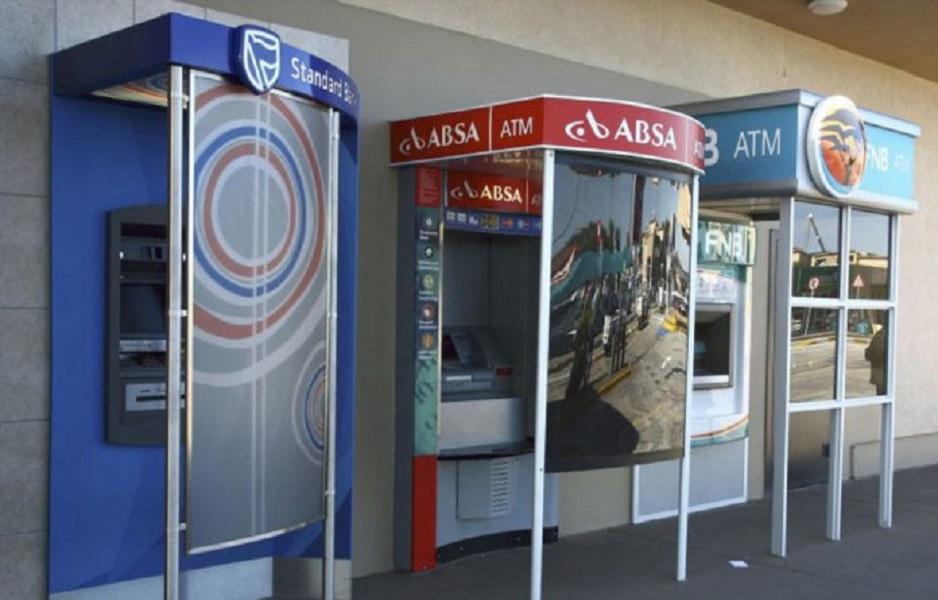
“The South African Reserve Bank (SARB) is advancing plans to establish a national cash-management utility and introduce shared, unbranded ATMs, with the latest Moneyweb report indicating that the wider rollout is targeted to begin in 2028. The initiative aims to reduce the cost of handling cash, improve access to withdrawals and deposits, and address gaps affecting rural and lower-income communities, although the final arrangements still require engagement with commercial banks.”
South Africa’s Banking Sector Faces a Major ATM Overhaul as SARB Targets Lower Cash Costs
South Africa’s banking industry is preparing for a potentially significant transformation in the way consumers access physical money. The South African Reserve Bank’s plans to introduce shared, unbranded automated teller machines (ATMs) form part of a broader effort to modernise the country’s payments infrastructure, reduce the cost of handling cash and improve financial inclusion.
The proposed reforms could change the relationship between commercial banks, ATM operators, businesses and millions of consumers who depend on cash for everyday purchases. Rather than maintaining a system in which individual banks operate separate ATM networks, the central bank wants to explore a shared infrastructure model that makes cash services more accessible and less expensive.
The latest report, published by Moneyweb on 19 October 2026 and attributed to Bloomberg journalist Ntando Thukwana, indicates that the Reserve Bank wants to finalise the deployment arrangements in 2027, with a rollout starting in 2028. The programme also includes plans to establish a national cash-management company and consolidate parts of the infrastructure used to store, process and distribute banknotes.
Why South Africa is reconsidering its ATM model
ATMs remain an important part of the South African financial system. They allow customers to withdraw money, check balances and, where supported, deposit cash without visiting a bank branch.
However, the current system has developed around multiple banks and independent operators, each maintaining its own equipment, technology, security arrangements and cash distribution processes. Although competition between providers can benefit customers, maintaining overlapping infrastructure can also increase operating costs.
According to the reporting published by Moneyweb, South Africa has approximately 30,000 ATMs. Yet the presence of thousands of machines does not necessarily mean that every community has convenient access to affordable cash services.
Machines may be concentrated in commercial centres and wealthier urban neighbourhoods, while residents of rural areas and lower-income communities may need to travel further to withdraw money. Where a customer cannot conveniently use an ATM operated by their own bank, additional transaction charges may also apply.
The Reserve Bank’s proposed shared network is intended to address some of these problems by making ATM infrastructure more efficient and improving the geographical distribution of services.
What are white-label ATMs?
White-label ATMs are machines that operate without prominent branding by a particular commercial bank. Instead, they can function as part of a shared network, allowing customers of participating financial institutions to access selected services through common infrastructure.
Under the model being considered in South Africa, the Reserve Bank has discussed converting some existing bank ATMs into shared machines rather than necessarily building an entirely new network.
The objective is to reduce duplication and make better use of existing equipment. If customers can access basic cash services through a wider shared network, banks may have less need to maintain separate machines in every location.
The proposal also envisages standardising core services, including cash withdrawals, deposits and balance enquiries. The central bank has discussed offering some transactions free of charge, although the precise qualifying amounts, conditions and final fee structure remain subject to the policy and implementation arrangements.
For consumers, the practical value of the initiative will depend on more than the branding displayed on a machine. Customers will want to know whether their bank cards are accepted, which transactions are free, how much cash they can withdraw and whether deposits are credited promptly.
A shared network would therefore need reliable connections between banks, clear transaction records, effective dispute-resolution procedures and strong protections against fraud.
The national cash utility: a central part of the reform
Another major component of the initiative is the proposed national cash utility, a centralised organisation intended to improve the way physical money is handled across South Africa.
Cash must be counted, authenticated, stored, transported and distributed before it reaches ATMs, shops and consumers. These processes require secure facilities, specialised vehicles, trained staff and systems that protect against theft, losses and operational errors.
The Reserve Bank has identified opportunities to streamline this infrastructure. Moneyweb reports that South Africa has around 109 cash centres, although Reserve Bank official Pradeep Maharaj indicated that a network of approximately 40 to 50 centres might be sufficient. The proposed utility would bring together relevant cash-handling operations and reduce unnecessary duplication.
The transition would be complex. Cash centres operated by different organisations have existing contracts, employees, equipment and security procedures. Moving assets and responsibilities into a shared structure will require careful planning to avoid interruptions to cash distribution.
The central bank has indicated that compensation or shares in the new utility could be offered where assets are taken over. The final ownership structure, governance arrangements and operational responsibilities will be important in determining whether the model can deliver its intended efficiencies.
A well-designed utility could improve coordination across the industry. Nevertheless, the expected savings will depend on implementation costs, the quality of management and whether the benefits are passed on to banks and their customers.
Why the cost of cash matters to consumers
The cost of handling cash affects the wider economy, not just commercial banks.
Consumers can face withdrawal fees, transport expenses and the opportunity cost of time spent travelling to access money. Small businesses must also consider the costs of cash deposits, secure storage, reconciliation and the risk of theft.
These expenses can be especially burdensome for households with limited disposable income. A seemingly small banking charge may represent a meaningful expense when customers make frequent withdrawals or have few alternative ways to access their money.
Reporting on the Reserve Bank’s cash-modernisation programme has cited an estimated R180 billion in physical money circulating in the economy and annual cash-management costs approaching R90 billion. These figures illustrate the scale of the infrastructure involved, although they should not be interpreted as the amount consumers could automatically save under the proposed reform.
The key question is whether a shared network can lower the overall cost of providing cash services while maintaining security and reliability.
If operating expenses fall, banks and independent operators may have an opportunity to reduce certain fees. However, lower costs will not automatically translate into lower charges. The eventual outcome will depend on pricing rules, competition, commercial agreements and regulatory oversight.
Consumers should therefore look for published fee schedules and confirmed service conditions rather than assume that every withdrawal or deposit will become free.
Financial inclusion and rural communities
Financial inclusion is one of the most important reasons for reforming ATM infrastructure.
Although digital banking has expanded access to financial services, not every consumer has reliable internet connectivity, a suitable smartphone or the confidence to conduct all transactions electronically. Some customers also prefer cash because it is widely accepted by informal traders and small businesses.
For rural communities, the availability of an ATM can determine how easily residents receive and use money. If a customer must travel a long distance to withdraw funds, the real cost of banking includes transport fares and lost time in addition to the bank’s transaction fee.
A shared network could help improve access if machines are deployed according to local demand rather than only according to the commercial priorities of individual operators.
However, simply converting existing machines to a common brand would not resolve every access problem. Some areas may need new machines, improved telecommunications, more reliable electricity supplies or partnerships with local retailers.
The Reserve Bank’s official Cash Smart Strategy identifies improved access to cash, particularly in underserved locations, as an objective of the white-label ATM programme.
The effectiveness of the reform should ultimately be measured by whether underserved communities gain dependable access to affordable services, not merely by the number of machines converted.
What the reform means for commercial banks
South Africa’s major banks could experience both opportunities and challenges as the proposal develops.
Shared infrastructure may reduce the need to operate and maintain overlapping ATM networks. Banks could potentially redirect resources towards digital products, customer service, fraud prevention and lending.
At the same time, the transition could affect established business models. Banks have invested in ATM equipment, cash logistics, software, security arrangements and the customer relationships associated with their branded networks.
Participation in a shared network would require agreement on operating standards, transaction processing, cost allocation, liability and service quality. Banks will also need assurance that customers can access their accounts securely and that disputed transactions can be resolved efficiently.
A central question is how costs and responsibilities will be distributed between the Reserve Bank, commercial lenders and other service providers.
The arrangements must be sufficiently attractive for banks to participate while preserving appropriate competition and accountability. Clear governance will be particularly important if shared infrastructure becomes essential to everyday banking services.
The Reserve Bank has said it is engaging with lenders over alternative models and intends to progress discussions before finalising the deployment approach.
Digital payments will remain part of the bigger picture
The ATM initiative is not an isolated project. It forms part of a broader effort to modernise South Africa’s payments ecosystem.
On 16 October 2026, Reuters reported that the Reserve Bank plans to open the national payments system to eligible non-bank participants, including telecommunications companies, fintech businesses and retailers, from mid-2027. The changes are intended to increase competition, encourage innovation and potentially lower the cost of digital financial services.
The central bank is also seeking wider adoption of PayShap, its fast-payment service developed with commercial banks. Reuters reported that the Reserve Bank wants to increase monthly PayShap transactions from approximately 60 million to 500 million by 2029.
These developments reflect a dual approach: make electronic payments easier to use while retaining practical access to physical money.
Digital payments can help consumers transfer funds quickly and give businesses alternatives to handling cash. Nevertheless, cash continues to serve people who cannot easily use digital services or who prefer physical money for budgeting and everyday purchases.
A modern financial system therefore needs both reliable digital channels and a sustainable cash infrastructure.
Security, reliability and consumer protection
The proposed shared ATM model will need strong security safeguards.
ATMs handle sensitive financial information and physical money, making them potential targets for card fraud, cash trapping, robbery and other criminal activity. A wider shared network must maintain consistent standards for surveillance, software updates, authentication and incident reporting.
Customers will also need clear guidance on what to do if a machine debits their account without dispensing cash, accepts a deposit incorrectly or becomes unavailable during a transaction.
Because a shared machine may serve customers from several banks, responsibility for investigating and resolving complaints must be clearly defined. Consumers should not be passed between operators and financial institutions without a straightforward resolution process.
Operational reliability will be equally important. If customers are encouraged to depend on a shared network, frequent outages could undermine confidence in the entire arrangement.
The Reserve Bank and participating institutions will need to coordinate technology, settlement systems, maintenance and emergency procedures. Transparent reporting on machine availability, fraud incidents and complaint resolution would help establish public confidence.
The implementation timeline and remaining uncertainties
The timeline is an important consideration for banks, consumers and businesses planning around the reform.
The Moneyweb report published on 19 October 2026 indicates that the Reserve Bank wants to finalise the ATM deployment approach during 2027, with rollout starting in 2028. Earlier coverage, including TechCentral’s report published on 16 October, described a pilot in January 2027 and an initial deployment by the end of that year.
These reports do not establish that a nationwide rollout will be completed in 2028. A start date, pilot phase and full implementation are different milestones, and the schedule may change as discussions progress.
Important details still to watch include the final fee thresholds, the number and locations of participating ATMs, the responsibilities of the proposed cash utility and the arrangements for transferring existing infrastructure.
The Reserve Bank’s official Cash Smart Strategy provides the policy context for the initiative, but consumers and businesses should rely on confirmed implementation announcements for final operational details.
Conclusion: a potential turning point for South African banking
South Africa’s proposed white-label ATM network represents a significant opportunity to rethink how cash is distributed and accessed.
If implemented effectively, shared machines and a national cash utility could reduce duplication, improve operational coordination and make essential banking services more accessible to underserved communities. They could also help the banking industry respond to changing consumer behaviour as digital payments become more widely used.
However, the benefits are not guaranteed. The success of the programme will depend on a workable agreement between the Reserve Bank and commercial banks, careful management of the transition, transparent pricing and strong security protections.
For consumers, the most important measures of success will be straightforward: convenient access to cash, reliable deposits and withdrawals, fair fees and effective protection when something goes wrong.
For banks and policymakers, the challenge will be to modernise infrastructure without undermining competition or leaving vulnerable communities behind.
The next stage of the process will reveal whether South Africa can turn the proposal into a practical, affordable and reliable national service. Until the final arrangements and timetable are confirmed, the initiative should be viewed as a major planned reform rather than a completed change to everyday banking.



