




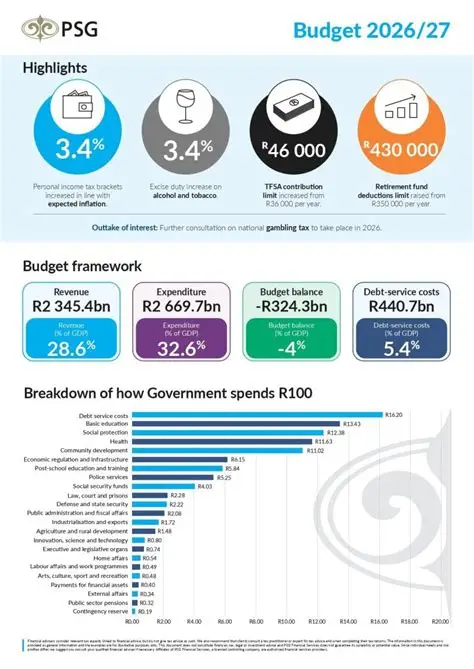
“South Africa’s 2026 Budget Speech marks a turning point in fiscal policy, stabilizing debt-to-GDP at 78.9% and projecting a decline below 75% within five years. The budget introduces tax relief, infrastructure investment, and energy reforms to restore investor confidence and stimulate long-term growth.”
South Africa’s 2026 Budget Speech, delivered by Finance Minister Enoch Godongwana, has been hailed as a landmark in the country’s economic trajectory. After years of fiscal deterioration, the announcement that gross national debt has stabilized at 78.9% of GDP represents a pivotal moment. This fiscal turnaround signals a broader policy shift aimed at restoring investor confidence, stimulating growth, and ensuring social protection in a challenging global environment.
Debt Stabilization: A Structural Inflection Point
For nearly two decades, South Africa’s debt trajectory was a source of concern for rating agencies and investors. Debt-servicing costs absorbed nearly 5% of GDP, crowding out growth-oriented spending. The 2026 Budget projects debt-to-GDP peaking at 78.9% in 2025/26 before declining below 75% within five years. This stabilization reduces sovereign risk premiums and enhances credibility in capital markets. For businesses, it creates a more predictable environment for investment and long-term planning.
Growth Outlook and Structural Constraints
The budget forecasts GDP growth of 1.6% in 2026, rising to 2% by 2028. While modest, these projections are significant given structural challenges such as infrastructure bottlenecks, energy shortages, and logistics inefficiencies. Reforms in energy, transport, and municipal governance are expected to unlock productivity gains. The government’s emphasis on infrastructure-led reform highlights recognition that growth cannot be achieved without addressing systemic weaknesses.
Tax Relief and Revenue Gains
One of the most notable aspects of the 2026 Budget is the withdrawal of a proposed R20 billion tax increase, made possible by stronger-than-expected revenue collection. Instead, the government introduced inflation-linked personal income tax relief, higher savings limits, and VAT threshold relief for small businesses. For small enterprises, the increase in the VAT registration threshold from R1 million to R2.3 million is particularly significant, reducing compliance burdens and fostering entrepreneurship.
Infrastructure Investment and Energy Reform
Infrastructure remains central to the government’s growth strategy. The budget allocates significant resources to energy and logistics reforms. With persistent electricity shortages undermining productivity, reforms in the energy sector are expected to stabilize supply and reduce costs. Logistics reforms, particularly in rail and ports, aim to improve efficiency and competitiveness in global trade.
Investor Confidence and Market Reaction
The announcement has already begun to restore investor confidence. Rating agencies have signaled cautious optimism, noting that fiscal discipline combined with structural reforms could improve South Africa’s credit outlook. The Johannesburg Stock Exchange saw modest gains following the speech, reflecting market approval of the government’s commitment to fiscal stability.
Social Protection and Inclusivity
Beyond fiscal metrics, the budget emphasizes social protection. Increased allocations to healthcare, education, and social grants aim to cushion vulnerable households against economic shocks. This balance between fiscal discipline and social inclusivity reflects the government’s recognition that sustainable growth must be equitable.
Conclusion
The 2026 Budget Speech represents a turning point in South Africa’s macroeconomic policy. By stabilizing debt, introducing tax relief, and prioritizing infrastructure and energy reforms, the government has laid the foundation for modest but sustainable growth. While challenges remain—particularly in unemployment and structural inefficiencies—the budget signals a new era of fiscal discipline and growth-oriented policy.



