




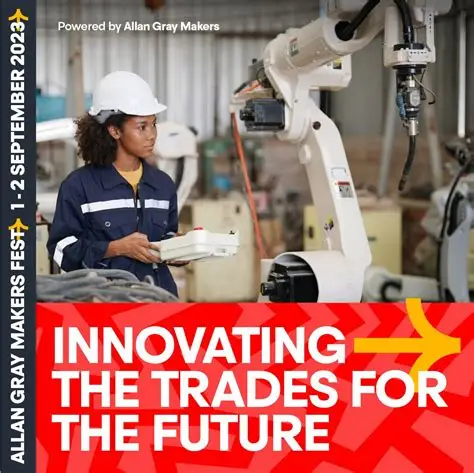
“Allan Gray Makers hosted Fusion Fest 2026 in Kempton Park, spotlighting artisan entrepreneurship as a powerful tool to combat South Africa’s staggering youth unemployment rate of 47.4%. The initiative envisions building a coordinated trades ecosystem that could launch 200,000 artisan-led businesses by 2035, reshaping the country’s economic future.”
South Africa’s unemployment crisis has long been a pressing challenge, with youth bearing the brunt of the struggle. Nearly half of young South Africans in the labor force remain jobless, a figure that underscores the urgency for innovative solutions. Against this backdrop, Allan Gray Makers has emerged as a beacon of hope, championing artisan entrepreneurship as a pathway to sustainable livelihoods and economic growth. Their flagship event, Fusion Fest 2026, held in Kempton Park, brought together artisans, industry experts, policymakers, and entrepreneurs to chart a new course for South Africa’s trades ecosystem.
The Context: Youth Unemployment at 47.4%
The statistics are sobering: 47.4% of South Africa’s youth are unemployed. This crisis not only threatens economic stability but also erodes social cohesion. Traditional job creation strategies have struggled to keep pace with demographic realities, making entrepreneurship a vital alternative. Artisan trades—plumbing, carpentry, electrical work, tailoring, and other skilled crafts—offer a unique opportunity to absorb labor while fostering community-based economic resilience.
Allan Gray Makers’ Vision
At Fusion Fest 2026, Allan Gray Makers outlined a bold vision: by 2035, South Africa will have a coordinated trades entrepreneurial ecosystem capable of launching 200,000 artisan-led businesses and scaling 20,000 existing ones. This vision rests on five interconnected pillars:
- Connected Ecosystem: Building trust and alignment among actors to reduce duplication and maximize impact.
- Evidence-Led Approach: Using research and shared learning to guide interventions.
- Infrastructure & Networks: Ensuring artisans have access to markets, funding, and mentorship.
- Talent Development: Equipping young people with practical skills and entrepreneurial acumen.
- Finance & Leadership: Mobilizing capital and fostering leadership within the artisan sector.
Fusion Fest 2026 Highlights
The event was more than a conference—it was a rallying cry. Artisans showcased their work, from innovative carpentry solutions to eco-friendly construction techniques. Industry experts discussed how digitization could modernize trades, while policymakers debated regulatory reforms to ease business registration and access to finance. The atmosphere was charged with optimism, as young artisans shared stories of resilience and ambition.
The Role of Artisan Entrepreneurship
Artisan entrepreneurship is uniquely positioned to address unemployment because it:
- Requires modest startup capital, making it accessible to youth from disadvantaged backgrounds.
- Generates local employment, as artisans often hire apprentices and assistants.
- Builds community resilience, since trades are essential services that remain in demand regardless of economic cycles.
- Encourages innovation, with artisans increasingly adopting sustainable practices and digital tools.
Challenges Ahead
Despite its promise, artisan entrepreneurship faces hurdles:
- Access to finance remains limited, with many artisans unable to secure loans.
- Market visibility is a challenge, as artisans often struggle to reach customers beyond their immediate communities.
- Skills gaps persist, requiring continuous investment in training and mentorship.
- Regulatory barriers can discourage formalization, leaving many artisans in the informal sector.
Allan Gray Makers’ Strategic Response
To overcome these challenges, Allan Gray Makers is investing in:
- Skills Development Programs: Training artisans in both technical and business skills.
- Market Linkages: Creating platforms that connect artisans with customers and suppliers.
- Funding Mechanisms: Partnering with financial institutions to design accessible loan products.
- Policy Advocacy: Working with government to streamline regulations and incentivize artisan entrepreneurship.
Broader Economic Implications
If successful, this initiative could transform South Africa’s economy. Artisan-led businesses would not only reduce unemployment but also contribute to GDP growth, tax revenues, and community development. Moreover, the emphasis on trades could help diversify the economy, reducing reliance on volatile sectors like mining and manufacturing.
Voices from Fusion Fest
Seth Mulli, Programme Director of Allan Gray Makers, emphasized the importance of shared action: “We consolidated ten conditions into five goals—not because the system became simpler, but because shared action must become clearer. Five goals that can be owned, resourced, and measured.”
Young artisans echoed this sentiment, expressing hope that the ecosystem would provide them with the tools to succeed. One participant, a 23-year-old carpenter from Soweto, remarked: “I don’t just want a job; I want to build something that lasts, something that creates jobs for others.”
Conclusion
Allan Gray Makers’ push for artisan entrepreneurship represents a paradigm shift in South Africa’s fight against unemployment. By empowering youth to harness their skills and build businesses, the initiative offers a sustainable, scalable solution to one of the country’s most pressing challenges. Fusion Fest 2026 was not just an event—it was the beginning of a movement that could redefine South Africa’s economic landscape for generations to come.



