




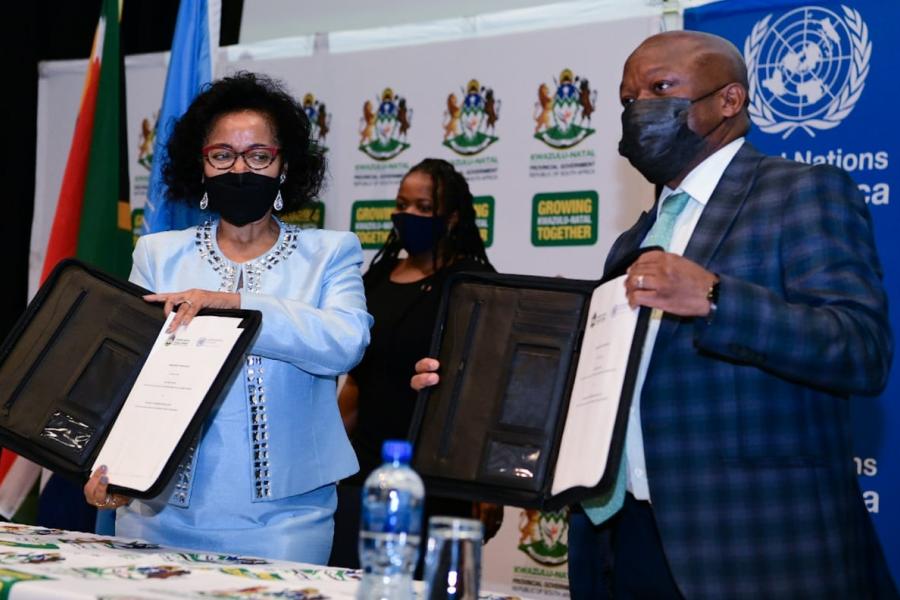
“The South African government and the United Nations signed a landmark five-year cooperation framework today, designed to align national priorities with the UN’s Sustainable Development Goals. The agreement will focus on job creation, governance reforms, healthcare, education, climate resilience, and support for vulnerable communities.”
On 10 July 2026, South Africa entered a pivotal new chapter in its governance and development trajectory by signing a five-year cooperation framework with the United Nations. The agreement, covering the period 2026–2030, is designed to accelerate economic growth, reduce inequality, and strengthen governance while ensuring that development reaches the country’s most vulnerable communities.
Background and Context
South Africa has faced persistent challenges in governance, inequality, and service delivery. Despite progress since the democratic transition in 1994, issues such as youth unemployment, gender-based violence, and uneven access to healthcare and education remain pressing. The UN partnership builds on earlier frameworks but introduces a sharper focus on inclusive governance and sustainable development, aligning with both the National Development Plan (NDP) and the UN Sustainable Development Goals (SDGs).
Key Areas of Focus
The framework outlines several priority areas:
- Job creation: Expanding opportunities for young people, women, and small businesses.
- Healthcare and education: Strengthening systems to improve access and quality.
- Governance reforms: Enhancing transparency, accountability, and service delivery.
- Gender-based violence: Supporting prevention and survivor assistance programs.
- Climate resilience: Building sustainable infrastructure and protecting vulnerable communities.
Governance Implications
The agreement is not merely developmental—it is fundamentally about governance capacity. By embedding accountability mechanisms and strengthening partnerships with civil society and the private sector, the framework seeks to address long-standing criticisms of weak institutional performance. Minister Maropene Ramakgopa, who signed on behalf of the government, emphasized that governance reforms are central to ensuring that resources reach intended beneficiaries.
Economic and Social Impact
Economically, the framework is expected to stimulate growth through targeted investments in small enterprises and infrastructure. Socially, it aims to reduce inequality by prioritizing marginalized groups, including rural communities, women, and youth. The UN’s involvement provides international oversight and technical expertise, which could help South Africa avoid pitfalls of mismanagement and corruption that have plagued past initiatives.
Challenges and Risks
Despite optimism, challenges remain:
- Implementation capacity: South Africa’s bureaucracy has often struggled with execution.
- Political will: Sustained commitment across administrations is essential.
- Resource constraints: Funding gaps could undermine ambitious targets.
- Public trust: Citizens remain skeptical due to past governance failures.
International Significance
This partnership also positions South Africa as a regional leader in governance innovation. By aligning with the UN, the country signals its commitment to multilateralism and sustainable development, potentially influencing governance practices across the African continent.
Conclusion
The signing of the 2026–2030 UN-South Africa Cooperation Framework marks a significant milestone in governance under politics. If successfully implemented, it could transform South Africa’s socio-economic landscape, strengthen governance institutions, and restore public trust. However, execution will be the ultimate test—whether promises translate into tangible improvements for ordinary citizens.



