




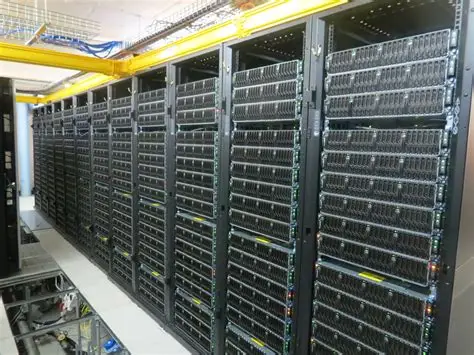
“South Africa is investing R292 million in a new four-petaflop supercomputer to replace the Lengau cluster, boosting national research capacity by nearly 300%. The phased rollout between November 2026 and March 2027 will support critical scientific projects in astronomy, genomics, climate modelling, and artificial intelligence, while addressing cybersecurity concerns after Lengau was hacked earlier this year.”
South Africa has taken a decisive step in advancing its computing infrastructure with the announcement of a R292 million investment in a new supercomputer. This system, expected to deliver four petaflops of computing power, will replace the Lengau cluster, which has served as the backbone of African high-performance computing (HPC) since 2016. The upgrade represents not only a leap in raw computational capacity but also a strategic investment in the country’s scientific competitiveness, innovation ecosystem, and resilience against cyber threats.
The Legacy of Lengau
The Lengau supercomputer, meaning “Cheetah” in Setswana, was launched in June 2016 at the CHPC under the Council for Scientific and Industrial Research (CSIR). At the time, it was the most powerful computing system on the African continent, boasting a peak performance of 1.3 petaflops. Lengau supported a wide range of scientific applications:
- Weather modelling and seismic analysis for disaster preparedness.
- Drug discovery and genomics research, including critical contributions during the COVID-19 pandemic.
- Astronomy projects such as the Square Kilometre Array (SKA) and MeerKAT telescope.
- Artificial intelligence applications across multiple industries.
Despite its achievements, Lengau has become outdated compared to global HPC standards. Its limited capacity has constrained researchers working with increasingly large datasets and complex simulations.
The New Supercomputer: Technical Leap
The upcoming system will deliver four petaflops, nearly 300% more powerful than Lengau. This performance boost will enable:
- Climate modelling with higher accuracy, vital for addressing climate change impacts.
- Bioinformatics and genomic sequencing at unprecedented scale.
- AI-driven innovation across sectors including healthcare, finance, and logistics.
- Astronomical research with deeper exploration of cosmic phenomena.
The phased rollout ensures continuity: Phase 1 will be operational by November 2026, with full deployment expected by March 2027. This approach minimizes disruption to ongoing research while gradually integrating new capabilities.
Cybersecurity Concerns
The announcement comes in the wake of a cybersecurity breach in May 2026, when Lengau was hacked and exploited for cryptocurrency mining. The attack caused downtime and raised alarms about the resilience of South Africa’s digital infrastructure. In response, the government has implemented a “remediation and resilience programme”, including:
- Stronger access controls.
- Improved network segmentation.
- Enhanced monitoring of abnormal workloads.
Budgetary Pressures
While R292 million has been ring-fenced for the National Integrated Cyberinfrastructure System (NICIS), experts warn that sustaining operations may be difficult without additional funding. Rising operational costs and Treasury budget cuts pose challenges to long-term expansion.
Strategic Importance
Minister of Science Blade Nzimande emphasized that the upgrade is critical to maintaining South Africa’s scientific competitiveness. By modernizing computing infrastructure, the country aims to:
- Reduce reliance on legacy systems.
- Support cutting-edge research in AI, bioinformatics, and climate science.
- Strengthen collaborations with global institutions.
Applications Across Sectors
The new supercomputer will impact multiple domains:
- Astronomy: Supporting SKA and MeerKAT telescope projects.
- Healthcare: Accelerating drug discovery and genomic analysis.
- Climate Science: Enhancing weather and seismic modelling.
- Education & Research: Providing continuity for thousands of researchers across Africa.
Conclusion
South Africa’s investment in a next-generation supercomputer marks a turning point in its scientific and technological trajectory. By replacing Lengau with a system nearly three times more powerful, the country is not only modernizing its research infrastructure but also positioning itself as a leader in African innovation. The phased rollout, combined with strengthened cybersecurity measures, ensures that this leap forward will be both sustainable and secure.



