




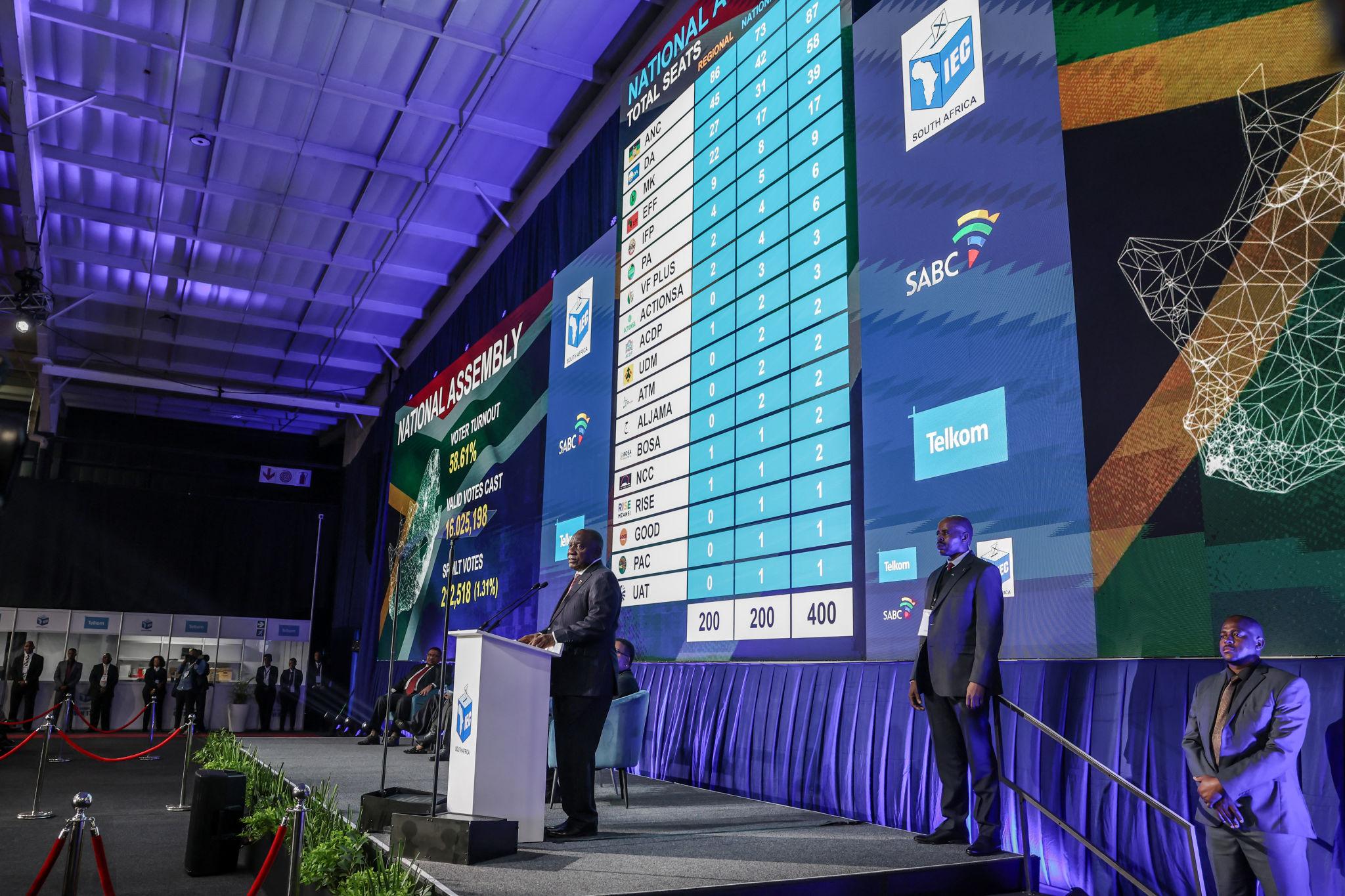
“South Africa’s 2026 Local Government Elections have reshaped the country’s municipal political landscape, with the African National Congress (ANC) retaining its position as the largest national party despite a significant decline in voter support, while the Democratic Alliance (DA), ActionSA and other opposition parties strengthen their influence. As coalition negotiations intensify across municipalities without outright majorities, political parties face mounting pressure to prioritise stable governance, accountability and improved service delivery over political bargaining.”
South Africa’s Hung Municipal Councils Trigger Intense Coalition Negotiations Following ANC Electoral Decline
South Africa is entering a significant new chapter in its democratic development following the 2026 Local Government Elections, with coalition negotiations emerging as the defining political challenge after the African National Congress (ANC) experienced a substantial decline in electoral support. Although the ANC remains the country’s largest political party nationally, the election results have demonstrated that South African voters are increasingly willing to reconsider traditional political loyalties in favour of alternative leadership and improved municipal governance.
The Electoral Commission of South Africa (IEC) announced the final election results on 8 November 2026, confirming a fragmented political landscape across the country’s municipalities. The ANC secured 30.76% of the national vote, followed by the Democratic Alliance (DA) with 24.64%, the uMkhonto weSizwe Party (MK Party) with 9.76%, the Economic Freedom Fighters (EFF) with 6.22%, and ActionSA with 5.67%.
The results represent a substantial political setback for the ANC, which has historically dominated South African electoral politics since the country’s transition to democracy in 1994. Consequently, the outcome has intensified discussions about political accountability, municipal performance and the future direction of local government.
Coalition Negotiations Become the Central Political Challenge
The immediate consequence of the election results is the emergence of numerous municipalities where no political party has secured an outright majority. These councils must therefore negotiate coalition arrangements or other governing agreements to establish municipal administrations.
According to the IEC’s final announcement, 127 municipalities were classified as hung councils, where no party obtained more than 50% of the seats. This situation has significantly increased the importance of negotiations between political parties, particularly in economically important metropolitan areas and municipalities experiencing longstanding governance challenges.
Johannesburg, Tshwane, Ekurhuleni and several other municipalities have become particularly important political battlegrounds. The DA emerged as a leading party in Johannesburg, while ActionSA’s electoral representation positions it as an influential potential coalition partner.
The negotiations are expected to involve discussions concerning mayoral appointments, executive positions, council leadership, governance priorities and policy commitments. However, political analysts and community organisations have repeatedly warned that coalition arrangements must deliver meaningful improvements in municipal administration rather than simply redistribute political positions.
President Cyril Ramaphosa has also urged political parties to approach coalition negotiations with maturity and prioritise residents’ interests. His remarks reflect growing concerns that prolonged political disagreements could undermine municipal stability and delay essential administrative decisions.
ANC Retains National Leadership Despite Electoral Setbacks
Despite its declining support, the ANC remains the largest political party nationally, securing 3,246 municipal council seats. Nevertheless, its electoral performance represents a significant departure from its historical dominance.
The party’s reduced support reflects mounting public dissatisfaction with municipal service delivery, unemployment, corruption allegations, infrastructure deterioration and broader socioeconomic challenges.
The election results have also intensified internal discussions within the ANC concerning organisational renewal and political strategy. Party structures in several provinces have acknowledged the need to examine electoral weaknesses and reconnect with communities.
In the North West province, ANC representatives have acknowledged that worsening service delivery contributed to the party’s poor electoral performance. The acknowledgement highlights the increasing importance of municipal governance in determining electoral outcomes.
The ANC’s electoral decline is particularly significant because it follows the party’s loss of its national parliamentary majority during the 2024 general elections. Together, the national and municipal election results demonstrate that South African politics is becoming increasingly competitive and fragmented.
DA and ActionSA Strengthen Their Political Influence
The Democratic Alliance has emerged from the municipal elections with an enhanced position in several major metropolitan councils. Its national vote share of 24.64% represents a substantial electoral achievement, while its representation in important municipalities strengthens its influence over coalition negotiations.
The party’s performance in Johannesburg, Tshwane, Ekurhuleni and Nelson Mandela Bay places it in a strong position to negotiate governing arrangements in municipalities where it lacks outright majorities.
ActionSA has also strengthened its political relevance, particularly in Gauteng. Its electoral performance provides the party with opportunities to influence municipal leadership arrangements and governance priorities.
In Johannesburg, coalition negotiations involving the DA and ActionSA have attracted considerable attention. However, disagreements concerning leadership positions and political relationships could complicate efforts to establish a stable administration.
ActionSA has indicated that leadership considerations remain important in its coalition discussions, illustrating how negotiations involve both policy priorities and political considerations.
The developments demonstrate that smaller political parties can exercise considerable influence when larger parties lack sufficient council seats to govern independently.
Voters Demand Better Municipal Service Delivery
Beyond party competition, the election results highlight the central importance of municipal service delivery in South African politics.
Communities across the country continue to experience challenges involving water shortages, electricity infrastructure, waste collection, road maintenance, housing, sanitation and municipal financial management.
These problems have contributed to growing public frustration and increasingly competitive electoral outcomes.
The election results suggest that voters are increasingly evaluating political parties according to their performance in government rather than relying exclusively on historical political affiliations.
In several communities, residents have expressed demands for improved accountability, stronger municipal leadership and more reliable public services.
The growing influence of opposition parties therefore reflects not only political competition but also broader expectations concerning governance and administrative effectiveness.
Municipal governments will consequently face pressure to demonstrate measurable improvements in service delivery throughout their next administrative terms.
IEC Declares Elections Free and Fair
The Electoral Commission declared the 2026 Local Government Elections free and fair following the completion of the national counting process.
According to the commission, approximately 14.9 million South Africans participated in the elections out of 29.2 million registered voters, resulting in national turnout of 52%.
The turnout represents an increase from the 45.9% recorded during the 2021 Local Government Elections.
The IEC also reported that voter satisfaction remained relatively strong. Findings from the Human Sciences Research Council’s Elections Satisfaction Survey indicated that 90% of respondents regarded electoral procedures as free, while 91% considered them fair.
Additionally, 95% expressed satisfaction with IEC services, and 81% reported trust in the Electoral Commission.
Nevertheless, the commission acknowledged several areas requiring improvement, including intimidation, impartiality concerns, inclusive voting and information gaps.
The IEC has committed to examining the electoral process and addressing shortcomings identified by voters, political parties, observers and election personnel.
Political Stability Remains Essential
The formation of coalition governments presents both opportunities and risks for South African municipalities.
Successful coalitions could encourage cooperation between political parties, improve administrative oversight and establish governance arrangements reflecting the preferences of diverse communities.
However, unstable coalition agreements could produce repeated leadership changes, political disagreements and delays in approving municipal budgets.
These challenges are particularly concerning in municipalities already experiencing financial difficulties, infrastructure deterioration and administrative weaknesses.
Political parties therefore face an important responsibility to establish coalition agreements based on clearly defined priorities, transparent decision-making processes and accountability mechanisms.
Residents will ultimately judge coalition governments according to their ability to improve everyday living conditions rather than the political arrangements that produced their leadership.
Conclusion: A Changing Democratic Landscape
South Africa’s 2026 Local Government Elections have confirmed a substantial transformation in the country’s political environment.
The ANC remains the largest national party, but its declining electoral support demonstrates that historical political dominance can no longer guarantee municipal control.
Meanwhile, the DA, ActionSA, MK Party, EFF and other political organisations have strengthened their representation, creating opportunities for alternative governing arrangements.
Coalition negotiations will now determine how municipalities are administered and whether political parties can translate electoral mandates into effective public governance.
The coming weeks will therefore be crucial for municipal stability, political accountability and the country’s democratic development.
Ultimately, the election results provide a clear message: South African voters expect their elected representatives to deliver reliable services, transparent governance and meaningful improvements in their communities.
The success of the next municipal administrations will depend not simply on which parties secure mayoral positions, but on whether they demonstrate the ability to govern responsibly, cooperate effectively and respond to the needs of residents.



