




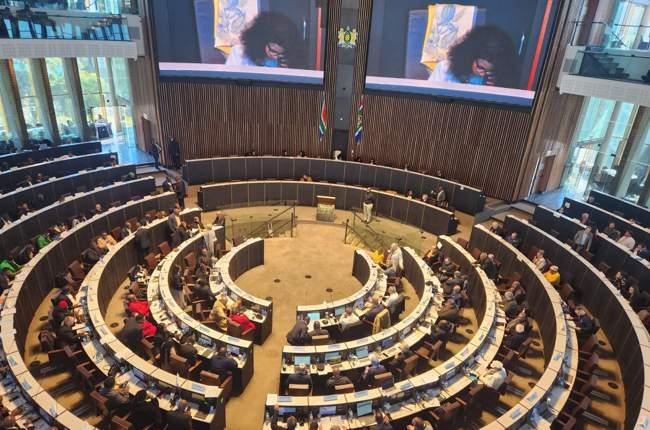
Following the conclusion of South Africa’s 2026 local government elections, the South African Local Government Association (SALGA) has called on political parties to prioritise stable, accountable municipal councils and effective service delivery as coalition negotiations begin across the country. The transition presents a significant governance challenge, particularly in hung municipalities, where parties must establish workable political partnerships while addressing longstanding concerns about municipal performance, financial accountability and deteriorating public services.
South Africa Turns to Coalition Governance as New Municipal Councils Face Accountability and Service Delivery Challenges
South Africa has entered a crucial new phase of democratic governance following the conclusion of its 2026 Local Government Elections, with the South African Local Government Association (SALGA) calling for political parties to prioritise stable, capable and accountable municipal councils capable of delivering essential services to communities. As parties begin negotiations to establish municipal administrations, governance experts and political stakeholders face growing pressure to translate electoral outcomes into effective leadership, institutional stability and improved public services.
The elections, held on 4 November 2026, concluded with the Electoral Commission of South Africa announcing the final results on 8 November. The outcome has intensified the country’s movement towards coalition-based municipal governance, creating opportunities for political cooperation while introducing challenges involving accountability, political negotiations and institutional performance.
SALGA’s message, published on 10 November, emphasises that the successful conclusion of elections represents only the beginning of a demanding governance process. Municipal councils must now demonstrate that democratic representation can produce tangible improvements in communities’ everyday lives.
Coalition Negotiations Become a Governance Priority
The formation of municipal councils is now among South Africa’s most important governance priorities. Political parties have a prescribed 14-day period within which councils must be constituted, creating pressure for negotiations to produce workable political arrangements.
Hung councils, where no political party secures an outright majority, require parties to cooperate to establish governing administrations. These arrangements can strengthen democratic representation by encouraging consultation, compromise and accountability between political organisations.
However, coalition negotiations can also create instability when disagreements over leadership positions, municipal portfolios and policy priorities undermine cooperation.
SALGA has warned that coalition arrangements must promote stability, accountability, effective oversight and continuity in service delivery rather than political instability that weakens municipal performance.
This warning reflects longstanding concerns about municipalities experiencing frequent leadership changes, disagreements between coalition partners and interruptions to administrative decision-making.
The challenge for political parties is therefore to negotiate agreements that extend beyond distributing political positions. Successful coalitions must establish shared priorities, transparent decision-making procedures and mechanisms for resolving disagreements without unnecessarily disrupting municipal administration.
Electoral Results Strengthen Pressure for Better Governance
The 2026 elections have reinforced demands for stronger accountability in local government. Reuters reported on 9 November that the African National Congress suffered its worst-ever electoral result, receiving less than one-third of the vote nationally in the local elections.
The result reflects growing voter dissatisfaction with governance performance, corruption concerns and inadequate public services. The ANC remains a major political force, but its declining electoral dominance illustrates the increasing importance of competition and coalition negotiations in South African politics.
The Democratic Alliance also strengthened its position, while other political organisations gained influence across different municipalities.
The changing political environment means that municipal administrations increasingly require cooperation among parties with different priorities and constituencies.
For residents, however, the most important question remains whether the new political arrangements will improve municipal performance.
Elections provide citizens with an opportunity to reward or reject political leadership. Effective governance must subsequently demonstrate that electoral accountability translates into responsive institutions, responsible spending and dependable services.
Accountability and Oversight Must Strengthen Municipal Institutions
Municipal accountability remains one of the central concerns facing South Africa’s local government system.
Incoming councillors must understand their responsibilities in legislation, financial oversight, public representation and executive supervision. Effective municipal governance requires elected representatives to exercise oversight over administrative decisions while ensuring that municipal officials comply with applicable laws and regulations.
SALGA has committed to supporting incoming councillors through its Integrated Councillor Induction Programme, which will be implemented after municipal councils have been constituted.
The programme is intended to strengthen councillors’ knowledge and practical abilities in representative, legislative and oversight responsibilities.
This initiative is particularly important because councillors frequently face complicated decisions involving municipal budgets, procurement, infrastructure development and service delivery priorities.
Effective oversight also requires councillors to distinguish between political responsibilities and administrative functions. Municipal officials must implement lawful decisions professionally, while political representatives must ensure that public resources are used responsibly.
Strengthening these relationships can improve institutional accountability and reduce the risks associated with political interference, administrative weaknesses and poor decision-making.
Service Delivery Remains the Central Governance Test
South Africa’s municipal governance challenges are closely connected to the quality of essential public services.
Communities continue to demand reliable water supplies, electricity infrastructure, sanitation services, waste collection, maintained roads and functioning municipal systems.
The quality of these services directly influences public confidence in local government.
A municipality may establish a politically stable administration, but stability alone cannot guarantee effective governance. Municipal leadership must also address operational weaknesses, financial constraints and infrastructure maintenance requirements.
The electoral transition therefore presents an opportunity for incoming councils to review municipal performance and establish practical improvement programmes.
Such programmes should identify urgent service delivery problems, establish measurable targets, allocate responsibilities and provide mechanisms for public reporting.
Coalition agreements can support this process by identifying shared service delivery priorities and requiring political partners to cooperate in implementing them.
Residents should also have opportunities to participate in municipal decision-making through public consultations, ward meetings and other established participation mechanisms.
The Municipal Coalitions Bill and Institutional Reform
The growing importance of coalition governance has renewed attention on the proposed Municipal Structures Amendment Bill, commonly referred to as the Municipal Coalitions Bill.
An analysis published by the Mail & Guardian on 8 November highlighted the importance of coalition legislation in addressing municipal instability and improving governance arrangements.
The proposed framework seeks to strengthen coalition governance through formal agreements, greater transparency and clearer procedures for establishing municipal administrations.
Among the proposals discussed are compulsory public coalition agreements, adjustments to coalition formation timelines and restrictions on repeated motions of no confidence against municipal office-bearers.
These measures are intended to reduce political instability and provide municipal administrations with greater continuity.
Nevertheless, legislative reform alone cannot resolve every governance challenge.
Municipalities also require professional administrative institutions, competent leadership, responsible financial management and effective accountability systems.
The professionalisation of municipal public services remains particularly important because political instability can undermine administrative continuity when officials are appointed or removed according to political considerations rather than competence.
A sustainable governance framework must therefore combine political cooperation with administrative professionalism.
Parliament’s Role in Strengthening National Accountability
National Parliament also returns to its legislative and oversight responsibilities during this important political transition.
According to Parliament’s programme published on 8 November, members returned from their constituency period on 10 November to resume committee work.
The parliamentary programme includes oversight discussions involving municipal and national governance-related institutions, financial accountability and public administration.
Parliamentary committees provide important mechanisms through which government departments and public institutions can be questioned about performance, expenditure and policy implementation.
The return of parliamentary oversight is significant because local government challenges frequently require coordination between municipal authorities, provincial administrations and national departments.
Effective intergovernmental cooperation can help address infrastructure problems, financial weaknesses and administrative challenges that municipalities cannot resolve independently.
However, coordination must not weaken accountability. Each institution must remain responsible for its decisions and performance.
Political Violence and Democratic Participation
SALGA has also expressed concern about incidents of political violence and killings reported during the election period.
The association condemned intimidation and violence, emphasising that citizens and public representatives must be able to participate in democratic processes without fear.
Political violence represents a serious threat to democratic governance because it undermines the principles of peaceful participation, freedom of political expression and public accountability.
Law enforcement agencies therefore have an important responsibility to investigate reported incidents and ensure that perpetrators are brought to justice.
Protecting councillors, political candidates, community activists and voters is essential for maintaining democratic institutions.
The incoming municipal administrations must also promote political tolerance and peaceful engagement between parties and communities.
Public Expectations and the Future of Municipal Governance
South Africa’s changing political environment creates both opportunities and risks for democratic governance.
Coalition administrations can encourage cooperation between political parties, strengthen representation and create opportunities for policy innovation.
However, their success depends on the willingness of political leaders to place public interests above narrow party considerations.
Residents will increasingly evaluate municipal administrations according to their ability to address practical challenges rather than their political rhetoric.
Water shortages, infrastructure failures, financial mismanagement and unreliable municipal services remain significant concerns requiring urgent attention.
Incoming councillors must therefore demonstrate that their electoral mandates carry meaningful responsibilities.
Transparency, public participation and regular performance reporting can help strengthen relationships between municipalities and communities.
Political parties should also establish internal mechanisms to monitor their councillors and ensure that elected representatives remain accountable to voters.
Conclusion: From Elections to Effective Governance
South Africa’s 2026 Local Government Elections have opened a new chapter in municipal governance, characterised by increasing political competition, coalition negotiations and heightened expectations for institutional accountability.
SALGA’s call for stable, capable and accountable municipal councils highlights the importance of transforming electoral outcomes into practical improvements in governance and service delivery.
The immediate challenge is to establish municipal administrations capable of cooperating politically while maintaining professional institutions and effective oversight.
Coalition agreements, councillor training, administrative professionalism and transparent decision-making will all play important roles in determining whether municipalities can overcome longstanding governance weaknesses.
Ultimately, the credibility of South Africa’s democratic institutions will depend not only on the successful conduct of elections but also on the ability of elected leaders to deliver reliable services, protect public resources and respond effectively to citizens’ concerns.
The transition from the ballot box to accountable municipal governance is therefore one of the country’s most consequential political responsibilities in November 2026.



