




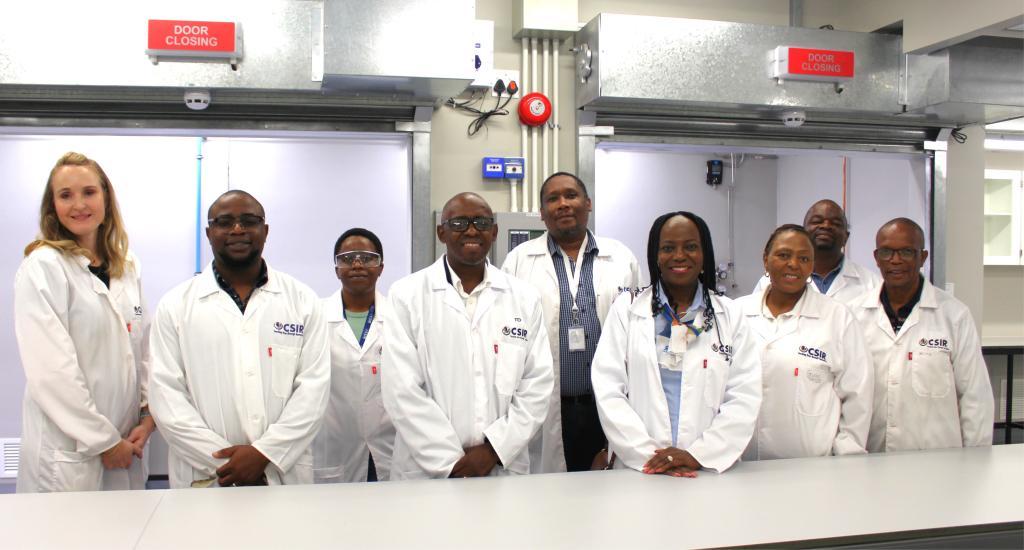
“South Africa has launched the CSIR’s FuturePHARMA facility in Tshwane, a national open-access platform designed to help move pharmaceutical, vaccine and biologics discoveries from laboratories towards clinical development, scale-up and manufacturing. The facility is intended to reduce the country’s dependence on imported pharmaceutical ingredients while strengthening biotechnology skills, local biomanufacturing capacity, health security and preparedness for future pandemics.”
South Africa Launches FuturePHARMA Facility to Strengthen Local Biotechnology, Biologics and Medicine Manufacturing
South Africa has taken a significant step towards strengthening its biotechnology and pharmaceutical innovation ecosystem with the official launch of the Council for Scientific and Industrial Research’s (CSIR) FuturePHARMA facility in Tshwane. The facility, launched by President Cyril Ramaphosa on 7 October 2026, is designed to address one of the country’s longstanding challenges: turning strong scientific research into products that can be tested, manufactured and ultimately made available to patients.
The development is particularly important for biotechnology because FuturePHARMA incorporates capabilities for vaccines, biologics and biopharmaceutical production. The CSIR describes its Investigational Vaccines and Biologics Facility as a development and manufacturing platform intended to bridge laboratory research and early clinical evaluation. Its capabilities include process development, analytical testing, quality systems and small-scale production of investigational clinical material.
Closing the Gap Between Science and Manufacturing
One of the biggest challenges facing South Africa’s biotechnology sector is not necessarily the absence of scientific expertise. Instead, the difficulty is often moving promising research beyond the laboratory and into development, clinical testing, regulatory approval and commercial production.
That gap was central to the launch of FuturePHARMA.
President Ramaphosa said the facility occupies an important space between laboratory research and commercial manufacturing. Rather than functioning simply as another conventional pharmaceutical factory, it provides specialised infrastructure and expertise that universities, researchers, start-ups and emerging companies may find too expensive or complex to establish independently.
This model is particularly relevant to biotechnology because the development of vaccines, biologics and advanced therapies requires specialised equipment, controlled processes, analytical capabilities and highly trained personnel.
For an early-stage biotechnology company, discovering a promising biological process is only the beginning. The process must eventually be reproduced consistently at larger volumes, meet quality requirements and generate material suitable for further testing. Facilities capable of supporting this transition can therefore become important links between scientific discovery and commercialisation.
FuturePHARMA is intended to provide precisely this type of bridge.
Reducing South Africa’s Import Dependence
Another major reason the development matters is South Africa’s dependence on imported active pharmaceutical ingredients.
According to CSIR Group Executive for Advanced Chemistry and Life Sciences Dr Rachel Chikwamba, approximately 98% of the active pharmaceutical ingredients used to make medicines in South Africa are imported. This leaves the country’s pharmaceutical manufacturing system exposed to international supply disruptions, exchange-rate movements, inflation and other external pressures.
The COVID-19 pandemic demonstrated how vulnerable global medical supply chains can become during a major health emergency. Countries competing for vaccines, medicines and other medical products can face delays when international demand suddenly rises.
For South Africa and the wider African continent, developing domestic capabilities therefore has implications that go beyond industrial policy.
It is also a question of health security.
FuturePHARMA is designed to strengthen local capabilities in pharmaceutical development and manufacturing, potentially allowing South African researchers and companies to develop technologies closer to home rather than relying entirely on overseas manufacturing infrastructure.
A Strong Biotechnology Component
While the facility includes small-molecule pharmaceutical capabilities, its biotechnology component is particularly significant.
The CSIR says its FuturePHARMA platform can support the development of vaccines and biopharmaceuticals, while its Investigational Vaccines and Biologics Facility is designed to help promising biological medicines progress towards early clinical evaluation.
Biologics are medicines produced using biological systems or biological materials. They include vaccines, therapeutic proteins and other advanced medical products. Their development can require specialised manufacturing and quality-control systems that differ considerably from those used for conventional chemically synthesised medicines.
This makes access to appropriate biomanufacturing infrastructure particularly important.
South Africa has universities and research institutions capable of producing high-quality scientific work, but the pathway from discovery to product requires much more than laboratory research. Researchers need process-development expertise, manufacturing facilities, analytical testing, quality systems, regulatory knowledge and skilled technical personnel.
FuturePHARMA brings several of these requirements together.
Building a Biomanufacturing Workforce
Infrastructure alone, however, cannot create a successful biotechnology industry.
South Africa and Africa also need people with the technical expertise required to operate sophisticated biomanufacturing facilities.
The CSIR has been developing this capability through its Southern African Biomanufacturing Training Hub. In October, the first cohort completed training in upstream production of recombinant proteins in prokaryotic expression systems. The programme combined theoretical instruction with practical training.
The workforce challenge is substantial. CSIR Programme Manager Lara Kotzé-Jacobs said Africa currently has approximately 3,000 personnel with relevant capabilities, compared with an estimated requirement of about 14,000. Training therefore represents an important part of the continent’s ambition to expand local vaccine manufacturing.
This creates an important connection between FuturePHARMA and broader biotechnology skills development.
Modern biotechnology requires scientists, bioprocess engineers, laboratory specialists, quality professionals, manufacturing technicians and regulatory experts. Developing these skills can create opportunities for universities, research organisations and young biotechnology companies.
Preparing for Future Pandemics
Pandemic preparedness is another major motivation behind the investment.
During COVID-19, many African countries depended heavily on imported vaccines and medical products. The CSIR says Africa was effectively at the back of the global queue for imported vaccines during the pandemic, while disruptions also affected other medicines.
FuturePHARMA is intended to help South Africa avoid repeating that vulnerability.
The facility will not eliminate the need for international cooperation. However, strengthening domestic capabilities could allow South African institutions to respond more rapidly when new health threats emerge.
The ability to conduct research locally, develop biological processes, manufacture investigational material and establish production pathways can shorten the distance between identifying a health threat and developing a potential response.
This is particularly important as infectious diseases continue to cross national borders.
Connecting Universities, Industry and Government
Another defining feature of FuturePHARMA is its open-access model.
The facility is intended to serve researchers, universities, emerging enterprises, established companies and other partners.
This approach could be important for biotechnology start-ups.
Many young biotechnology companies have strong scientific ideas but lack the capital required to establish their own pilot manufacturing infrastructure. Access to shared facilities can allow them to develop and validate technologies without immediately carrying the enormous cost of constructing specialised manufacturing plants.
The same applies to university researchers.
A discovery made in a university laboratory can remain commercially undeveloped if researchers cannot access the equipment and expertise necessary for scale-up. A shared national platform can help close that gap.
The government’s objective is therefore not simply to construct another facility. It is to create connections across the innovation system.
President Ramaphosa emphasised that FuturePHARMA’s success will depend on partnerships involving government, universities, research councils, industry, regulators and investors.
Opportunities for South African Biotechnology Companies
For South African biotechnology companies, the new infrastructure could create several opportunities.
First, it can support product development.
A company developing a vaccine, biologic or other biotechnology product may need assistance moving from laboratory-scale experiments towards reproducible processes.
Second, it can support scale-up.
A process that works in a small laboratory vessel does not automatically work at larger production volumes. Engineers and scientists must understand how parameters such as temperature, mixing, oxygen transfer, nutrients and purification affect the final product.
Third, the facility can support technology transfer.
A successful process may eventually need to move from a research environment into a commercial manufacturing facility. Having experts involved in development and scale-up can make this transition more structured.
Finally, FuturePHARMA could strengthen relationships between South African innovators and international partners.
A Wider African Opportunity
The significance of the facility extends beyond South Africa’s borders.
The African Union and Africa Centres for Disease Control and Prevention have increasingly promoted local manufacturing as part of the continent’s health-security agenda. President Ramaphosa said South Africa is positioned to use its research institutions, universities, regulatory capabilities and manufacturing capacity to participate in regional value chains.



