




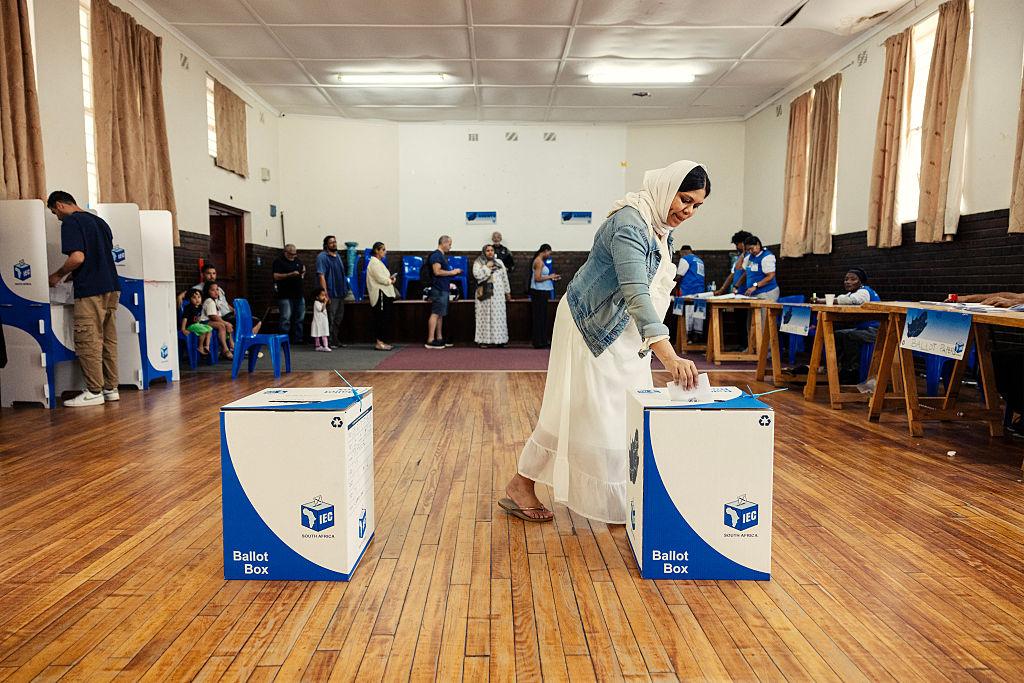
“A new Human Sciences Research Council (HSRC) survey shows that 90% of South African voters considered the 2026 local government elections free and 91% considered them fair, despite declining confidence in the Electoral Commission of South Africa (IEC). The findings highlight a growing distinction between satisfaction with election-day administration and concerns about institutional credibility, political accountability and democratic representation.”
South African Voters Express Confidence in Election Fairness as Trust in Electoral Commission Declines
South Africa’s democratic institutions have received a mixed assessment following the country’s 2026 local government elections, with voters expressing strong satisfaction with the voting process while reporting declining confidence in the institution responsible for administering elections. New research released by the Human Sciences Research Council (HSRC) indicates that the overwhelming majority of participating voters considered the elections free and fair, although trust in the Electoral Commission of South Africa (IEC) has weakened over successive election cycles.
The findings provide an important insight into public opinion at a time when South African politics is undergoing significant transformation. The country’s political landscape has become increasingly fragmented, traditional party loyalties are weakening, and voters are demanding greater accountability from political leaders and municipal administrations.
Strong Public Approval of Election Administration
According to the preliminary Election Satisfaction Survey (ESS) 2026, approximately 90% of voters considered the electoral procedures free, while 91% regarded them as fair. The survey was commissioned by the IEC and conducted by the HSRC through interviews with 13,198 voters at 300 voting stations nationwide.
The results suggest that election-day experiences remained broadly positive across participating communities. Voters expressed satisfaction with the conduct of polling personnel, the accessibility of voting procedures and the protection of ballot secrecy.
Approximately 96% of respondents indicated satisfaction with the service provided by election officials, while 96% found voting procedures easy to understand. Furthermore, 95% expressed satisfaction with the secrecy of their ballots.
These figures reinforce the importance of effective election administration in maintaining public confidence in democratic participation.
The research also highlighted improvements in queue management compared with the 2024 national and provincial elections. Around 78% of voters waited 15 minutes or less to cast their ballots, compared with 60% during the previous national election. The proportion waiting longer than an hour reportedly declined from approximately 11% to 4%.
These operational improvements demonstrate that logistical efficiency can significantly influence citizens’ perceptions of the democratic process.
Declining Confidence in the Electoral Commission
Despite the positive assessment of election procedures, the survey identified a decline in institutional trust.
The proportion of respondents expressing trust or strong trust in the IEC stood at 81%. This represented a decrease from 85% in 2024 and 91% during the 2016 local government elections.
The decline raises questions about how South Africans perceive the Electoral Commission beyond their immediate experiences at voting stations.
Some respondents who expressed confidence cited professionalism, competence, perceived independence and confidence in the counting of votes as reasons for trusting the institution.
However, respondents who expressed distrust raised concerns involving perceived corruption, dishonesty, political bias, vote counting and previous controversies.
The researchers emphasised that these concerns represented respondents’ perceptions and allegations rather than independently established findings of misconduct.
Nevertheless, public perceptions remain politically important because democratic institutions depend not only on operational performance but also on citizens’ belief that they are impartial, accountable and transparent.
The survey therefore presents a nuanced picture of electoral confidence: voters can be satisfied with the mechanics of voting while remaining concerned about institutional credibility.
Public Opinion and the Changing Political Landscape
The findings emerge against the background of a significant political shift in South Africa.
The 2026 local government elections have reinforced the country’s movement away from the dominance of a single political party towards a more fragmented electoral environment.
Recent reporting indicates that the African National Congress experienced a historic decline in support, while opposition parties gained ground in several municipalities. The changing political balance has increased the importance of coalition negotiations and cooperation between parties.
Reuters reported that voters punished the ANC over corruption concerns and poor public services, while analysts observed that political support increasingly depends on governing performance rather than historical loyalty.
This transformation has implications for public opinion.
Citizens increasingly evaluate political parties according to their ability to improve living conditions, provide municipal services and address unemployment, corruption and infrastructure challenges.
The growing demand for accountability also places pressure on political leaders to demonstrate that electoral participation can produce meaningful improvements.
Political Representation Remains a Major Concern
Public opinion research conducted before the elections identified another important challenge: many South Africans feel politically unrepresented.
An Ipsos survey published on 30 October found that 53% of eligible voters believed no political party represented their views. Among registered voters, half expressed the same sentiment.
The research also indicated that 68% of registered voters believed politicians could not be trusted, while 65% supported political parties working together in municipal government.
These findings suggest that public dissatisfaction extends beyond individual political parties.
Instead, a substantial section of the electorate appears concerned about the responsiveness of the political system itself.
The combination of declining party loyalty, distrust of politicians and support for coalition government illustrates the changing expectations of South African voters.
Political representation is increasingly being judged by practical results rather than historical identity or campaign promises.
Service Delivery and Accountability Shape Voter Expectations
Municipal service delivery remains one of the most important issues influencing public opinion.
Communities expect municipalities to provide reliable water, electricity, sanitation, waste collection, road maintenance and other essential services.
When local authorities fail to meet these expectations, dissatisfaction can translate into electoral consequences, public demonstrations or demands for administrative accountability.
Ipsos research found that 58% of registered voters considered protests, strikes and marches acceptable responses to dissatisfaction with service delivery.
This suggests that public participation in South Africa extends beyond voting.
Citizens continue to regard protest and community mobilisation as legitimate mechanisms for expressing dissatisfaction and demanding improvements.
The relationship between service delivery and democratic legitimacy is therefore particularly important for newly elected municipal administrations.
Voters Continue to Believe in Democratic Participation
Despite concerns about political trust and representation, the HSRC findings suggest that many South Africans continue to value voting.
Approximately 59% of respondents identified the belief that their vote could make a difference as their strongest motivation for participating in the elections.
Other important motivations included good-quality government services, economic improvement and fighting corruption.
These motivations indicate that electoral participation is increasingly connected to citizens’ expectations of practical governance outcomes.
Rather than relying exclusively on political loyalty, voters are increasingly interested in whether elected representatives can improve their communities.
The survey also found that 96% of interviewed voters indicated that they were likely to participate in future elections.
This finding offers an encouraging indication that dissatisfaction with political institutions does not necessarily translate into complete rejection of democratic participation.
Implications for the Electoral Commission
The declining trust recorded in the survey presents an important challenge for the IEC.
Although the commission received positive ratings for election administration, it must continue strengthening public confidence in its independence, transparency and accountability.
IEC chairperson Mosotho Moepya acknowledged that the elections were not without shortcomings and indicated that the commission needed to examine areas requiring improvement.
Concerns involving intimidation, perceptions of impartiality, inclusive voting and information gaps were identified as matters requiring attention.
The willingness of electoral authorities to acknowledge weaknesses could help strengthen institutional credibility.
However, rebuilding confidence requires consistent communication, transparent procedures, effective complaint mechanisms and credible responses to public concerns.
The commission’s long-term legitimacy will depend on whether voters continue to regard it as an impartial institution capable of administering elections fairly.
Coalition Government and the Future of Public Opinion
The increasing fragmentation of South African politics also means that coalition governments are likely to play a greater role in municipal administration.
Coalitions create opportunities for political cooperation, but they also introduce challenges involving accountability, stability and policy coordination.
Voters who support cooperation between parties may expect coalition governments to prioritise service delivery and responsible administration over political disagreements.
The success or failure of these arrangements could influence public opinion ahead of future national elections.
Municipal performance will therefore become an important measure of whether political cooperation can deliver tangible benefits.
Conclusion
South Africa’s 2026 Election Satisfaction Survey presents a significant picture of democratic confidence.
The overwhelming majority of participating voters considered the local government elections free and fair, while satisfaction with polling personnel and voting procedures remained high.
Nevertheless, declining trust in the IEC, widespread concerns about political representation and dissatisfaction with service delivery reveal important challenges facing the country’s democracy.
The findings suggest that South Africans continue to value electoral participation but increasingly expect political institutions to demonstrate transparency, accountability and effectiveness.
For the Electoral Commission, rebuilding institutional confidence will require sustained attention to public concerns and continued improvements in election administration.
For political parties and municipal leaders, the message is equally clear: voters expect democratic participation to produce meaningful improvements in governance and everyday life.
Ultimately, the future of public confidence in South African politics will depend not only on whether elections are conducted fairly, but also on whether elected representatives deliver the results citizens expect.



