




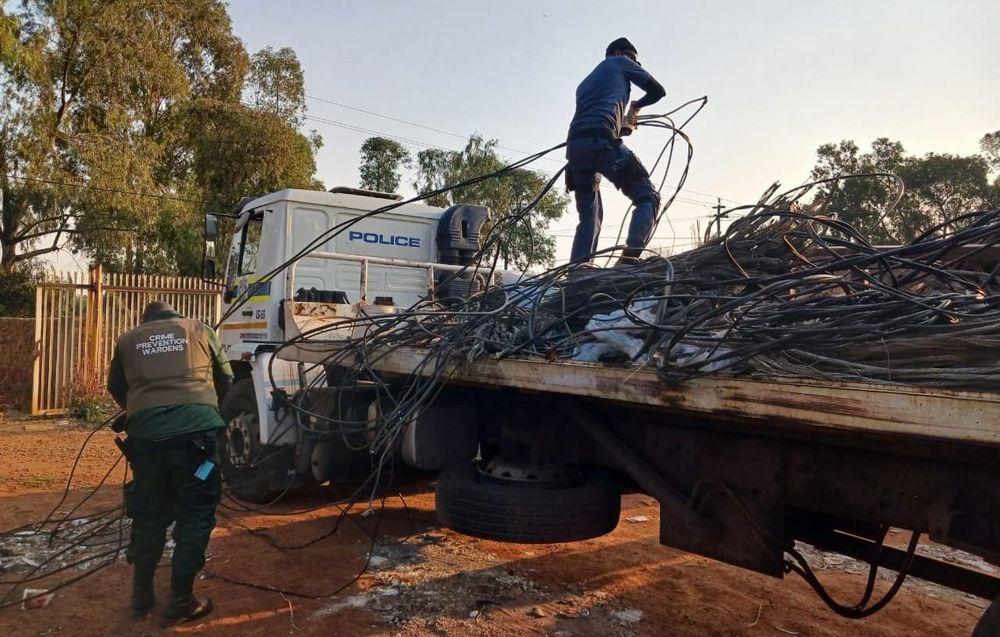
“South Africa is moving closer to banning cash payments in scrap-metal transactions as part of proposed amendments to the Second-Hand Goods Act, with government seeking to disrupt the illegal trade that fuels cable theft, infrastructure vandalism and illicit mining. The proposed legislation would introduce stronger record-keeping requirements, electronic payments, seller identification measures and tighter controls over second-hand goods and precious metals, with public comments due by 2 November 2026.”
Government Targets the Scrap-Metal Economy
South Africa is preparing for a significant tightening of legislation governing the second-hand goods and scrap-metal industries as authorities attempt to tackle the growing economic and social consequences of infrastructure theft.
The proposed Second-Hand Goods Amendment Bill, 2026 is emerging as one of the country’s most important legislative developments because it seeks to address the market that allows stolen infrastructure, particularly copper cable and other valuable metals, to enter legitimate commercial channels.
The legislation has gained renewed attention after details emerged showing that scrap-metal dealers could be required to abandon cash payments and instead use electronic transactions when purchasing controlled metals. The objective is to create a stronger financial trail that investigators can follow when stolen material enters the recycling and scrap-metal economy.
Cabinet approved the publication of the Bill for public comment in August. According to the government, the proposed legislation is intended to strengthen regulation of the second-hand goods sector, close regulatory gaps and combat stolen goods, infrastructure vandalism, cable theft and unlawful scrap-metal trading.
The public-comment period provides an opportunity for businesses, workers, civil-society organisations, industry associations and members of the public to assess the proposals before the legislation proceeds through the parliamentary process.
The deadline for public submissions is 2 November 2026.
Why Cashless Transactions Matter
At the centre of the proposed reforms is the planned shift away from cash.
Authorities and human-rights institutions argue that cash transactions make it more difficult to establish where scrap metal originated and where money from its sale ultimately went. By requiring electronic payments, investigators could potentially obtain a transaction trail connecting sellers, recyclers and buyers.
The South African Human Rights Commission has previously identified infrastructure vandalism and the theft and trafficking of copper cable as a serious human-rights concern because damage to infrastructure can interrupt electricity, transport, telecommunications and other essential services.
The commission has supported mandatory cashless payments for copper scrap transactions and argued that electronic records could assist law-enforcement agencies in identifying suspicious transactions and following illicit financial flows.
The proposed legislation therefore represents more than an administrative change for scrapyards. It reflects a broader attempt to transform how the state monitors an industry that sits at the intersection of legitimate recycling, informal livelihoods, organised crime and infrastructure protection.
New Record-Keeping Requirements
The proposed amendments would also strengthen the information that dealers and recyclers must collect.
Under the proposed framework, dealers would have to maintain prescribed registers containing information about acquisitions, disposals and pawning of second-hand goods. Recyclers acquiring controlled metal from scrap-metal waste pickers would also have to record identifying information about the sellers.
The Bill specifically proposes that recyclers keep information such as the full names and identification-document numbers of scrap-metal waste pickers from whom controlled metal is acquired.
This requirement is designed to improve traceability. If stolen cable or another controlled metal is discovered later, authorities would have more information with which to determine where the material entered the commercial chain.
The current Second-Hand Goods Act already regulates dealers and scrap-metal dealers and provides for registers covering certain second-hand goods and controlled metals. The proposed amendments seek to strengthen these mechanisms in response to persistent criminal activity.
The R45 Billion Infrastructure Problem
The urgency behind the proposed legislation is linked to the enormous cost of infrastructure theft.
Business Day reported that infrastructure vandalism and related illicit trade are estimated to cost South Africa approximately R45 billion annually. Copper cable theft alone is estimated to cost Eskom billions of rand every year, including additional expenses required to replace stolen infrastructure.
Transnet has also suffered extensive losses from cable theft and damage to railway infrastructure.
Between 2017 and 2021, the amount of cable stolen from Transnet rail lines reportedly increased dramatically, while recorded incidents also rose substantially. The consequences extend beyond the value of the stolen metal because damaged rail infrastructure can affect freight movement, passenger services and the broader economy.
Electricity infrastructure is similarly vulnerable. When copper cable is stolen, communities and businesses can experience outages while utilities must redirect resources from network maintenance and expansion towards emergency repairs and security.
The legislation therefore attempts to attack the economic incentives behind the theft rather than focusing exclusively on the individuals physically removing cables.
Precious Metals and Illegal Mining
The proposed amendments would not be limited to copper.
The legislation would also affect trade involving precious metals, including gold and chrome. These metals are particularly significant because they are associated with South Africa’s illegal-mining economy.
The Bill proposes additional responsibilities for jewellers dealing with unwrought or semi-fabricated precious metals. Jewellers would be expected to ensure that suppliers are properly authorised to possess and sell such materials.
Where there are reasonable grounds to suspect that precious metal has been tampered with or its appearance altered to disguise its identity, reporting obligations could also apply.
The inclusion of gold and chrome demonstrates the government’s intention to address different parts of the illicit-mining and metals economy through stronger regulation.
Foreign Nationals and Trading Licences
Another controversial aspect of the proposed amendments concerns eligibility for second-hand goods trading licences.
Under the provisions reported on Monday, foreign nationals without verified legal permanent-residency status would be disqualified from obtaining trading licences in the second-hand goods market.
The issue is politically sensitive because South Africa’s informal and formal scrap-metal sectors involve people from different backgrounds, including South African citizens, migrants and waste pickers.
Any changes to licensing requirements will therefore need to be examined carefully during public consultation. Policymakers will need to balance the objective of preventing organised criminal activity with constitutional principles, lawful economic participation and the protection of legitimate livelihoods.
Industry Impact
For legitimate scrap-metal dealers and recyclers, the proposed amendments could mean additional administrative and financial responsibilities.
Electronic payments could improve accountability, but smaller businesses may need new banking arrangements, accounting systems and compliance procedures. Dealers may also have to spend more time verifying sellers and recording transactions.
Waste pickers could also be affected. While stronger identification requirements may make it harder for criminals to disguise stolen material as legitimate scrap, informal workers may face difficulties if they lack documentation, bank accounts or access to electronic payment systems.
Consequently, the implementation of the legislation will be important. Regulations and enforcement mechanisms will need to distinguish between legitimate recycling activity and organised criminal networks.
Public Participation Comes Next
The Bill remains a proposal rather than a law currently in force.
Cabinet approved its publication for public comment in August, and the latest legislative process gives interested parties until 2 November 2026 to make submissions.
After public consultation, government and Parliament will have to consider submissions before the legislative process advances.
The process is particularly important because the proposed reforms affect several groups simultaneously, including scrap-metal businesses, recyclers, waste pickers, jewellers, law-enforcement agencies, municipalities and infrastructure companies.
Public participation could identify practical challenges that need to be addressed before the legislation is finalised.
A Wider Legislative Strategy
The Second-Hand Goods Amendment Bill forms part of a broader legislative programme aimed at strengthening South Africa’s response to organised crime and infrastructure-related offences.
The Civilian Secretariat for Police Service has identified the Second-Hand Goods Amendment Bill alongside other proposed legislative interventions, including measures addressing stock theft and critical infrastructure protection.
This suggests that government is increasingly attempting to address crime through changes to the regulatory environment surrounding criminal markets rather than relying solely on arrests and prosecutions.
The strategy is based on the idea that preventing stolen goods from entering legitimate markets can make infrastructure theft less profitable.
What the Legislation Could Mean for South Africa
If implemented effectively, the proposed reforms could give police, regulators and financial investigators stronger tools for tracing suspicious transactions and identifying businesses or individuals involved in the illicit metals trade.
However, legislation alone will not eliminate cable theft or infrastructure vandalism.
South Africa will still need effective policing, prosecution, intelligence gathering, cooperation between municipalities and state-owned companies, and stronger oversight of scrapyards and recycling businesses.
The experience of previous measures also demonstrates the importance of enforcement. Existing legislation already regulates second-hand goods and controlled metals, but persistent theft indicates that regulatory gaps, weak enforcement and organised criminal networks remain significant challenges.
The proposed cashless system could therefore become an important component of a much broader response.
Ultimately, the political significance of the Second-Hand Goods Amendment Bill lies in its attempt to change the economics of infrastructure crime. By making transactions more traceable and placing greater responsibilities on dealers, recyclers and other participants in the metals market, government hopes to make it harder for stolen material to be converted into easily accessible cash.
For South Africans, the issue is about more than scrap metal. Copper stolen from a railway line can disrupt transport. Cable removed from an electricity network can leave communities without power. Damage to municipal infrastructure can increase public spending and reduce the quality of essential services.
The proposed legislation therefore places infrastructure protection, economic security and public safety at the centre of a major legislative debate.
With public comments open until 2 November, the next stage will be closely watched by Parliament, industry and civil society. The effectiveness of the final law will ultimately depend not only on what Parliament passes, but also on whether the state can consistently enforce the rules across the entire illicit metals value chain.



