




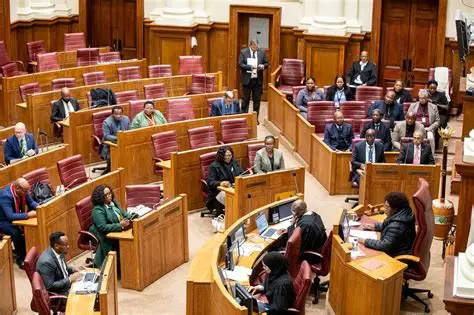
“South Africa’s National Assembly is considering the Independent Municipal Demarcation Authority Bill, which will repeal the 1998 Municipal Demarcation Act and create a new independent authority to manage municipal boundaries and governance oversight. The reform is expected to strengthen accountability, improve service delivery, and reduce political interference in local government structures.”
South Africa’s Parliament placed the Independent Municipal Demarcation Authority Bill at the center of its legislative agenda. This bill represents a sweeping reform of local governance, aiming to strengthen accountability, reduce corruption, and ensure that municipal boundaries and ward structures are determined by an independent body rather than political actors. The reform comes at a time when South Africa is grappling with coalition politics, declining trust in the ruling African National Congress (ANC), and mounting pressure to deliver effective governance at the local level.
Background: Why Reform Was Needed
The Municipal Demarcation Act of 1998 established the Municipal Demarcation Board, which has long been responsible for determining municipal boundaries. However, critics argue that the board lacked independence and was vulnerable to political manipulation. Over the years, disputes over ward boundaries, service delivery failures, and accusations of gerrymandering eroded public trust. The new bill seeks to address these shortcomings by creating the Independent Municipal Demarcation Authority (IMDA), a body with constitutional backing and enhanced oversight mechanisms.
Key Provisions of the Bill
- Repeal of 1998 Act: The bill repeals the outdated Municipal Demarcation Act.
- Creation of IMDA: Establishes the Independent Municipal Demarcation Authority with constitutional safeguards.
- Expanded Functions: IMDA will determine municipal boundaries, delimit wards, conduct capacity assessments, and establish an appeals mechanism.
- Transparency Measures: Decisions must be published with clear justifications, reducing ambiguity and political influence.
- Appeals Mechanism: Citizens and municipalities will have the right to appeal boundary decisions, ensuring accountability.
Political Context
The reform comes against the backdrop of the ANC’s declining dominance, following its loss of parliamentary majority in July 2026. The ANC was forced into a Government of National Unity (GNU) with the Democratic Alliance (DA), marking a historic shift in South African politics. In this coalition era, reforms like the IMDA Bill are seen as essential to restoring credibility and ensuring that governance structures are not subject to partisan manipulation.
Implications for Local Governance
Local municipalities have long struggled with service delivery failures, ranging from water shortages to collapsing sewage systems. By strengthening oversight and removing political interference, the IMDA is expected to:
- Improve service delivery efficiency.
- Reduce corruption and patronage networks.
- Enhance citizen trust in local governance.
- Provide a more equitable distribution of resources across municipalities.
Gender and Social Justice Dimension
Coinciding with the bill’s consideration, Parliament also commemorated the 70th anniversary of the 1956 Women’s March, under the theme “Empowered Women, Empower Nations.” This parallel event highlights the broader push for inclusive governance, ensuring that reforms like the IMDA Bill also advance gender equality and social justice in municipal structures.
Risks and Challenges
While the bill is widely welcomed, challenges remain:
- Implementation Costs: Establishing a new authority requires significant funding.
- Political Resistance: Some factions within the ANC may resist reforms that reduce their influence.
- Capacity Issues: Ensuring the IMDA has the expertise and independence to function effectively will be critical.
- Public Awareness: Citizens must be educated about the appeals mechanism to make full use of it.
Conclusion
The Independent Municipal Demarcation Authority Bill marks a turning point in South Africa’s governance landscape. By creating a truly independent authority, Parliament is signaling its commitment to accountability, transparency, and effective service delivery. In a coalition era where compromise and reform are essential, this bill stands out as a cornerstone of South Africa’s evolving democracy.



