




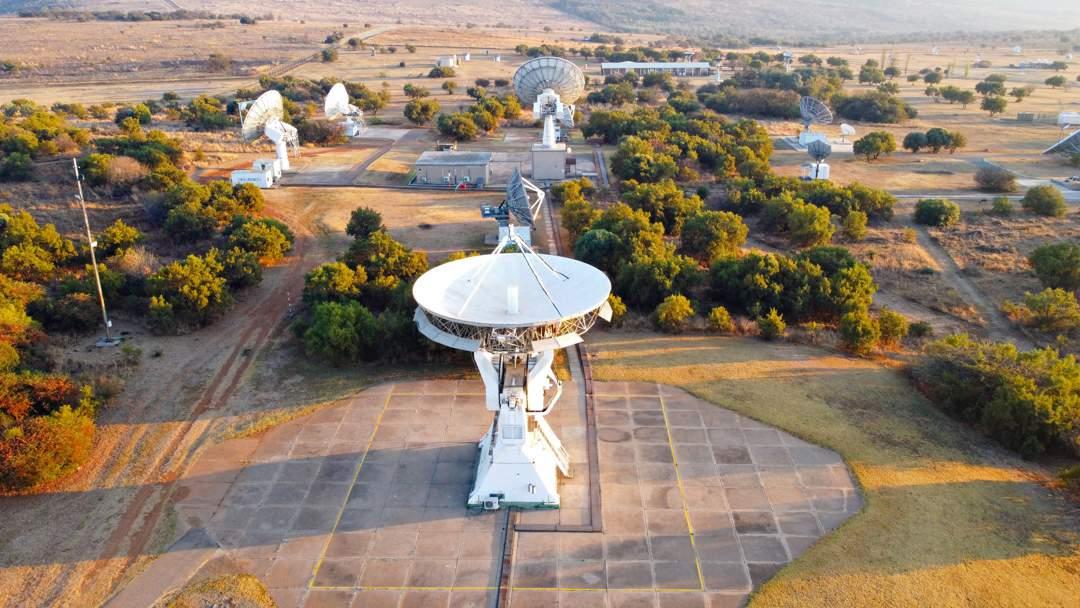
“South Africa’s state-owned signal distributor, Sentech, has put a price of approximately R6.5 billion on a proposed national communications satellite, including manufacturing, launching, ground stations, equipment and associated services. The announcement provides a clearer picture of the country’s ambition to strengthen independent communications infrastructure, expand connectivity and improve national security through space technology.”
South Africa’s R6.5 Billion National Satellite Plan: A Major Step Towards Space Technology Independence and Digital Connectivity
Introduction: South Africa puts a price on its space ambitions
South Africa has taken an important step towards strengthening its position in the global space and telecommunications industries after the government disclosed that its proposed national communications satellite programme could cost approximately R6.5 billion.
The financial estimate was presented to Parliament on 24 November 2026 during a joint briefing involving the Portfolio Committee on Communications and Digital Technologies and the Portfolio Committee on Science, Technology and Innovation. The announcement represents an important development in the country’s long-running ambition to establish its own satellite communications infrastructure.
Sentech chief executive Tebogo Leshope confirmed that the estimated investment covers the manufacturing and launch of the satellite, the construction and installation of ground stations, equipment and related services.
The proposed programme is being developed through cooperation between the Department of Communications and Digital Technologies (DCDT), the Department of Science, Technology and Innovation (DSTI), Sentech and the South African National Space Agency (SANSA).
The government wants to strengthen South Africa’s technological independence, improve communications coverage and reduce its dependence on foreign satellite infrastructure. The initiative is also intended to support underserved communities where conventional telecommunications infrastructure remains difficult or expensive to deploy.
Although the R6.5 billion estimate provides greater financial clarity, the project has not yet received final Cabinet approval. Its implementation will depend on the completion of consultations, the selection of an appropriate financing structure and the government’s ability to establish a sustainable business case.
1. Understanding the proposed national communications satellite
A communications satellite is a spacecraft designed to receive, process and retransmit signals between different locations on Earth.
These satellites play an important role in modern telecommunications because they allow information to travel across large geographical areas without requiring every location to be connected through physical cables or terrestrial mobile networks.
For a geographically extensive country such as South Africa, satellite communications could provide an additional way of delivering connectivity to remote settlements, rural communities, public institutions and locations where conventional infrastructure is limited.
The proposed national satellite programme seeks to establish domestic capacity that can complement existing fibre-optic networks, mobile telecommunications infrastructure and other broadband services.
The initiative is not simply about placing a satellite into orbit. It involves developing an entire operational system that includes the spacecraft, launch services, ground infrastructure, communications equipment and associated technical support.
According to the parliamentary briefing reported by IOL, the estimated R6.5 billion covers these components rather than only the manufacturing of the spacecraft.
This distinction is important because a satellite cannot provide a useful communications service without the infrastructure needed to control it, receive its signals, manage its operations and distribute connectivity to customers.
South Africa therefore faces a major infrastructure development exercise that will require cooperation between government departments, technical specialists, telecommunications companies, investors and international aerospace partners.
2. Four financing models under consideration
One of the most important issues discussed during the parliamentary briefing was how South Africa would finance the proposed satellite.
The government outlined four possible financing arrangements. Each option presents different opportunities and challenges concerning public expenditure, ownership, operational responsibilities and financial risk.
The first option is full government funding.
Under this arrangement, National Treasury would finance the entire capital expenditure.
The satellite would effectively become a strategic national asset, with the government responsible for funding its development and associated infrastructure.
This model could provide the state with greater control over the programme. However, it would also place substantial pressure on public finances, particularly when government departments must balance infrastructure spending against healthcare, education, transport, housing and other priorities.
The second option is a public-private partnership.
The government could establish a proposed satellite company known as SATCO.
This company would coordinate government satellite requirements while attracting investment from strategic private-sector partners.
A public-private partnership could provide access to specialised expertise, technical knowledge and additional capital. It could also distribute some of the project’s financial risks between government and investors.
Space in Africa has highlighted Nigeria’s Nigerian Communications Satellite Limited (NIGCOMSAT) as an example of an African national satellite company.
However, the success of such a model would depend on establishing transparent ownership arrangements, clear commercial responsibilities and effective government oversight.
The third option involves debt financing.
Under this arrangement, the proposed SATCO could approach development finance institutions for funding.
Institutions identified during the briefing include the Development Bank of Southern Africa, the Industrial Development Corporation and the New Development Bank.
The government could also consider blended financing through the National Treasury’s Budget Facility for Infrastructure.
This arrangement could reduce the immediate pressure on the national budget. Nevertheless, borrowing would introduce repayment obligations that would need to be supported by sustainable revenue.
The fourth option combines different financing arrangements.
This model would bring together government investment, development finance and private-sector participation.
It could offer greater flexibility by allowing different investors to contribute according to their financial capacity and strategic interests.
However, combining financing sources would require strong governance and clearly defined responsibilities.
The final decision will be important because it will influence the satellite’s ownership, management, commercial operations and long-term financial sustainability.
3. Bridging South Africa’s digital divide
One of the strongest arguments for the proposed satellite is its potential contribution to reducing South Africa’s digital divide.
Although the country has relatively developed telecommunications infrastructure, access to reliable and affordable internet remains uneven.
Major cities and commercial centres generally benefit from extensive fibre and mobile network coverage. However, some rural settlements, remote agricultural communities and isolated public facilities face connectivity challenges.
Building fibre networks across sparsely populated areas can be expensive. Telecommunications companies must consider construction costs, maintenance, electricity, network capacity and the number of potential customers.
Satellite technology offers an alternative because communications signals can cover large geographical areas without requiring conventional terrestrial infrastructure at every location.
A national satellite could potentially support connectivity for schools, healthcare facilities, government offices, agricultural businesses and other institutions.
For example, remote schools could use satellite connectivity to access online learning platforms, digital educational resources and communication services.
Healthcare facilities could potentially improve their access to digital health systems, administrative platforms and remote professional consultations.
Agricultural businesses could use connected services to access weather information, market data and digital management systems.
However, the satellite alone would not automatically solve internet access problems.
The government would still need to establish affordable distribution services, provide suitable terminals and ensure that communities can access the necessary electricity and digital devices.
Consequently, the success of the programme should be measured not simply by whether the satellite reaches orbit, but by whether it delivers meaningful improvements in connectivity.
4. National security and communications sovereignty
Beyond broadband access, the programme has an important national security dimension.
Modern governments increasingly depend on digital communications for defence operations, emergency response, public administration and the coordination of critical infrastructure.
Satellite communications can provide connectivity across extensive geographical areas, including locations where terrestrial networks are unavailable or unreliable.
For South Africa, greater control over communications infrastructure could help reduce dependence on services operated entirely outside the country.
Military Africa’s reporting highlights the strategic importance of secure communications for the South African National Defence Force and other government institutions.
Satellite capacity could potentially support communications associated with border monitoring, maritime operations, disaster management and emergency response.
Nevertheless, ownership of a satellite does not automatically guarantee secure communications.
The government would need appropriate encryption, cybersecurity systems, operational monitoring, secure ground stations and protection against interference.
Potential threats include signal jamming, cyberattacks, equipment failures and unauthorised access to communications systems.
These risks make technical security an important consideration throughout the programme’s development.
Parliamentary oversight will therefore remain important as the government determines how the satellite should be protected and which institutions should be responsible for its operation.
5. South Africa’s position in the African space industry
The proposed communications satellite could also strengthen South Africa’s role in Africa’s expanding space economy.
Across the continent, governments and private organisations are increasingly recognising the importance of satellites for telecommunications, Earth observation, navigation, environmental monitoring and scientific research.
Countries are exploring ways to improve their ability to develop, operate and manage space infrastructure.
South Africa already has established capabilities in space science and satellite-related activities through SANSA, universities, research institutions and private-sector organisations.
Its space activities include Earth observation, space science, engineering and space operations.
However, the country does not currently operate its own dedicated national geostationary communications satellite.
The proposed programme would therefore represent an important expansion of its existing space capabilities.
The wider African industry also offers opportunities for cooperation in manufacturing, research, engineering, technical training and commercial services.
For South Africa, building stronger domestic expertise could create opportunities for universities, engineering companies, telecommunications specialists and emerging technology businesses.
Nevertheless, the government will need to ensure that local companies and research institutions have meaningful opportunities to participate rather than relying entirely on imported expertise and equipment.
6. Competition from international satellite operators
South Africa’s proposed satellite programme is emerging at a time when international satellite operators are expanding their services across Africa.
Companies operating geostationary and low-Earth-orbit satellite systems are changing how internet connectivity can be delivered.
Low-Earth-orbit satellite constellations, in particular, offer the possibility of providing broadband services with lower signal latency than traditional geostationary systems.
The growing availability of these services presents both opportunities and competitive challenges for South Africa.
International operators can provide connectivity without requiring the country to finance an entirely new satellite system. However, relying heavily on external providers can raise questions about long-term costs, operational control and national communications sovereignty.
Recent discussions surrounding Starlink and South Africa’s telecommunications licensing requirements have also highlighted the relationship between international satellite companies and national regulatory frameworks.
ITWeb’s reporting on satellite sovereignty reinforces the importance of ensuring that satellite service providers comply with the laws and policies of the countries in which they operate.
South Africa’s national satellite could offer an additional domestic option within this competitive environment.
However, the project will need to demonstrate that its services can compete on reliability, coverage, capacity and affordability.
Government ownership alone will not guarantee that customers choose the domestic system.
The programme will therefore need a clear commercial strategy that identifies its intended customers and explains how its services will complement existing telecommunications infrastructure.
7. The economic opportunities of a national satellite
The proposed R6.5 billion investment could generate economic opportunities across several industries.
Satellite manufacturing, engineering, communications infrastructure, software development and technical services all require specialised skills.
If the project creates opportunities for domestic companies, it could contribute to the development of South Africa’s aerospace and telecommunications industries.
Universities and technical institutions could also benefit through research partnerships, engineering programmes and specialist training.
Potential opportunities include:
-
Satellite engineering and systems integration.
-
Ground station construction and maintenance.
-
Telecommunications equipment development.
-
Satellite operations and monitoring.
-
Software and cybersecurity services.
-
Aerospace research and technical training.
-
Commercial satellite connectivity.
-
Data management and communications services.
The programme could also encourage investment in supporting industries.
For example, companies supplying electronic components, communications equipment and specialist engineering services could participate in the broader satellite supply chain.
However, the government must establish realistic local participation targets and procurement arrangements.
A major satellite programme that relies almost entirely on international suppliers would offer fewer opportunities for developing domestic technical capacity.
Technology transfer and local skills development should therefore form part of the programme’s procurement and partnership agreements.
8. Financial sustainability remains a major question
Although the proposed investment could deliver strategic benefits, the financial implications require careful examination.
An estimated R6.5 billion capital investment is substantial.
The government must determine whether the satellite can generate sufficient economic and public value to justify the expenditure.
A sustainable business case should explain who will purchase satellite capacity, how much customers will pay and how operational costs will be covered.
Potential customers could include government departments, telecommunications operators, public institutions and commercial organisations.
However, the final market will depend on the satellite’s technical specifications and service capabilities.
There are also ongoing costs associated with operating ground stations, maintaining communications systems, employing technical personnel and managing the spacecraft.
Satellite infrastructure has a finite operational lifespan. Military Africa reports that previous planning discussions considered an expected operational period of approximately 15 to 20 years for the proposed system.
Military Africa
Consequently, the financial model should account for replacement costs and future technological developments.
The government must also consider the risk that satellite technology could become less competitive as commercial operators introduce new services.
A successful investment requires more than completing manufacturing and launching the spacecraft. It requires a long-term operational plan that ensures the infrastructure remains useful and financially sustainable.
9. The importance of parliamentary oversight
Parliament’s involvement will be essential as the project moves towards its next stage.
The joint briefing provides an opportunity for elected representatives to examine the government’s objectives, proposed financing arrangements and expected benefits.
The committees will need sufficient information to evaluate whether the programme is technically achievable and financially justified.
Important questions include the satellite’s proposed technical specifications, expected coverage, operational lifespan, procurement arrangements and security requirements.
Parliamentary oversight should also examine how the project will complement existing broadband programmes.
The government must avoid creating infrastructure that duplicates existing services without providing sufficient additional value.
Transparent reporting will help the public understand how the money is being spent and what benefits the investment is expected to deliver.
It will also be important to establish measurable performance indicators.
These could include the number of underserved institutions connected, improvements in service availability, the cost of satellite capacity and the proportion of project expenditure directed towards domestic suppliers.
The strategy’s development should therefore be accompanied by clear accountability arrangements.
10. What happens next?
The immediate next step is the completion of stakeholder consultations before the draft National Satellite Communications Strategy is submitted to Cabinet for consideration and approval.
Cabinet’s decision will be important because it will determine whether the programme can proceed towards implementation.
The financing model must also be selected.
If government funding is chosen, Treasury will need to consider the project’s affordability and competing budget priorities.
If a public-private partnership is preferred, the government will need to identify suitable investors and establish a transparent partnership structure.
A debt-financed approach will require detailed financial projections and a credible repayment strategy.
Once the financing and policy arrangements are established, the programme will require further technical and procurement planning.
This includes selecting appropriate satellite technology, identifying manufacturing and launch partners, developing ground infrastructure and establishing operational responsibilities.
The government will also need to coordinate with telecommunications regulators and international space organisations where required.
These steps will determine the project’s eventual timetable.
At present, the R6.5 billion figure is an estimated programme cost, not evidence that the satellite has already been manufactured, launched or fully funded.
11. What the project means for ordinary South Africans
For ordinary South Africans, the importance of the proposed satellite will ultimately depend on whether it improves access to affordable communications services.
Rural communities could benefit if satellite connectivity helps extend broadband services to places where traditional infrastructure is difficult to establish.
Schools could gain improved access to online educational resources, while healthcare facilities could potentially strengthen their digital communication capabilities.
Small businesses could benefit from more reliable connectivity, enabling them to participate in online commerce and access digital services.
Agricultural businesses could also benefit from improved access to information and connected technologies.
However, these outcomes will depend on how the programme is implemented.
The government must ensure that satellite services reach communities that need them rather than concentrating exclusively on government institutions and large commercial customers.
Affordability will be particularly important.
If satellite connectivity remains too expensive for ordinary households, its contribution to reducing the digital divide could be limited.
The programme should therefore be evaluated according to its practical contribution to economic development, public services and digital inclusion.
12. A strategic investment in South Africa’s technological future
South Africa’s proposed national communications satellite represents an important opportunity to expand its position in the global space economy.
The R6.5 billion estimate brings greater financial clarity to a programme that has been under development for several years.
It also highlights the scale of investment required to establish sovereign communications infrastructure.
The project combines several national priorities, including digital connectivity, telecommunications development, national security, scientific innovation and economic growth.
Nevertheless, substantial challenges remain.
The government must secure financing, establish a viable commercial model, protect public resources and ensure that the programme delivers measurable benefits.
It must also navigate a competitive international satellite market in which technology continues to evolve.
Cooperation between government, industry, universities and international partners will be necessary to achieve these objectives.
If implemented effectively, the programme could strengthen South Africa’s domestic space capabilities while creating opportunities for local businesses and technical professionals.
It could also provide an additional communications platform for underserved communities and critical government services.
The most important test, however, will be whether the investment produces long-term value for the country.
South Africa has now put a clearer price on its ambition to establish a national communications satellite. The next challenge is turning that ambition into a technically successful, financially sustainable and nationally beneficial space infrastructure programme.
Conclusion
South Africa’s proposed R6.5 billion communications satellite is one of the country’s significant emerging space infrastructure developments in 2026. Its potential benefits extend beyond telecommunications to national security, digital inclusion, industrial development and technological independence.
However, the programme remains subject to Cabinet consideration, financing decisions and further implementation planning. The coming policy and funding decisions will determine whether South Africa can transform this ambitious proposal into an operational national satellite system.



