




“South African researchers have reported laboratory findings indicating that bacteria isolated from fermented foods can inhibit the growth of certain disease-causing pathogens, with testing also indicating no clinical antibiotic resistance in the bacterial strains examined. The findings highlight the potential of locally sourced microorganisms for biotechnology research, food safety, antimicrobial discovery and the development of future health-related applications.”
Introduction: Traditional South African foods attract biotechnology research attention
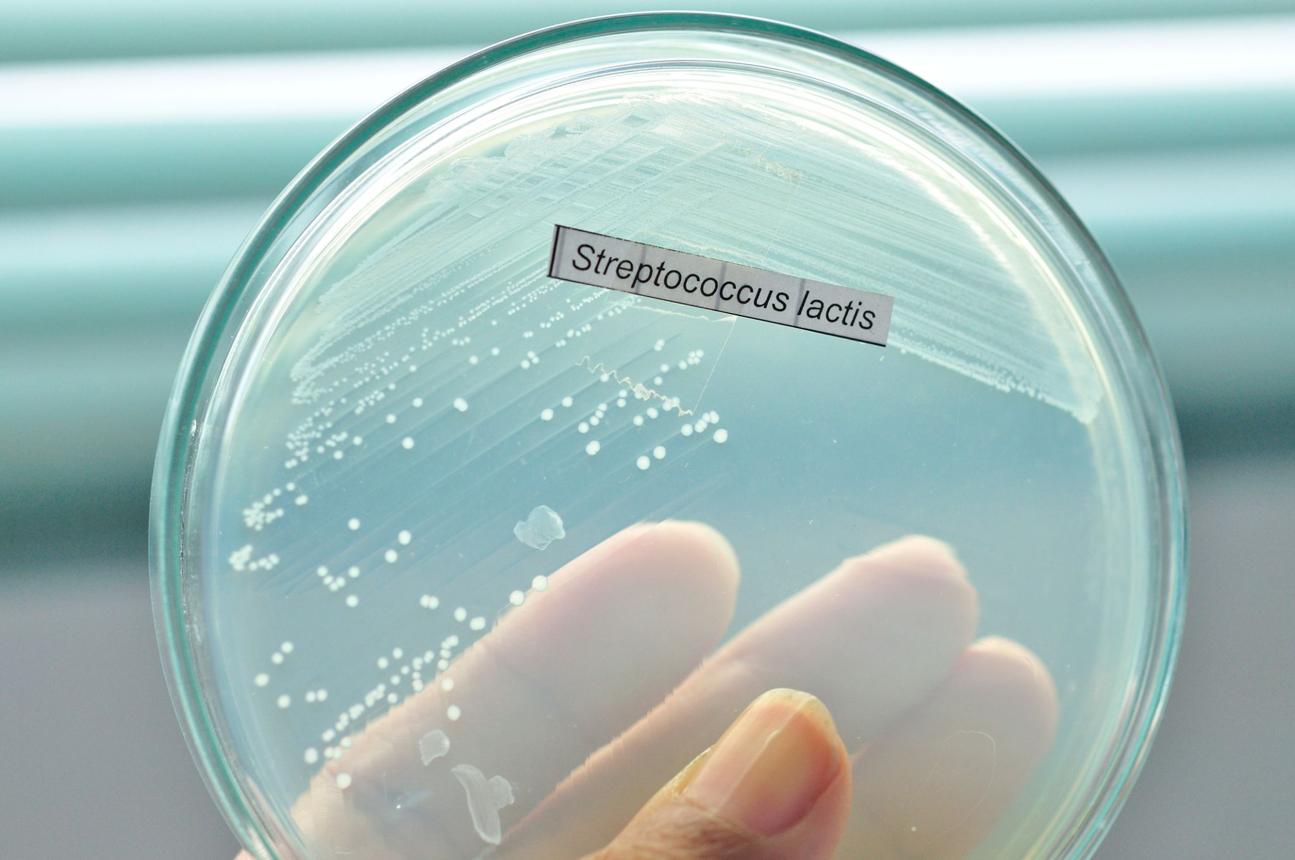
South African traditional fermented foods are attracting scientific attention for their potential contribution to biotechnology, particularly in research involving beneficial microorganisms and antimicrobial activity. A report published on 25 November 2026 highlights research into Lactococcus lactis, a bacterial species associated with food fermentation, and its ability to inhibit the growth of selected disease-causing bacteria under laboratory conditions.
The research examined three bacterial strains obtained from traditional fermented foods in South Africa and Russia. Two of the strains originated from South African products: amasi, a fermented milk drink, and mahewu, a fermented maize-based beverage. The investigation explored their genetic characteristics, antimicrobial properties and susceptibility to clinically relevant antibiotics.
The findings are particularly interesting because selected strains demonstrated the ability to suppress Escherichia coli and Staphylococcus aureus, two bacteria associated with human disease and food contamination.
However, the results require careful interpretation. The study was originally published in 2024, while the biotechnology news report discussing it appeared on 25 November 2026. Consequently, the development represents renewed attention to existing research rather than a newly completed South African clinical discovery.
Understanding the biotechnology behind fermented foods
Fermentation is a biological process in which microorganisms transform substances in food, often producing acids, gases, flavour compounds and other metabolites.
In traditional food production, naturally occurring bacteria play an important role in changing the chemical composition of ingredients. These microorganisms can influence food preservation, texture, taste and microbial stability.
In South Africa, amasi and mahewu are important examples of fermented food products. Amasi is traditionally produced through the fermentation of milk, while mahewu is made using fermented maize-based ingredients.
The research investigated Lactococcus lactis, a bacterium commonly associated with dairy fermentation.
This microorganism is particularly important in food biotechnology because certain strains produce antimicrobial substances called bacteriocins. These substances can interfere with the growth of other bacteria.
Researchers are interested in bacteriocins because they may provide additional methods of controlling unwanted microorganisms in food production.
Importantly, not every strain of the same bacterial species has identical properties. Genetic differences can influence antimicrobial effectiveness, safety characteristics and suitability for industrial applications.
The investigation demonstrated precisely this variation among the three strains examined.
Three bacterial strains examined by researchers
The investigation compared three strains identified as Lactococcus lactis dlA, AM1 and MA1.
The dlA strain originated from traditional Russian sour cream. The AM1 strain was isolated from South African amasi, while MA1 originated from South African mahewu.
Researchers used laboratory cultivation, whole-genome sequencing and bioinformatics to investigate their characteristics.
The genomic analysis helped scientists understand how the strains were related, which genes they carried and whether their genetic profiles contained characteristics associated with antibiotic resistance.
The study identified differences in their genetic structures and antimicrobial properties.
One important finding was that the two South African strains were genetically more closely related to each other than either was to the Russian strain.
This provides useful information about the diversity of bacteria associated with different traditional fermented foods.
Nevertheless, the fact that two strains originated from South African products does not mean that all amasi or mahewu products contain bacteria with identical properties. Their microbial composition can vary depending on ingredients, preparation methods, fermentation conditions and storage.
Laboratory findings reveal differences in antibacterial activity
One of the most significant findings concerned the ability of selected bacterial strains to inhibit other microorganisms.
Researchers conducted co-cultivation experiments involving the three Lactococcus lactis strains and two laboratory reference bacteria: Escherichia coli and Staphylococcus aureus.
The experiments showed that AM1 and dlA demonstrated notable antibacterial activity.
After 48 hours of co-cultivation, AM1 suppressed the growth of E. coli by approximately 75%, while dlA achieved approximately 65% suppression.
Against S. aureus, dlA demonstrated approximately 50% inhibition, compared with approximately 31% for AM1.
The MA1 strain showed considerably weaker activity, achieving approximately 13% inhibition against E. coli and 26% against S. aureus.
These differences demonstrate why biotechnology research must evaluate individual microbial strains rather than assume that all bacteria belonging to one species have the same biological capabilities.
For food manufacturers, the findings could eventually help identify bacterial cultures suitable for protective fermentation processes.
For researchers, they provide an opportunity to investigate the biological mechanisms responsible for antimicrobial activity.
However, laboratory inhibition does not establish that these bacteria can treat infections in humans. Further research would be required to establish their effectiveness and safety in practical applications.
The role of bacteriocins in antimicrobial biotechnology
Bacteriocins are antimicrobial substances produced by certain bacteria. They can inhibit other microorganisms through different biological mechanisms.
In the investigation, researchers identified genetic clusters associated with bacteriocin production.
All three strains contained genes associated with lactococcin production. However, the two strains with stronger antibacterial activity, AM1 and dlA, also contained an additional genetic cluster associated with sactipeptide biosynthesis.
This difference offers a possible explanation for their stronger inhibitory effects.
The MA1 strain lacked this additional cluster, which may help explain its comparatively limited antimicrobial performance.
The findings are relevant to food biotechnology because bacteriocins could potentially be used in developing protective bacterial cultures and improving the microbial stability of certain foods.
They may also provide useful starting points for investigating new antimicrobial compounds.
Nevertheless, identifying a gene cluster does not automatically establish the precise substance produced, its effectiveness under commercial conditions or its suitability for human medicine.
Further biochemical analysis, purification, stability testing and controlled experiments would be necessary.
Antibiotic resistance and the importance of microbial safety
Another important part of the investigation involved examining antibiotic susceptibility.
Antimicrobial resistance represents a major public health challenge because resistant microorganisms can reduce the effectiveness of medicines used to treat infections.
Food-associated bacteria must therefore be evaluated carefully before they are considered for industrial or probiotic applications.
Researchers investigated whether the three strains displayed resistance to nine clinically relevant antibiotic groups.
Although genomic analysis identified several genetic sequences associated with resistance mechanisms, laboratory susceptibility testing showed that all three strains remained phenotypically susceptible to the antibiotics examined.
The tested antibiotics included ampicillin, streptomycin, kanamycin, gentamicin, erythromycin, clindamycin, vancomycin, tetracycline and chloramphenicol.
The researchers also reported that they did not identify the specified transmissible antibiotic-resistance determinants in the genomes.
This distinction between genetic potential and observable resistance is important.
A genetic sequence associated with resistance does not necessarily mean that a bacterium will demonstrate clinically relevant resistance under laboratory conditions.
The activity of genes can depend on several factors, including gene expression, genetic structure and environmental conditions.
For biotechnology developers, combining genomic screening with laboratory susceptibility testing provides a more comprehensive approach to assessing microbial safety.
However, these findings should not be interpreted as proof that the strains are universally safe for human consumption or medical use. Additional safety assessments would be needed before commercial or clinical deployment.
Potential applications in South African food biotechnology
The research provides several opportunities for further investigation within South Africa’s food biotechnology sector.
One possible application is the development of protective starter cultures.
Starter cultures are selected microorganisms deliberately introduced into food production to help control fermentation and produce consistent characteristics.
If further testing confirms the effectiveness and safety of AM1, it could potentially be investigated for use in selected fermented dairy products.
Another possibility is the development of natural biopreservatives.
Food manufacturers continuously seek methods of maintaining product quality while controlling unwanted microbial growth.
Selected bacteriocin-producing microorganisms could offer additional tools for food preservation, particularly where their activity can be demonstrated under realistic processing and storage conditions.
The research may also encourage further exploration of traditional South African foods as sources of useful microorganisms.
Local fermented products represent an important area for scientific investigation because their microbial communities can contain organisms with potentially valuable technological properties.
Universities, food manufacturers and biotechnology companies could collaborate to identify promising strains, assess their characteristics and investigate practical applications.
However, any commercial development would require appropriate food-safety assessments, quality-control procedures and regulatory compliance.
Opportunities for scientific research and industrial development
South Africa has opportunities to strengthen its biotechnology industry by connecting university research with commercial food production and industrial innovation.
Microbial biotechnology can contribute to several economic sectors, including food processing, agriculture, pharmaceutical research and environmental management.
The investigation illustrates how microorganisms obtained from traditional foods can become subjects of advanced genomic research.
Whole-genome sequencing provides information that can help scientists identify genes associated with useful biological functions.
Bioinformatics allows researchers to compare microbial genomes and investigate genetic differences.
Laboratory experiments then help establish whether those genetic characteristics correspond to measurable biological activity.
Combining these techniques can help researchers identify promising microbial strains more efficiently.
For South African universities and research institutions, this creates opportunities to expand research into microbial diversity, fermentation technology and industrial biotechnology.
For entrepreneurs, it may eventually create opportunities in specialised food ingredients, fermentation products and microbial preservation technologies.
Nevertheless, moving from laboratory discovery to commercial manufacturing requires funding, infrastructure, specialised personnel and long-term testing.
The importance of further research
Although the findings are promising, several important questions remain.
First, researchers would need to determine whether the antimicrobial effects remain consistent under different food-processing conditions.
Laboratory experiments conducted under controlled conditions cannot automatically predict performance in commercial food products.
Second, additional work would be required to identify and characterise the substances responsible for the observed inhibition.
Purification and biochemical analysis could help establish their properties, stability and potential applications.
Third, researchers would need to assess whether the strains remain genetically and functionally stable during repeated cultivation and industrial use.
Food safety must also remain central to future development.
Any proposed probiotic or food-preservation application would require evidence supporting its safety, quality and effectiveness.
If researchers eventually investigate pharmaceutical applications, considerably more extensive preclinical and clinical studies would be necessary.
The current findings do not establish that the bacterial strains can cure bacterial infections or replace antibiotics.
Instead, they provide a scientific foundation for further research into their possible technological value.
South Africa’s traditional food knowledge and biotechnology future
The investigation also highlights the importance of connecting traditional food knowledge with modern scientific methods.
Traditional fermented products have long formed part of food cultures across South Africa.
Their production involves microbial processes that can now be investigated through advanced sequencing, microbiology and biochemical analysis.
By studying these products, researchers can generate information about microbial diversity and identify organisms with potentially useful characteristics.
Such research could support the development of locally relevant food technologies.
It could also contribute to scientific education by demonstrating how everyday food products can provide opportunities for advanced biotechnology investigations.
For South Africa, developing this research capacity could strengthen collaboration between universities, food producers, laboratories and private biotechnology businesses.
Conclusion: A promising research direction, not yet a medical breakthrough
The investigation of Lactococcus lactis strains from South African amasi and mahewu provides valuable insight into the potential of traditional fermented foods as sources of microorganisms with useful antimicrobial properties.
The stronger inhibitory performance of AM1 and the genetic differences between the three strains demonstrate the importance of detailed microbial characterisation.
The reported antibiotic susceptibility findings also provide useful information for future safety investigations.
Although the research does not establish a new treatment for bacterial infections, it highlights opportunities for food biotechnology, natural preservation and further antimicrobial research.
South Africa’s traditional fermented foods could therefore remain an important resource for scientific investigation, provided future development is supported by rigorous safety testing, reproducible evidence and appropriate regulatory oversight.
The wider significance is that biotechnology innovation does not always begin with sophisticated industrial materials. Sometimes, valuable scientific discoveries begin with microorganisms found in familiar traditional foods.



