




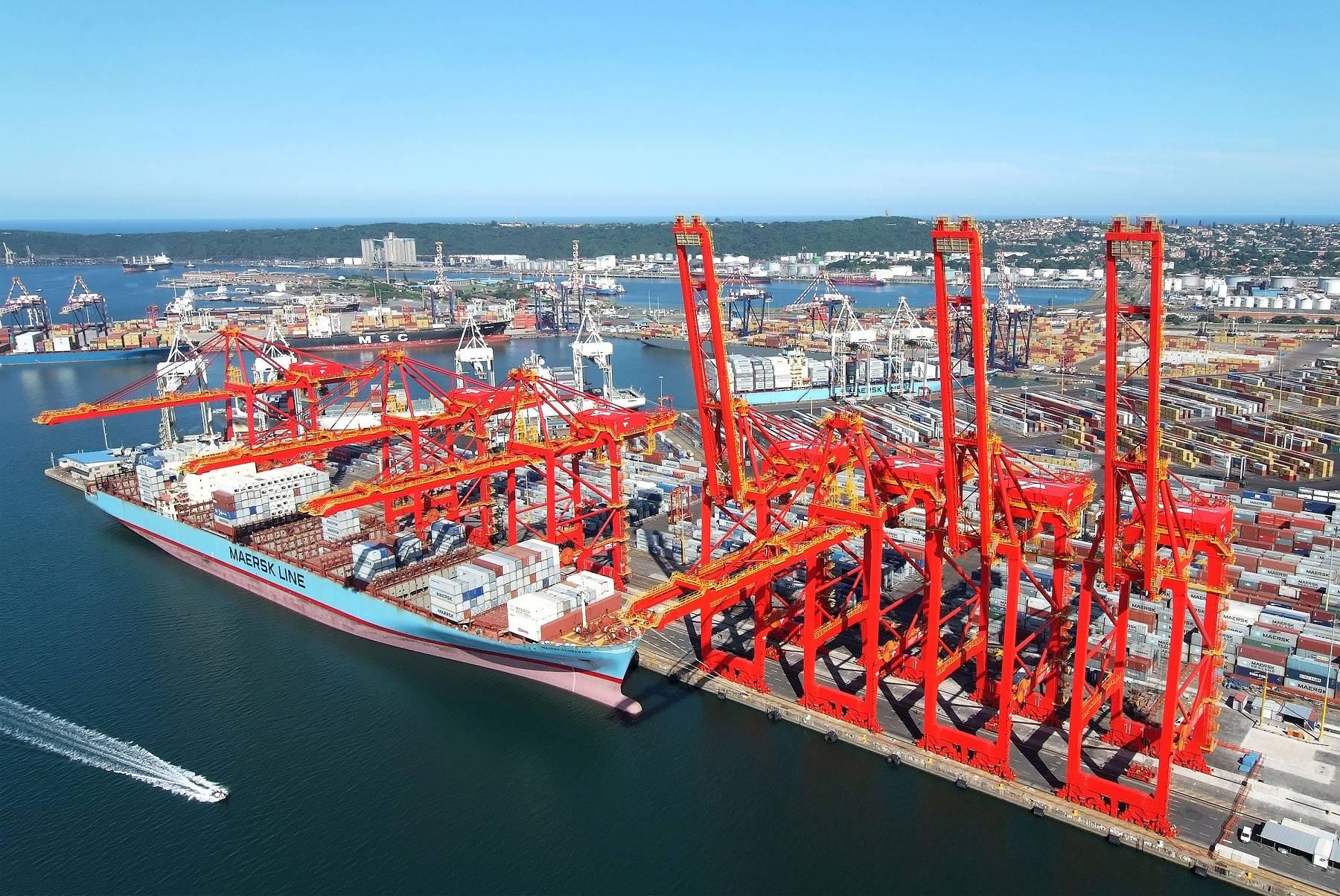
“South African exports to China increased by nearly 25% year on year between May and August 2026 after China introduced a zero-tariff scheme for qualifying African exports, while imports from China rose by 23%. The development offers South African producers an opportunity to expand market access, but the government faces the challenge of increasing higher-value exports, strengthening local manufacturing and narrowing a longstanding trade imbalance.”
Trade growth puts China at the centre of South Africa’s export strategy
South Africa’s economic relationship with China is gaining renewed attention following a substantial increase in bilateral trade during 2026. A report published by Reuters on 22 October said South African exports to China rose by nearly 25% year on year between May and August, while imports from China increased by 23%. The figures highlight the growing importance of the Chinese market as South Africa seeks additional destinations for its products amid uncertainty surrounding some of its established international trade relationships.
The increase follows China’s introduction of a temporary zero-tariff preference scheme covering qualifying exports from 20 African countries, including South Africa. The arrangement took effect on 1 May 2026 and is scheduled to run until 30 April 2028. By reducing customs duties on eligible goods, the initiative offers South African businesses an opportunity to compete more effectively in one of the world’s largest consumer markets.
However, higher trade volumes alone do not guarantee stronger domestic economic growth. South Africa must convert improved market access into sustained export orders, new investment, industrial expansion and employment. The long-term value of the arrangement will therefore depend on which products are exported, how much value is added locally and whether domestic businesses can meet the requirements of Chinese buyers.
China’s tariff initiative opens a significant market
China’s zero-tariff scheme represents an important change in the trading environment for eligible South African exporters. Tariffs can increase the final price of imported products, potentially making them less competitive against goods produced locally or supplied by competing countries. Removing qualifying duties can reduce that disadvantage and create opportunities for exporters to negotiate more attractive prices with distributors and customers.
The South African government has welcomed the initiative as a way to strengthen export competitiveness and diversify the country’s overseas markets. According to SAnews, the Department of Trade, Industry and Competition has been working with the South African Revenue Service to establish the procedures needed to implement the arrangement, including the issuing of certificates of origin.
Nevertheless, zero tariffs do not mean that every South African product automatically enters China duty-free. Eligibility depends on the applicable tariff schedule and rules of origin. Certain goods may also face specific restrictions, including tariff-rate quotas.
Exporters must consequently identify the correct product classification, confirm eligibility and obtain the documentation required by Chinese customs. Businesses that overlook these requirements could lose the intended tariff advantage or encounter delays at the border.
Exporters must meet rules of origin requirements
Rules of origin establish where goods have been produced or sufficiently processed for the purposes of a trade arrangement. They help authorities distinguish qualifying exports from products that have merely passed through a country without meeting the applicable production criteria.
For South African businesses, understanding these rules is essential before making commercial commitments based on preferential access. Exporters need to ensure that their goods satisfy the relevant requirements and that their certificates of origin accurately reflect the product’s status.
The government has also outlined a process for certain consignments already in transit when the required certificate was not issued before or at shipment. In specified circumstances, a deposit may be required, with a refund possible after the documentation is submitted. Retrospective certificates must be marked accordingly and are subject to the stated validity requirements.
These procedures demonstrate why businesses should treat trade compliance as part of their export strategy rather than an administrative task to complete at the last minute.
Smaller producers may need assistance with customs documentation, product classification, packaging requirements and the preparation of export contracts. Government support and reliable freight partners can help firms navigate these processes, although businesses remain responsible for meeting the applicable rules.
The trade imbalance remains a major concern
Despite the growth in exports, the relationship with China continues to present a structural challenge for South Africa. Reuters reported that South Africa exported approximately R222 billion worth of goods to China in 2025, while imports from China were nearly twice that amount, according to Trade Minister Parks Tau.
An imbalance in bilateral trade is not automatically harmful. Imports can provide businesses and consumers with machinery, electronics, components and other goods that support productivity and investment. Affordable imported equipment can also help domestic firms modernise their operations and become more competitive.
The concern arises when a country consistently exports relatively low-value raw materials while importing more expensive manufactured products. In that situation, a substantial share of the processing, technology development and associated employment may occur outside the exporting country.
South Africa’s challenge is therefore not simply to increase the amount of merchandise shipped to China. It must also improve the composition of those exports by expanding opportunities for processed agricultural goods, manufactured products and other items that retain more economic value domestically.
Such a transition requires investment in production capacity, reliable electricity, efficient transport infrastructure, skills development and access to finance. Without those foundations, tariff reductions may benefit established commodity exporters more quickly than smaller manufacturers or emerging businesses.
Agriculture and manufacturing offer room for expansion
Agriculture could be one area where South African firms seek to benefit from improved access to the Chinese market. The country has established production and export capabilities across several agricultural categories, while China represents a substantial potential customer base.
However, market access is only one part of the process. Exporters must also comply with relevant food safety rules, phytosanitary requirements, packaging standards, traceability systems and any product-specific conditions imposed by importing authorities.
Meeting those standards can require investment, particularly from smaller producers. Cooperatives, industry bodies and export-support organisations could help businesses share information, improve compliance and identify potential buyers.
Manufacturing presents another opportunity. South African companies that produce processed materials, industrial inputs or finished goods could seek to establish relationships with Chinese distributors and industrial customers. Preferential tariff treatment may help eligible products compete, but price is only one consideration. Reliability, quality, delivery times and after-sales support can determine whether an initial transaction becomes a long-term commercial relationship.
The government’s stated ambition to encourage higher-value exports is particularly important in this context. More domestic processing can generate additional activity in packaging, logistics, maintenance, engineering and other supporting industries.
Nevertheless, manufacturers will need to demonstrate that they can supply products consistently at internationally competitive prices. Preferential access cannot compensate indefinitely for high production costs or unreliable delivery.
Global trade uncertainty encourages market diversification
South Africa’s efforts to expand trade with China are also taking place against a backdrop of uncertainty in its relations with other major trading partners.
Reuters has reported that South Africa is seeking to diversify its export destinations while questions remain about its future treatment under the United States’ African Growth and Opportunity Act, commonly known as AGOA. The United States has extended the broader programme through 2028, but South Africa has faced uncertainty over whether it will continue to benefit.
For South African exporters, this uncertainty makes market diversification commercially important. A business that relies heavily on a single destination may face serious difficulties if tariffs increase, trade preferences change or political disagreements affect commercial relations.
Expanding into China and other markets can reduce that exposure. However, diversification requires more than announcing new diplomatic partnerships. Companies must understand consumer demand, establish distribution networks, secure payments, comply with local regulations and build the relationships needed to sustain sales.
South Africa must also recognise that different markets have different commercial requirements. Products developed for one destination may need changes in packaging, certification, labelling or pricing before they can compete elsewhere.
The most effective strategy would combine diplomatic engagement with practical support for businesses seeking to enter new markets.
Logistics and infrastructure will influence the outcome
The competitiveness of South African exports depends not only on tariffs but also on the cost and reliability of moving goods from factories and farms to international customers.
Ports, roads, railways, warehousing and customs services all influence delivery times and total export costs. Delays or unreliable freight services can erode the benefits of lower tariffs, especially for perishable agricultural products or businesses operating under tight delivery contracts.
Exporters must also account for shipping costs, insurance, exchange-rate movements and financing expenses. Even where customs duties fall to zero, these other costs can influence the final price paid by the buyer.
For that reason, the growth in China-bound trade should be considered alongside the broader competitiveness of South Africa’s logistics system. Improving freight efficiency and reducing avoidable delays could help more firms take advantage of preferential market access.
Small and medium-sized enterprises may face additional difficulties because they often lack the scale to negotiate favourable shipping rates or maintain large inventories. Shared logistics services, export consortia and better access to market information could help them participate more effectively.
Turning trade growth into jobs and industrial development
The central policy question is whether rising trade with China will translate into a stronger domestic productive economy.
Export growth can support employment directly in farming, mining, manufacturing and freight services. It can also stimulate demand for suppliers, maintenance companies, packaging businesses and professional services. The wider benefits, however, depend on the degree to which local firms participate in the supply chain.
If increased exports primarily reflect higher shipments of unprocessed commodities, the immediate gains may be concentrated in a relatively narrow range of industries. Greater domestic processing could spread those gains more widely, although it would require investment and must remain commercially viable.
The same distinction applies to imports. Imported machinery and industrial equipment can improve productivity, while a rapid increase in finished consumer goods may intensify competitive pressure on some local manufacturers. The effects will vary by sector, and import growth should not be interpreted as inherently negative.
Policymakers therefore need to assess the trade relationship using several measures: export growth, product diversity, local value addition, investment, productivity, employment and the participation of smaller businesses.
Transparent and timely data would help the government and industry identify which sectors are benefiting from the arrangement and where additional support may be justified.
What businesses should do next
South African exporters interested in the Chinese market should begin by confirming which of their products qualify for preferential treatment. They should review the applicable tariff schedules and rules of origin, ensure that certificates of origin are correctly prepared and establish a clear understanding of Chinese import requirements.
Businesses should then assess their capacity to supply the market consistently. This includes evaluating production volumes, quality control, packaging, delivery arrangements, insurance and payment terms.
Market research is equally important. Exporters need to identify potential distributors and buyers, understand competitive prices and establish whether demand is sufficient to justify the cost of entering the market.
Companies should avoid assuming that tariff concessions guarantee sales. Preferential treatment can improve competitiveness, but it does not replace product quality, commercial relationships or a credible supply strategy.
The Department of Trade, Industry and Competition has identified an Export Help Desk for guidance on compliance and market access. Businesses can contact the department at exports@thedtic.gov.za for information relating to the scheme.
Outlook: an opportunity that requires sustained execution
South Africa’s rising trade with China provides an important opportunity to diversify exports and strengthen commercial ties with a major global economy. The reported growth in exports following the introduction of the zero-tariff scheme suggests that the arrangement deserves close attention from policymakers and businesses.
However, the figures available from the recent report cover a limited period and do not establish that the tariff scheme alone caused the entire increase. Changes in demand, commodity prices, exchange rates and other market conditions may also influence trade flows.
The arrangement is temporary under its current terms, running through April 2028. South African exporters therefore need to use the available period strategically, while monitoring any changes to the applicable requirements.
Ultimately, success should be measured not only by how much South Africa sells to China, but also by whether more businesses gain access to international markets, whether domestic production becomes more competitive and whether additional value and employment are created at home.
The opportunity is significant, but realising it will depend on consistent implementation, effective logistics, sound commercial decisions and the development of more competitive South African products.



