




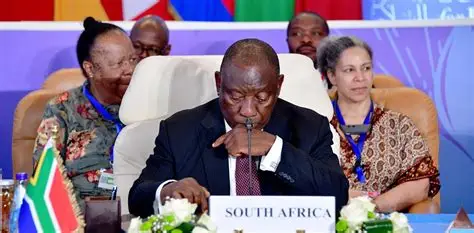
“At the 46th SADC Summit in Durban, South Africa assumed leadership of the regional bloc under President Cyril Ramaphosa, prioritizing coordinated strategies on migration and economic integration. The summit also renewed calls for the removal of sanctions on Zimbabwe, positioning Pretoria as a central driver of Southern Africa’s diplomatic agenda.”
South Africa’s international relations under politics have entered a new phase as President Cyril Ramaphosa officially took over the chairmanship of the Southern African Development Community (SADC) during the 46th Ordinary Summit in Durban. This leadership transition places Pretoria at the forefront of regional diplomacy, with immediate implications for migration governance, economic sanctions, and broader continental cooperation.
Background of the Summit
The summit, held at the Inkosi Albert Luthuli International Convention Centre, brought together leaders from the 16-member bloc. Discussions centered on regional security, economic integration, and critical minerals, but two issues dominated: South Africa’s immigration challenges and the ongoing sanctions imposed on Zimbabwe.
South Africa’s Immigration Challenges
South Africa has long grappled with undocumented immigration, xenophobic tensions, and strained relations with neighboring states over deportations. Ramaphosa’s leadership signals a push for coordinated regional dialogue to address the root causes of migration. SADC emphasized the need for multidimensional strategies that go beyond border enforcement, focusing instead on economic development, governance, and social stability across the region.
Zimbabwe Sanctions Debate
The summit reiterated SADC’s demand for the removal of sanctions on Zimbabwe, imposed by Western governments over concerns about human rights and governance. The bloc argued that sanctions have crippled Zimbabwe’s economy, limiting investment and regional trade. Ramaphosa’s chairmanship is expected to amplify this call, positioning South Africa as a mediator between Zimbabwe and the international community.
Regional Security Commitments
Beyond migration and sanctions, the summit reaffirmed commitments to peace in the Democratic Republic of Congo, dialogue in Madagascar, and counter-terrorism efforts in Mozambique’s Cabo Delgado province. These security priorities highlight SADC’s broader role in stabilizing Southern Africa, with South Africa expected to provide leadership in mobilizing resources and diplomatic support.
Economic Integration and Industrialization
Ramaphosa emphasized industrialization and infrastructure development as key pillars of his tenure. The summit’s theme—“Resilient, sustainable and inclusive industrialisation”—underscored the need to transform Southern Africa’s resource-rich economies into hubs of manufacturing and agro-processing. South Africa’s leadership is expected to accelerate projects such as regional transport corridors, electricity interconnections, and value chain development.
Implications for South Africa’s Foreign Policy
South Africa’s assumption of the SADC chairmanship strengthens its diplomatic clout. Domestically, it allows Ramaphosa to project leadership amid political challenges at home. Internationally, it positions Pretoria as a bridge-builder between African states and global powers, particularly in negotiations over trade, climate change, and security.
Zimbabwe-South Africa Bilateral Relations
The summit coincides with preparations for the South Africa-Zimbabwe Bi-National Commission (BNC), scheduled for later this week in Pretoria. This mechanism, established in 2015, has already produced over 30 agreements in trade, infrastructure, and development. The upcoming session will further deepen bilateral ties, reinforcing South Africa’s role as Zimbabwe’s most important regional partner.
Risks and Challenges
- Migration tensions: South Africa must balance domestic pressures against undocumented migrants with regional calls for solidarity.
- Sanctions diplomacy: Advocacy for Zimbabwe may strain relations with Western partners.
- Security commitments: South Africa’s leadership role requires significant resources to support peacekeeping and counter-terrorism.
- Economic transformation: Industrialization goals face hurdles from global market volatility and infrastructure deficits.
Conclusion
South Africa’s new role as SADC chair marks a turning point in regional international relations under politics. By prioritizing migration governance, sanctions relief for Zimbabwe, and economic integration, Pretoria is set to shape Southern Africa’s diplomatic and developmental trajectory. The coming year will test Ramaphosa’s ability to balance domestic challenges with regional leadership, but the Durban summit has already signaled a bold agenda for unity and transformation.



