




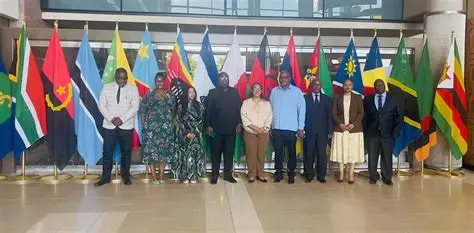
“South Africa has formally taken over the chairmanship of the Southern African Development Community (SADC), positioning itself to lead the bloc through critical issues of trade, security, and climate resilience. President Cyril Ramaphosa’s leadership will be tested as Pretoria balances national interests with regional solidarity in a rapidly shifting global economic and political landscape.”
On August 12, 2026, South Africa officially assumed the chairmanship of the Southern African Development Community (SADC), a regional bloc comprising 16 member states. This transition represents a significant milestone in Pretoria’s foreign policy, reinforcing its role as a continental leader while navigating complex global challenges. The announcement, made during preparatory meetings in Durban, sets the stage for the upcoming 46th SADC Summit under the theme: “Resilient, Sustainable and Inclusive Industrialization through Infrastructure Development, Agricultural and Critical Minerals Transformation in Pursuit of a Just World.”
Historical Context
Founded in 1980, SADC has been central to fostering regional cooperation, economic integration, and collective self-reliance in Southern Africa. South Africa’s leadership within the bloc has historically been shaped by its post-apartheid foreign policy, emphasizing democracy, human rights, and solidarity. Previous chairmanships saw Pretoria championing peace-building initiatives in conflict-prone regions such as Zimbabwe and the Democratic Republic of Congo. Today, the chairship builds on this legacy, aligning with South Africa’s broader international relations agenda, including its active participation in BRICS and the African Union.
Strategic Priorities Under South Africa’s Chairmanship
South Africa’s leadership is expected to focus on several strategic priorities:
- Regional Trade Integration: Strengthening customs union reforms and harmonizing border management protocols to boost intra-African trade.
- Security Cooperation: Enhancing collaboration against transnational crime, terrorism, and political instability.
- Infrastructure Development: Accelerating investment in transport corridors, energy grids, and digital infrastructure.
- Agricultural Transformation: Promoting food security and sustainable farming practices.
- Climate Resilience: Addressing climate shocks through renewable energy and sustainable agriculture.
Global and Regional Challenges
Despite optimism, South Africa faces formidable challenges:
- Balancing National and Regional Interests: Ensuring Pretoria’s priorities align with those of other SADC members.
- Economic Pressures: Global demand for critical minerals is reshaping trade dynamics, requiring careful negotiation to avoid exploitation.
- Security Threats: Persistent instability in Mozambique’s Cabo Delgado region and transnational crime networks pose risks to regional peace.
- Climate Change: Southern Africa remains highly vulnerable to droughts, floods, and cyclones, demanding urgent collective action.
Implications for South Africa’s Foreign Policy
South Africa’s chairmanship underscores its ambition to consolidate regional leadership while projecting influence globally. As the continent’s most industrialized economy, Pretoria is uniquely positioned to drive industrialization, digital transformation, and renewable energy adoption. Moreover, the chairship provides an opportunity to strengthen ties with India, China, and the EU, aligning SADC’s agenda with broader international partnerships.
Looking Ahead: The 46th SADC Summit
The 46th SADC Summit, scheduled for August 16–17, 2026, will serve as the first major test of South Africa’s leadership. Delegates will deliberate on trade integration, infrastructure financing, and climate resilience strategies, while also addressing pressing security concerns. The summit’s thematic focus on critical minerals reflects Pretoria’s ambition to align regional development with global economic shifts, particularly the demand for resources essential to renewable energy and technology sectors.
Conclusion
South Africa’s assumption of the SADC chairmanship marks a defining moment in its international relations trajectory. President Cyril Ramaphosa’s leadership will be pivotal in shaping the bloc’s response to trade, security, and climate challenges, while reinforcing Pretoria’s role as a continental and global actor. The coming months will reveal whether South Africa can successfully balance national interests with regional solidarity, steering SADC toward a more resilient and inclusive future.



