




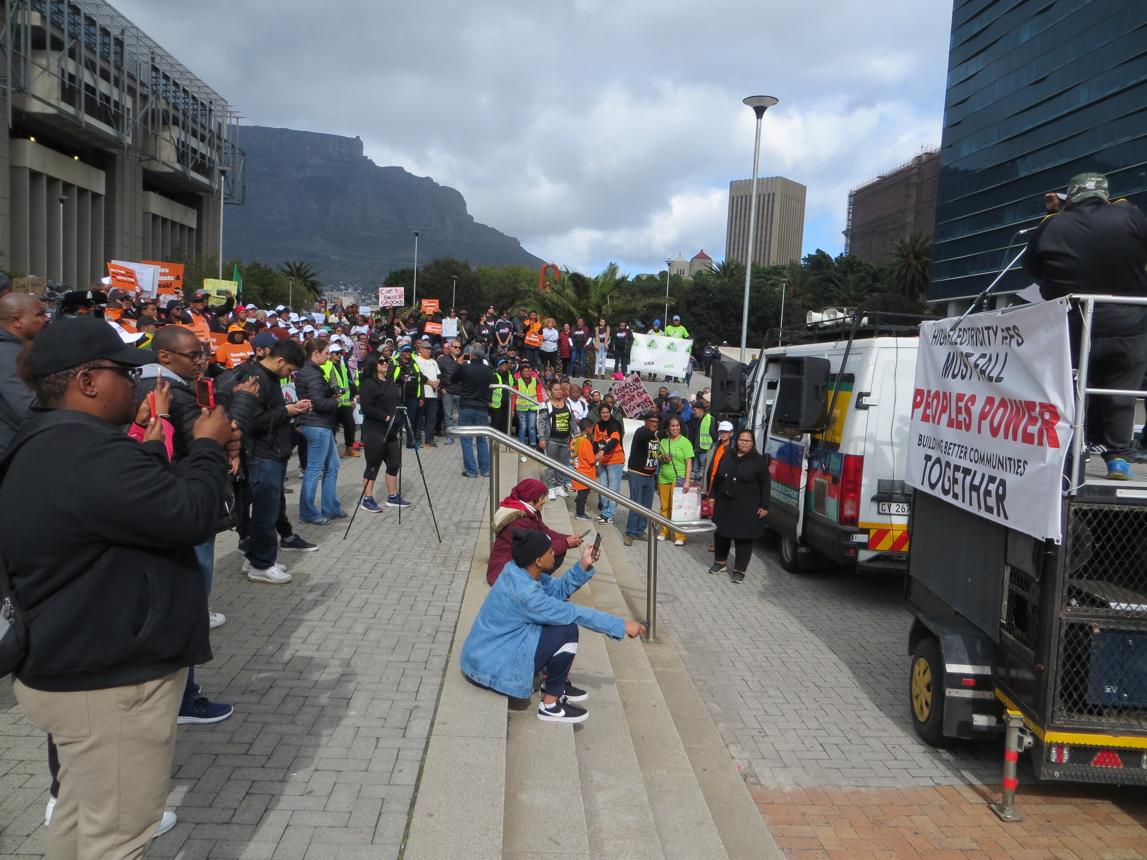
“South African community organisations are launching People’s Power Vol. 2, a nationwide week of action from 19 to 26 October, to campaign for affordable electricity, climate justice, food security and community-led solutions to water and energy challenges. The mobilisation highlights growing pressure on public institutions to address the everyday effects of inequality while giving residents a greater role in shaping the policies that affect their lives.”
Community activism returns to the national agenda
JOHANNESBURG, 19 October 2026 — Community activism is taking centre stage in South Africa as organisations associated with the Climate Justice Coalition begin a new week of coordinated activities focused on electricity affordability, environmental justice and the basic needs of vulnerable households.
The initiative, known as People’s Power Vol. 2, runs from 19 to 26 October 2026. According to the coalition’s announcement, participating organisations across the country intend to connect national debates about climate change and economic inequality with practical concerns affecting communities, including access to electricity, water, food and affordable energy.
The campaign comes as questions about the cost of living, the distribution of resources and the pace of social transformation remain important issues in South African public life. For participating activists, these challenges cannot be addressed through government policy alone without meaningful involvement from the people who experience their consequences.
The mobilisation therefore represents more than a series of demonstrations. It is also an effort to strengthen community organisation, political education and collective action around the services and resources that underpin everyday life.
What People’s Power Week aims to achieve
The Climate Justice Coalition says the latest mobilisation follows earlier People’s Power actions held across South Africa during September and October 2025. Its new programme is intended to build on that organising experience by bringing member organisations together around local priorities and shared demands.
Rather than treating climate change as an issue separate from poverty or service delivery, the campaign connects environmental concerns with the practical realities of household budgets, access to electricity and the availability of essential resources.
Affordable energy is a particularly important part of this agenda. Electricity costs affect household finances, small businesses, food preparation and the ability of communities to participate in economic life. When reliable energy becomes difficult to afford, low-income households can face difficult choices between electricity, transport, food and other necessities.
Activists argue that energy policy should therefore be assessed not only by its contribution to national supply but also by whether people can access energy at a price they can reasonably afford.
The coalition’s announcement also points to community-led approaches to water, food and energy. These priorities suggest an emphasis on practical organising alongside public campaigning, allowing residents to discuss local problems, exchange knowledge and develop proposals suited to their circumstances.
Electricity affordability and economic inequality
Electricity affordability is one of the central issues connecting the campaign’s environmental and social demands.
For many households, energy costs are inseparable from wider economic pressures. Families must balance electricity purchases against grocery bills, school expenses, transport and housing costs. Small traders and informal businesses also depend on energy for refrigeration, cooking, lighting and communications.
When electricity becomes unaffordable, the consequences can extend beyond the household. Businesses may struggle to operate, food preservation becomes more difficult, and families can be pushed towards less convenient or potentially less safe alternatives.
These pressures make energy affordability a political issue as well as an economic one. Decisions about tariffs, infrastructure investment, public support and energy generation influence how costs and benefits are distributed across society.
The People’s Power initiative places these questions within a broader call for a fairer energy system. Its organisers are seeking to build collective responses that reflect community needs rather than leaving residents to navigate these challenges individually.
However, meaningful reform involves difficult questions. Electricity systems require investment, maintenance and reliable generation. Any proposal to lower costs must also consider how infrastructure will be funded, how supply will remain dependable and how the financial burden will be distributed.
A credible public debate should therefore consider both immediate affordability and long-term sustainability. Community activism can contribute by identifying local priorities, examining the effects of existing arrangements and pressing decision-makers to explain their choices.
Climate justice beyond environmental protection
Climate justice is another central theme of the mobilisation.
Climate change can affect communities through heat, changing rainfall patterns, flooding, agricultural disruption and pressure on water supplies. These risks are not experienced equally. Households with secure housing, savings and access to services may be better positioned to recover from environmental shocks than families already facing poverty.
For communities dependent on agriculture, informal employment or vulnerable infrastructure, environmental disruption can threaten both income and food security.
The coalition’s approach connects climate action with these unequal social and economic conditions. Its campaign presents community participation as an important part of developing responses to environmental challenges.
This perspective also raises questions about who benefits from economic development and who bears its environmental costs. Infrastructure and energy projects can create employment and improve supply, but their consequences depend on where they are located, how they are regulated and whether affected communities have meaningful opportunities to participate in decisions.
Climate justice campaigners commonly argue that the transition towards more sustainable systems should protect vulnerable households and workers rather than transferring disproportionate costs to them.
For South Africa, this debate is closely linked to employment, industrial development and access to reliable electricity. A successful transition must balance environmental responsibilities with the need to expand economic opportunities and improve living standards.
Food security and the role of communities
Food security provides another important link between environmental policy and daily life.
Food prices, household incomes, agricultural conditions and access to land all influence whether families can obtain sufficient nutritious food. Climate-related disruption can add further pressure by affecting production, transport and the availability of essential resources.
Community-based responses can include supporting local food production, sharing agricultural knowledge, strengthening cooperation among producers and identifying barriers that prevent residents from accessing affordable food.
The coalition’s wider emphasis on food and community-led alternatives places these concerns alongside its calls for energy affordability and climate justice.
Nevertheless, local initiatives cannot replace the responsibilities of public institutions. Food insecurity also depends on broader economic conditions, employment opportunities, social protection and the performance of agricultural and distribution systems.
Community activism can help identify shortcomings and propose improvements, but sustained progress requires effective implementation, adequate resources and cooperation among government, civil society and other stakeholders.
Community mobilisation and political accountability
People’s Power Week also illustrates the role of activism in democratic accountability.
South Africa’s democratic system provides channels through which citizens can influence public decisions, including elections, public consultations, petitions, civic organisations and peaceful demonstrations. These channels serve different purposes, but they share a basic principle: public institutions should remain responsive to the people they serve.
Community mobilisation can draw attention to problems that residents believe have not received sufficient attention. It can also help turn individual frustrations into collective demands that policymakers can examine and answer.
The coalition describes People’s Power as a way for ordinary people to shape decisions affecting their lives and challenge systems that deepen inequality.
For this approach to produce lasting results, however, campaign demands must be translated into clear proposals and sustained engagement. Demonstrations can raise awareness, but progress also depends on follow-up meetings, credible evidence, transparent decision-making and monitoring of commitments.
Public officials, in turn, can strengthen trust by explaining their decisions, publishing relevant information and creating meaningful opportunities for communities to contribute to policy development.
The effectiveness of the week of action will therefore depend not only on participation but also on whether the issues raised lead to practical discussions and measurable improvements.
Activities across the provinces
The coalition says member organisations will hold activities across several provinces during the 19–26 October programme. The planned actions are designed to reflect the different concerns facing communities while contributing to a shared campaign for climate justice.
In the Free State, the announced programme includes community activist training in Botshabelo on 19 October, organised by the Botshabelo Unemployed Movement as part of the Electricity for All campaign.
The emphasis on training highlights an important aspect of community activism: building the knowledge and organisational skills needed to sustain campaigns beyond a single protest.
Political education can help residents understand how decisions about electricity, municipal services and public spending are made. It can also provide opportunities for communities to identify their priorities, communicate their demands and engage with public institutions more effectively.
The programme’s wider provincial approach allows local organisations to connect national concerns with specific circumstances in their communities. However, the activities and their outcomes will need to be assessed individually as the week progresses; the announcement does not establish that every planned action has already taken place.
The government’s responsibility
Although community mobilisation can generate public pressure, national and local government institutions retain important responsibilities for service delivery, energy planning, environmental protection and social development.
The campaign’s demands place these responsibilities under public scrutiny. Policymakers face the challenge of addressing immediate needs while planning for long-term infrastructure, environmental resilience and economic development.
Electricity affordability, for example, cannot be resolved through a single measure. Decisions about tariffs, infrastructure costs, energy generation, household support and the management of public utilities all influence what consumers ultimately pay.
Similarly, improving food security requires action across several areas, including employment, agricultural development, transport, social assistance and the protection of natural resources.
Community organisations can contribute local knowledge and propose alternatives, but governments must assess these proposals against available evidence, legal responsibilities and financial constraints.
A constructive response would involve transparent consultation, clear explanations of policy choices and public reporting on progress. Such engagement would also help distinguish practical proposals from broader political slogans.
For activists, the challenge is to sustain pressure while remaining specific about the changes they seek. For officials, the challenge is to demonstrate that public participation can influence decisions rather than simply provide an opportunity for residents to express frustration.
Challenges facing the movement
Like other broad civil society campaigns, People’s Power faces the challenge of maintaining momentum after the immediate mobilisation ends.
Organisations may agree on the importance of climate justice while differing over priorities, tactics or the balance between immediate relief and structural reform. Communities also experience different problems, meaning that a national campaign must accommodate local circumstances without losing its common purpose.
Another challenge is measuring success. Attendance at meetings and demonstrations can indicate public interest, but it does not automatically translate into changes in policy or living conditions.
More meaningful measures might include whether officials respond to campaign proposals, whether community concerns enter formal policy discussions, whether promised interventions are implemented and whether affected households experience improvements in access to essential services.
The campaign will also need to communicate its demands clearly to people who may not be familiar with climate policy. Connecting technical issues to everyday experiences can make the debate more accessible and help residents understand how energy decisions, environmental conditions and food prices interact.
Independent reporting and public documentation of the week’s activities will be important in determining what the campaign achieves and how government institutions respond.
What happens next?
People’s Power Vol. 2 is scheduled to continue until 26 October 2026. Its immediate significance lies in bringing community organisations together around shared concerns involving electricity, food, water and climate justice.
The next important development will be whether the mobilisation produces sustained engagement with the institutions responsible for these issues.
Communities may use the week to strengthen local networks, develop proposals and identify opportunities for continued organising. Public authorities can use the engagement to better understand residents’ priorities and explain how existing policies address them.
Any assessment of the campaign’s longer-term impact will require further reporting on participation, official responses and concrete outcomes. At this stage, the published announcement establishes the programme and its objectives, rather than demonstrating that particular policy changes have already been secured.
Conclusion: Activism and the demand for a fairer future
The launch of People’s Power Vol. 2 places community activism firmly within South Africa’s ongoing debate about inequality, public services and environmental responsibility.
By linking affordable electricity with food security, water access and climate justice, participating organisations are presenting these challenges as interconnected questions about living standards and public accountability.
The mobilisation also reinforces the importance of involving communities in decisions that directly affect their lives. While governments must balance competing priorities and financial constraints, public participation can help reveal the everyday consequences of policy choices and identify opportunities for improvement.
Ultimately, the campaign’s significance will depend on what follows the mobilisation. Strong community organisation, evidence-based proposals, constructive engagement and transparent government responses will be necessary to turn public demands into lasting change.
As activities continue through 26 October, the central question is whether the concerns raised by residents will translate into sustained policy engagement and practical improvements. For South African communities facing economic and environmental pressures, that outcome matters far more than the visibility of a protest alone.



