




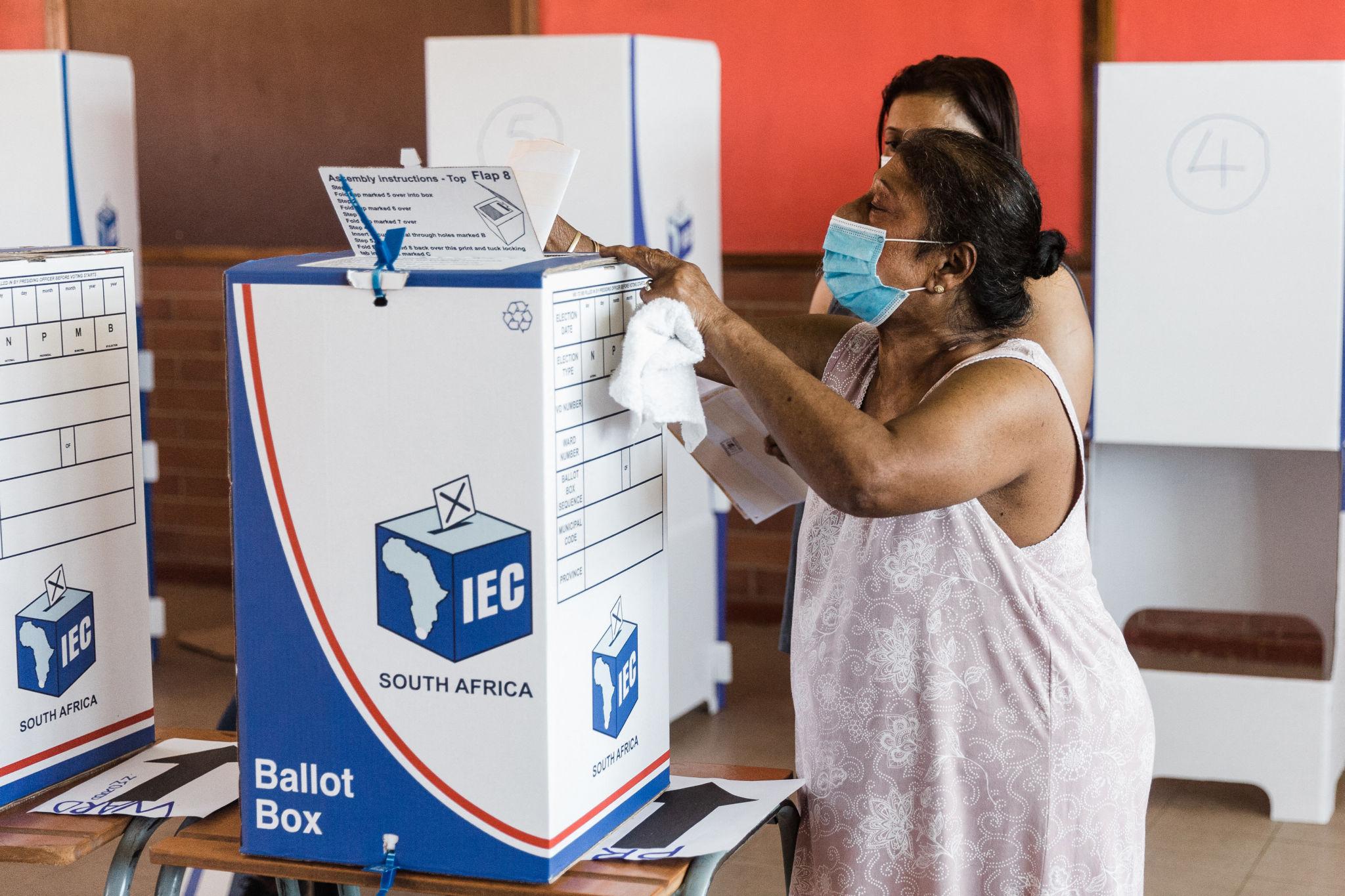
“New polling published on 19 October 2026 indicates that the African National Congress (ANC) has the support of 32% of surveyed voters, compared with 26% for the Democratic Alliance (DA), 12% for the uMkhonto weSizwe Party (MKP) and 8% for the Economic Freedom Fighters (EFF). The findings, based on a survey of 3,100 respondents conducted between 18 September and 12 October, highlight a competitive and increasingly fragmented political environment ahead of South Africa’s November local government elections.”
South African Voter Sentiment Signals a More Competitive Political Landscape Ahead of Local Elections
A changing picture of political support
South Africa’s political landscape is facing another important test as new polling published on 19 October 2026 points to a competitive contest ahead of the country’s November local government elections. The latest figures from the Social Research Foundation, published in conjunction with The Common Sense, place the African National Congress at 32% among surveyed voters, with the Democratic Alliance at 26%, the uMkhonto weSizwe Party at 12% and the Economic Freedom Fighters at 8%.
The results matter because public opinion provides an indication of how citizens currently assess political parties, leadership and the country’s direction. However, a poll is not a final verdict on an election. It records responses at a particular point in time and must be interpreted alongside the survey’s methodology, the issues dominating public debate and the possibility that voters may change their minds before election day.
The ANC remains the largest party in the national figures reported by the survey. Nevertheless, its 32% result represents a joint record low in SRF polling, according to The Common Sense. The finding suggests that the governing party faces a significant challenge in maintaining its traditional electoral dominance as competition from established and newer political organisations intensifies.
The ANC faces pressure to rebuild voter confidence
For the ANC, the central political question is whether it can persuade voters that it remains capable of addressing their concerns and improving their daily lives. Its support has historically rested on its role in the struggle against apartheid, its nationwide organisational reach and its record as the dominant party in democratic South Africa.
However, historical significance does not automatically guarantee continued electoral loyalty. Voters also judge parties on the performance of public institutions, access to essential services, economic opportunities, accountability and the quality of local administration.
Local government elections place particular emphasis on practical results. Residents encounter municipal government through water provision, electricity infrastructure, waste collection, road maintenance, sanitation, billing systems and the responsiveness of local officials. Where these services fall short, dissatisfaction can become a political issue that influences voting decisions.
The latest polling does not, by itself, establish why individual respondents support or reject the ANC. It would therefore be inaccurate to attribute the party’s position to one particular problem without examining the relevant survey questions and other reliable evidence.
Even so, the reported low level of support creates pressure for the party to explain its plans for local government and demonstrate how its candidates intend to respond to residents’ needs. Campaign promises may attract attention, but credibility is likely to depend on whether voters believe that proposed improvements can be delivered.
The DA has an opportunity, but faces its own test
The Democratic Alliance’s reported 26% support puts it six percentage points behind the ANC nationally in this survey. That position strengthens the DA’s argument that it can compete for a larger share of the electorate, although the figures do not guarantee that it will win control of particular municipalities.
The DA’s electoral prospects will depend on more than national party preference. Local candidates, community relationships, municipal performance and the credibility of proposed service-delivery plans can all affect election outcomes. In addition, a party’s ability to turn general support into actual votes depends partly on turnout and the geographical distribution of its supporters.
The party must also convince voters beyond its established constituencies that it can govern effectively and respond to different communities’ priorities. Strong polling can create momentum, but it also raises expectations. If voters believe that a party offers a viable alternative, they may demand clearer commitments on jobs, infrastructure, municipal finances and accountability.
Consequently, the DA’s challenge is twofold: maintain its existing support while persuading additional voters that it can provide practical solutions. The local elections will offer a test of whether the party’s national position translates into stronger results in individual councils.
Smaller parties add to political fragmentation
The reported support for the MKP and EFF illustrates the importance of parties beyond the ANC and DA. The MKP recorded 12%, while the EFF recorded 8% in the national figures reported on 19 October.
These parties operate in a political environment where voter preferences are increasingly consequential for municipal representation and coalition negotiations. Their performance could influence which parties lead councils, which parties become coalition partners and how local administrations are formed.
The presence of several significant political competitors also makes election outcomes more difficult to predict from national polling alone. A party can have substantial support across the country without becoming the largest party in a particular municipality. Conversely, a party with a smaller national share can be influential in areas where its support is concentrated.
This distinction is especially important in local elections, where council seats and coalition arrangements determine who governs. If no party wins a majority in a municipality, parties may need to negotiate agreements on leadership, budgets and policy priorities.
Coalitions can broaden representation, but they can also become unstable when partners disagree over appointments, spending priorities or political strategy. Their success ultimately depends on whether participating parties can agree on workable programmes and maintain accountability to residents.
Public opinion extends beyond party preference
Although voting intention is a central measure of political sentiment, public opinion encompasses more than the question of which party a person would support in an election.
The latest polling report also examines questions concerning the Government of National Unity (GNU), political leadership, immigration, foreign-policy alignment and public attitudes towards community initiatives that take on responsibilities often associated with the state.
These topics reveal the breadth of the choices facing South African voters. Citizens may evaluate the performance of the national government differently from their views of individual coalition parties. They may also support a party while disagreeing with particular policies or favour a policy without endorsing the political organisation proposing it.
The distinction matters when interpreting survey results. A favourable assessment of a coalition does not necessarily translate into increased support for every party in that coalition. Similarly, criticism of a political leader does not automatically mean that a respondent intends to vote for the leader’s main rival.
Public opinion is therefore best understood as a collection of related but distinct attitudes. Reliable analysis should examine the wording of individual questions, differences between demographic groups and changes across comparable surveys rather than reducing every result to a single narrative.
What the survey methodology tells readers
The Common Sense reports that the latest findings came from a Social Research Foundation survey conducted in conjunction with the publication and carried out by Victory Research. Researchers used computer-assisted telephone interviews, known as CATI, with a random-digit-dialling design. Respondents were screened for voter registration, while demographic quotas and weighting were used to align the sample with the registered-voter population. The survey covered 3,100 respondents between 18 September and 12 October 2026.
These details are important because polling quality depends on how respondents are selected, interviewed and weighted. A large sample can provide useful information, but sample size alone does not eliminate all sources of uncertainty. Telephone access, non-response, question wording, weighting decisions and differences between stated intentions and actual voting behaviour can influence results.
Readers should also distinguish between a poll’s findings and a forecast. The publication explicitly cautions that the figures are snapshots rather than predictions of the election outcome.
That caution is particularly relevant in a fluid political environment. Campaign events, candidate announcements, coalition disputes and local controversies may affect voter preferences. Furthermore, turnout can change the composition of the electorate that actually casts ballots.
The figures should consequently be treated as evidence about the survey’s respondents, interpreted within the stated research design, rather than as a definitive count of future votes.
Local government performance may shape the final vote
One of the most important features of local elections is the direct relationship between municipal performance and residents’ everyday experiences. National political debates can dominate headlines, but local concerns often determine whether voters are satisfied with the people managing their communities.
In Johannesburg, for example, a separate report published by Business Day on 18 October described polling that found substantial dissatisfaction with municipal services, including water supply, electricity, roads and sewage infrastructure. That survey reported the DA ahead of the ANC in the city, while several smaller parties competed for support. These findings come from a different poll and should not be confused with the national SRF figures.
The comparison nevertheless illustrates why national voting intention and municipal contests need to be analysed separately. Residents may vote according to local service delivery, candidate credibility and their experiences with council administration, rather than following national party rankings alone.
Political parties seeking to gain support will therefore need specific, realistic plans for improving municipal services. Voters may reasonably expect commitments to include implementation timelines, transparent budgets and clear ways to hold officials accountable.
Implications for democracy and political accountability
The polling published on 19 October contributes to a wider discussion about political representation in South Africa. A competitive electoral environment can encourage parties to respond more directly to citizens, improve their proposals and explain their performance.
However, competition alone does not guarantee effective governance. Parties must also demonstrate that they can manage public resources responsibly, work within the law and maintain functioning administrations after elections. Where coalition government becomes necessary, cooperation and transparent decision-making will be essential.
For citizens, the findings underline the importance of evaluating political claims critically. Voters should consider whether parties’ promises are achievable, whether candidates have demonstrated accountability and whether proposed policies address the needs of their communities.
Journalists and researchers also have a responsibility to explain polling results accurately. Headlines that present a party as certain to win or claim that voters have decisively changed allegiance can overstate what a survey establishes. Publishing fieldwork dates, sample details and relevant limitations allows readers to assess the evidence for themselves.
Conclusion: A competitive election season ahead
The latest SRF and The Common Sense polling provides a significant snapshot of South African political opinion before the November 2026 local government elections. With the ANC at 32%, the DA at 26%, the MKP at 12% and the EFF at 8%, the figures point to a competitive national environment and continuing challenges for the country’s established political order.
Nevertheless, the decisive test will come from voters themselves. National polling cannot establish which parties will win particular municipalities, how many voters will participate or what coalition arrangements may follow.
The most important question is whether political parties can translate public support into effective local leadership, better services and greater public confidence. As election day approaches, the relationship between citizens’ expectations and political performance will remain central to the contest.



