




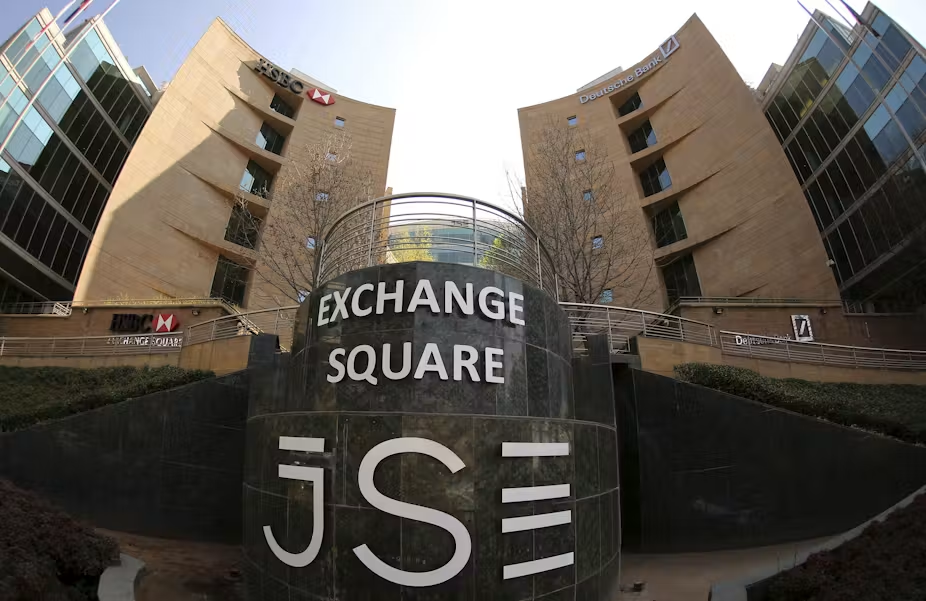
“South Africa’s stock market posted slight gains on September 11, 2026, with the FTSE/JSE All Share Index up 0.40% and the SAALL index rising 0.15%, driven by financials and telecoms. However, GDP contracted by 0.20% in Q2, while rising oil prices and Durban port congestion continue to weigh on investor sentiment.”
South Africa’s financial markets are navigating a complex landscape in September 2026, balancing modest equity gains against structural challenges in trade logistics and global commodity volatility. The FTSE/JSE All Share Index closed at 117,461.57 points, rising 0.40% despite weak GDP data and sectoral declines in mining.
Market Performance
- SAALL Index: 115,165 points (+0.15% daily, +10.25% YoY).
- Top performers: Standard Bank (+1.10%), Capitec (+0.63%), Vodacom (+2.08%).
- Lagging stocks: Naspers (-0.73%), Anglo American Platinum (-1.50%).
This divergence highlights resilience in financials and telecoms, while resource-heavy counters remain vulnerable to global commodity swings.
GDP Contraction
Statistics South Africa reported a 0.2% contraction in Q2 GDP, ending six consecutive quarters of growth. The revision of Q1 GDP to 0.4% further underscores fragility in the economy.
- Drivers of contraction:
- Weak mining output due to global metal selloffs.
- Logistics bottlenecks at Durban port.
- Rising fuel costs linked to Middle East tensions.
Durban Port Crisis
Durban’s Pier 2 terminal, South Africa’s busiest container hub, is facing delays of 8–12 days for ships offshore. The transition to the NAVIS N4 system has worsened congestion, with ICTSI and Transnet under scrutiny for poor coordination.
- Impact on trade:
- Exporters face rising costs and missed schedules.
- Importers struggle with supply chain disruptions.
- Freight forwarders have escalated demands for government intervention.
Inflation and Oil Prices
Global oil prices surged following renewed US-Iran hostilities, pushing up domestic fuel costs. While July CPI fell to 4.3%, analysts warn that September’s fuel hikes could reverse this trend.
- Positive signs: Food inflation at just 0.6%, lowest since 2010.
- Risks: Transport inflation likely to rise, threatening household budgets.
Investor Sentiment
Despite macroeconomic headwinds, investors remain cautiously optimistic:
- Financials: Strong balance sheets and rising interest margins.
- Telecoms: Vodacom and MTN benefiting from digital adoption.
- Mining: Under pressure from global commodity volatility.
Outlook
- Short-term: SAALL expected to trade near 115,678 points by end-Q3.
- 12-month forecast: Analysts project a decline to ~102,356 points, reflecting global uncertainty.
- Policy watch: The Reserve Bank’s September meeting will be critical, with calls to hold or cut rates amid weak growth.



