




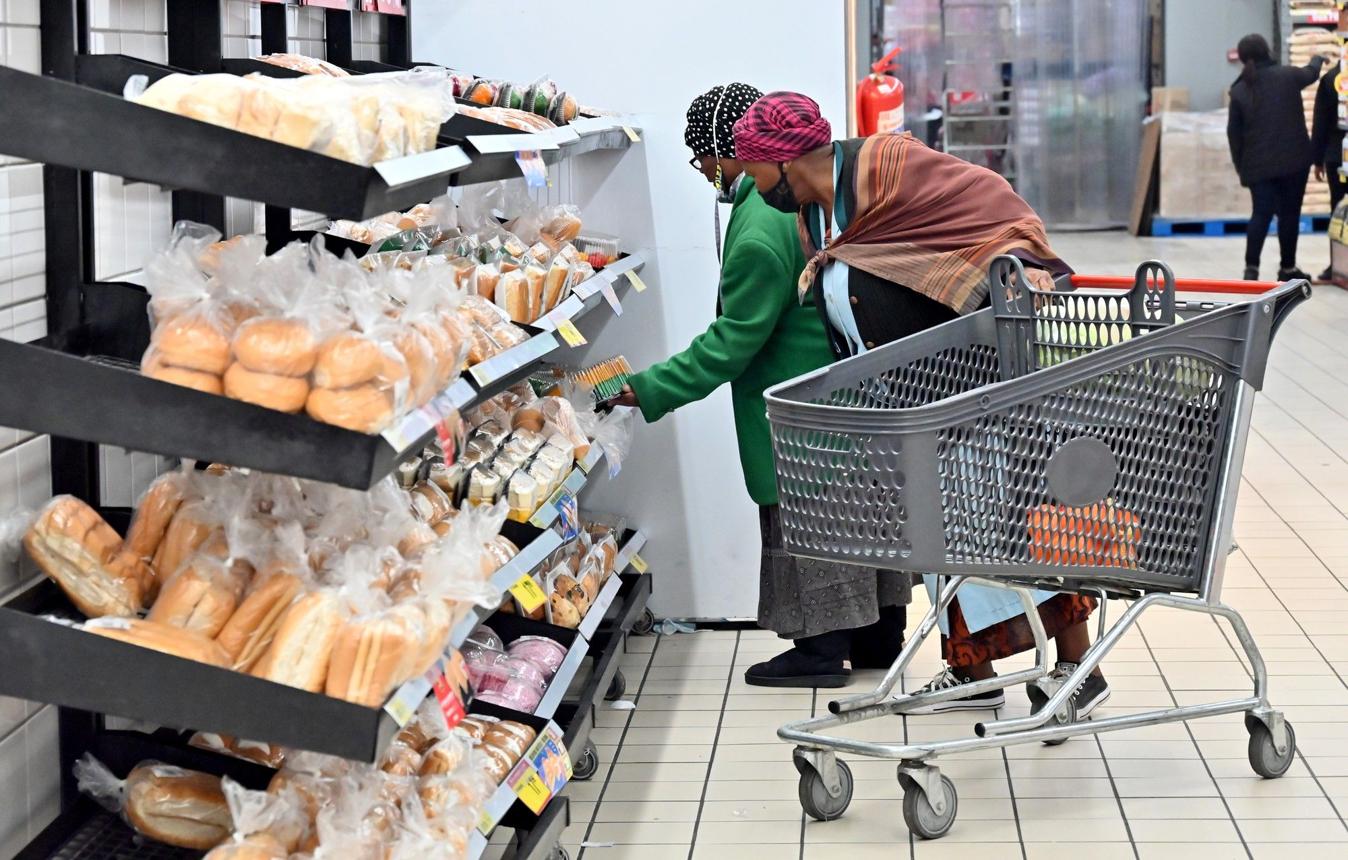
“South African households are making more frequent grocery trips while buying fewer products and smaller packs per visit, reflecting increasingly selective decisions about price, convenience and household budgets. New Worldpanel by Numerator research shows that although the FMCG market reached R422 billion in the 12 months to June 2026, overall household consumption remained broadly flat, with growth increasingly concentrated in convenient food products.”
South African Households Buy Less Per Shopping Trip as Consumers Reshape Grocery Spending
South African households are changing the way they shop for everyday necessities as consumers become increasingly selective about how they allocate limited household budgets. New consumer research shows that shoppers are visiting grocery stores more frequently but purchasing fewer products during each trip, offering an important insight into changing household demand, purchasing decisions and competition in South Africa’s fast-moving consumer goods market.
The findings from Worldpanel by Numerator’s “Plate of the Nation” report show that the South African fast-moving consumer goods market reached approximately R422 billion in the 12 months to June 2026. The market recorded value growth of 2.3%, while volume growth was considerably lower at 1.3%. Overall household consumption remained broadly flat.
From a microeconomics perspective, the figures illustrate how consumers respond when their purchasing power is constrained. Rather than simply stopping consumption, households are changing the quantity, frequency and composition of their purchases. These decisions affect retailers, manufacturers and suppliers because businesses must respond to what consumers are actually willing and able to buy.
One of the clearest changes has been the increase in shopping frequency. South African households made an average of 108 grocery trips during the year, compared with 105 trips a year earlier. However, the average number of packs purchased per trip declined from 6.55 to 6.37. Average pack size also decreased by 0.5%.
This pattern suggests that consumers are exercising greater control over individual purchases. Instead of making large shopping trips and purchasing everything they expect to need, households may be spreading purchases across more frequent visits. Such behaviour can make it easier to manage cash flow because consumers can decide what is essential at each point in time.
The changes are particularly important because food and other FMCG products account for a significant share of household expenditure. Food represented about 62% of the tracked grocery basket, with the food market valued at approximately R260 billion during the year to June 2026. Food value increased by 2.4%, while food volume increased by 1.8%.
These figures demonstrate that the market is not simply shrinking. Instead, demand is moving between categories. Consumers continue to spend, but their choices are changing according to price, convenience, preparation time, taste and perceived value.
For example, instant noodles recorded an 11.5% increase in volume per buyer. Bread volumes increased by 1.3%, while breakfast cereal volumes increased by 1.9%. At the same time, products associated with longer preparation times experienced declines. Flour volumes fell by 6.8%, while pasta declined by 4.6%.
The shift provides a useful illustration of substitution in consumer behaviour. When households face financial or time constraints, they may substitute one product for another depending on the relative value they receive. A food product that is inexpensive and quick to prepare can become more attractive than a cheaper raw ingredient that requires more preparation.
Convenience is therefore emerging as an important component of value.
Prepared frozen poultry products provide another example. Household penetration of prepared frozen poultry increased from 18.7% in 2024 to 23.3% in 2026, while non-prepared frozen poultry declined. Products such as nuggets and steaklets can be prepared relatively quickly, particularly using appliances such as air fryers.
The trend does not necessarily mean consumers are abandoning traditional cooking. Instead, it indicates that time has become an increasingly important consideration alongside price. Consumers may be attempting to reduce the total cost of a meal, including the money spent on ingredients as well as the time required to prepare food.
The research also points to a possible relationship between grocery purchasing and eating at home. Worldpanel does not provide direct evidence that restaurant spending has declined, but the growth of convenient supermarket products could indicate that some consumers are looking for less expensive alternatives to eating outside the home.
This behaviour matters for businesses across the food industry. Restaurants compete not only with other restaurants but also with products that allow consumers to prepare relatively convenient meals at home. Retailers and manufacturers therefore have an incentive to understand the complete value proposition facing households.
At the same time, consumers have not abandoned taste. Flavour enhancers accounted for 10.5% of food value, while household penetration of hot sauce increased from 45.5% in 2024 to 52.3% in 2026. Marinade penetration rose from 25% to 29.4%. The average number of table-sauce varieties purchased by each household also increased from 2.9 to 3.1.
This demonstrates that budget-conscious consumers do not necessarily choose the cheapest possible product in every category. Instead, they can make trade-offs. A household may reduce spending on one part of a meal while continuing to purchase products that improve taste or provide other benefits.
Eggs and dairy products have also gained importance. Together, these categories represented 16.3% of food value in June 2026, compared with 14.9% two years earlier. Egg penetration increased from 82.5% of households in 2024 to 88.1% in 2026, while annual volume per buyer increased from 183 to 234 eggs.
These changes illustrate how households adjust consumption patterns in response to relative prices, nutritional considerations and household needs. Consumers do not respond to economic pressure uniformly. Different households have different incomes, family sizes, preferences and constraints, meaning the same price change can produce different purchasing decisions.
The wider inflation environment provides important context. Statistics South Africa reported that headline consumer inflation increased slightly to 4.4% in August 2026 from 4.3% in July. Food and non-alcoholic beverage inflation accelerated to 1.1% from 0.9%, marking an important change after a period of slower food inflation.
Although the headline inflation rate remains substantially below the very high inflation rates experienced in previous periods, household affordability depends on the prices of individual goods and services rather than the headline number alone. Consumers may therefore continue to experience pressure even when overall inflation appears relatively moderate.
The Competition Commission has also highlighted differences between overall inflation and the costs of essential goods and services. Its 2026 cost-of-living analysis found that electricity, water, petrol, transport, healthcare and communication costs have placed sustained pressure on household budgets. It also raised concerns about whether consumers are always benefiting from lower input costs in certain food markets.
The Bureau for Economic Research’s latest data review similarly points to a challenging environment for households. The organisation reported that formal non-agricultural employment declined by 14,000 jobs quarter-on-quarter in the second quarter of 2026, while formal employment was down 95,000 jobs year-on-year. Private-sector credit growth was relatively stable, with household credit continuing to recover gradually.
These conditions help explain why consumer behaviour is an important economic indicator. Household purchasing decisions provide information about how people are responding to income, prices, employment conditions and expectations.
The telecommunications sector provides another example of businesses responding to increasingly price-sensitive consumers. Cell C said in its latest integrated annual report that weak economic growth, high unemployment and cost-of-living pressures were increasing consumer price sensitivity and strengthening demand for affordable connectivity.
For retailers and manufacturers, the implications are significant. A market with relatively weak volume growth cannot necessarily be expanded simply by producing more of the same products. Businesses may need to compete through affordability, pack sizes, promotions, convenience, product quality and targeted offerings.
Smaller packs can make products more accessible to consumers who cannot afford larger purchases at once. However, the price per unit can differ between pack sizes, meaning shoppers must balance immediate affordability against longer-term value.
Manufacturers also need to understand changing consumer preferences. Products that combine convenience with affordability may attract consumers who are unwilling or unable to spend more on services such as restaurant meals. Meanwhile, healthier or premium products can continue to find demand among consumers whose budgets allow for additional spending.
The research shows that health-oriented consumption is also developing. A basket containing products such as oats, honey and milk alternatives recorded 12% household-level volume growth, although the segment remained relatively small at around R4.7 billion.
Consumers are also continuing to purchase treats. Salty snacks increased their share of category volume from 35.7% two years earlier to 38% in 2026. This suggests that household budgeting does not necessarily eliminate discretionary purchases. Instead, consumers may reduce spending in some areas while preserving smaller purchases that provide enjoyment or perceived value.
For the broader South African economy, the most important point is that consumer demand is becoming more selective rather than disappearing. The R422 billion FMCG market continues to generate substantial economic activity, but volume growth remains modest.
The distinction between value growth and volume growth is particularly important. A market can increase in rand value without households buying substantially more physical products. Consequently, businesses need to distinguish between genuine increases in demand and increases in spending caused by prices or changes in the composition of purchases.
The 6,500-household Worldpanel panel provides a detailed view of these changes because participating households record purchases through an application by scanning products and uploading receipts. The research covers both modern and traditional retail channels.
Overall, South African consumers are demonstrating how microeconomic decisions operate in everyday life. Households are responding to their available resources by changing shopping frequency, pack sizes, product choices and consumption patterns. Convenience is becoming increasingly valuable, while price remains a central consideration.
For businesses, the lesson is that growth in a constrained market depends on meeting specific consumer needs. For households, the changing basket reflects an ongoing effort to balance affordability, nutrition, taste, convenience and quality.
As South Africa enters the final months of 2026, consumer behaviour will remain an important indicator of economic conditions. If household volumes remain broadly flat, retailers and manufacturers will have to compete increasingly for the spending that consumers are prepared to make. The resulting changes in product demand, pricing, pack sizes and competition will continue to shape the country’s microeconomic landscape.
In that sense, the ordinary grocery basket has become an important economic signal. What South Africans place in their shopping carts — and what they leave behind — provides a practical picture of how households are responding to prices, incomes, time constraints and changing economic conditions.



