




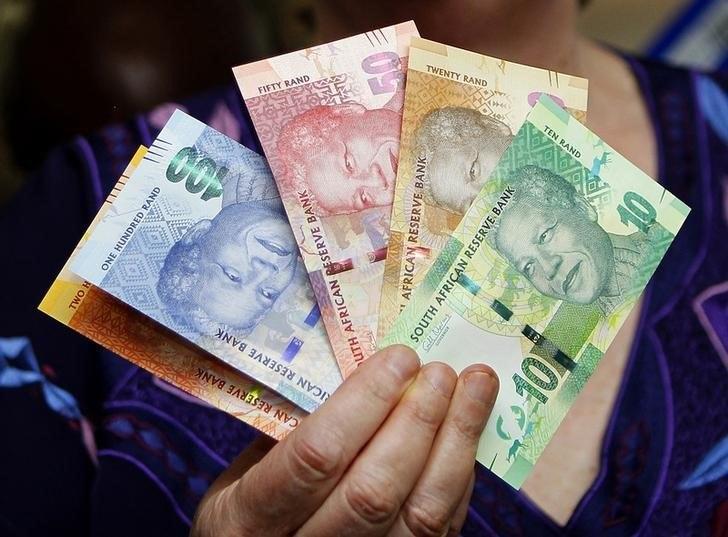
“South Africans effectively lose about R12 billion a year, or roughly R1 billion a month, through theft, robbery and other crime associated with physical cash, according to a new SARB study. The research estimates that the overall annual consumer cost of cash is R88.5 billion, highlighting the financial burden of bank fees, travelling to cash points, waiting in queues, lost time and security risks.”
South Africans Pay R1 Billion a Month in Cash-Related Crime Costs, SARB Study Finds
South Africans are paying a substantial hidden financial price for using physical cash, with theft, robbery and other cash-related crime estimated to cost consumers approximately R12 billion a year. That works out to roughly R1 billion every month, according to findings from the South African Reserve Bank’s 2026 Cost of Cash Research Study. The study examines the direct and indirect economic costs associated with producing, distributing, accessing, accepting and using banknotes and coins across the country.
The findings have placed the cost of physical money firmly in South Africa’s broader financial debate. While digital payments continue to expand, cash remains deeply embedded in the economy. The SARB study estimates that cash accounts for approximately 56% of consumer transactions by volume, demonstrating that physical money remains important to households, businesses and informal traders.
The R12 billion crime-related figure is only one component of the wider financial burden. The study estimates that the total annual consumer cost of cash is approximately R88.5 billion. Of this amount, R43.5 billion, or 49%, is attributed to direct costs, while R44.9 billion, or 51%, comes from indirect costs. The figures demonstrate that the financial consequences of cash extend well beyond the fees consumers see on their bank statements.
Cash Crime Creates a Major Financial Burden
Crime represents one of the most significant hidden costs identified by the research. The SARB estimates the value of cash lost through crime at R12 billion annually, equivalent to about 14% of the overall consumer cost of cash. The research groups theft, robbery and other cash-related losses among the risks that increase the economic burden of relying on physical money.
For consumers, the impact can be much greater than the value of money stolen during an individual incident. People who regularly withdraw cash may also face transport expenses, lost working time and additional risks while travelling to ATMs, bank branches or businesses where cash is accepted.
This means that the cost of cash is not simply a question of how much someone pays to withdraw money. It includes the wider economic consequences of obtaining, carrying, storing and using physical currency.
The SARB’s research is therefore significant because it provides a broader framework for understanding why cash can be expensive even when the transaction itself appears straightforward.
Bank Fees Add Billions to the Cost
Bank charges constitute the largest direct cost identified in the study. South Africans collectively spend approximately R31 billion each year on cash transaction fees, including about R17.7 billion in withdrawal fees and R13.3 billion in deposit fees.
These charges affect consumers and businesses differently depending on how frequently they use cash. A person who withdraws money regularly may accumulate significant fees over the course of a year. Small businesses that handle substantial volumes of physical money can also face additional costs associated with deposits, reconciliation, security and transportation.
The broader cash ecosystem also carries infrastructure costs. The SARB study estimates that banking services involved in distributing and providing access to cash through ATMs and branches account for approximately R21.6 billion. Retail cash acceptance and cash-back services contribute another estimated R4.3 billion, while essential industry services such as cash processing, distribution and supporting infrastructure account for approximately R1.2 billion.
Together, these figures illustrate the scale of the infrastructure required to keep physical money moving through the economy.
Time Is Another Hidden Financial Cost
One of the important findings of the study is that consumers pay not only through money but also through time.
The research estimates that lost time associated with cash transactions amounts to approximately R27.8 billion annually. This includes time spent travelling to cash points and waiting in queues. Travel-related costs alone are estimated at about R8.3 billion.
For households dependent on cash, these costs can be particularly significant. Travelling to an ATM or branch can involve taxi fares, fuel expenses or other transport costs. Waiting in a queue can also mean time that could otherwise have been spent working, caring for family members or conducting business.
The study estimates that consumers spend about R12.5 billion travelling to ATMs and bank branches, including expenses such as fuel, taxi fares and other transportation costs.
The economic effect is therefore broader than the transaction itself. A R500 withdrawal, for example, may appear inexpensive if only the withdrawal fee is considered. However, once transportation, waiting time and security risks are included, the real economic cost can be considerably higher.
Cash Remains Important Despite Digital Growth
The findings do not mean that South Africa can immediately replace cash with digital payments. Instead, they underline the complicated relationship between physical and electronic money.
According to the SARB, cash continues to play a foundational role in everyday transactions, informal markets and households that depend heavily on physical money. The central bank describes cash and digital payments as complementary parts of a hybrid payment ecosystem rather than simple substitutes.
This distinction is particularly important in communities where digital financial infrastructure, smartphone access, connectivity or electronic payment acceptance may be limited.
Cash also remains important in parts of the informal economy. Small retailers, street traders and other businesses may depend on physical money because their customers prefer it or because electronic payment facilities are not always practical or affordable.
Business Day, reporting on the SARB study, noted that cash remains especially relevant in cash-dependent environments, including the taxi sector and parts of the informal economy. The publication reported that the taxi industry alone accounts for more than 15 million commuter trips daily and remains heavily cash-oriented.
The Cost of Cash Creates a Policy Challenge
The challenge for policymakers is therefore not simply to encourage consumers to stop using cash. A broader objective is to make the cash system safer, more accessible and more efficient while digital alternatives continue to develop.
The SARB has already introduced the Cash Smart Strategy, a national programme intended to improve the affordability, accessibility and resilience of the cash ecosystem. The strategy recognises that cash remains necessary for many consumers while seeking to reduce duplication, inefficiencies and safety risks across the cash value chain.
One element of the strategy involves the development and rollout of white-label ATMs. These shared cash-access facilities are intended to improve access in underserved areas while reducing duplication in ATM infrastructure and cash logistics.
The strategy also reflects a wider transformation in South Africa’s payments system. Digital and mobile payment methods are expanding, but the central bank has acknowledged that cash continues to provide immediacy, broad acceptance and resilience when digital systems are unavailable.
What the Findings Mean for Consumers
For households, the SARB research provides a useful reminder that the apparent simplicity of cash can conceal substantial costs.
Consumers who frequently use physical money may face several layers of expense: bank withdrawal fees, transport costs, time spent travelling and waiting, security risks and the possibility of losing cash through theft.
Digital payments can remove some of these costs, although electronic transactions can carry their own fees, accessibility challenges and technology requirements. Consequently, the choice between cash and digital payments depends on individual circumstances, merchant acceptance, infrastructure and affordability.
The SARB study does not suggest that every consumer should abandon cash. Instead, it provides evidence about the economic costs associated with maintaining and using physical currency across South Africa.
Implications for Banks and Businesses
For banks, the findings highlight the potential value of improving cash infrastructure while supporting digital alternatives. More efficient ATM networks, cash-back services and shared infrastructure could potentially reduce some of the costs associated with providing physical money.
For retailers, better cash management could reduce handling and security expenses. The SARB research points to cash-back at points of sale as an important mechanism because retailers with high cash turnover can recycle money more efficiently and potentially reduce banking and cash-in-transit costs.
For fintech companies, meanwhile, the findings highlight a significant opportunity to build payment products that address the practical needs of cash-dependent consumers rather than simply assuming that digital adoption will happen automatically.
A Financial Cost That Extends Beyond Cash
The SARB’s R88.5 billion estimate provides a broader perspective on South Africa’s payment economy. Physical money remains widely used, but its total economic cost includes far more than bank charges.
The R12 billion annual cost associated with cash crime is particularly significant because it demonstrates how financial security and payment systems are interconnected. At approximately R1 billion a month, crime-related cash losses represent a substantial recurring economic burden.
At the same time, the findings show why a rapid transition away from cash cannot be considered in isolation. Millions of transactions still depend on physical money, particularly in lower-income communities and parts of the informal economy.
South Africa’s financial system is consequently moving through a period in which cash and digital payments must operate alongside each other. The policy challenge is to improve the efficiency and security of both systems while expanding access to affordable financial services.
The SARB’s research provides a detailed measure of the price of maintaining the country’s cash economy. With an estimated R88.5 billion annual consumer cost and R12 billion linked to cash crime, the figures demonstrate that the true price of physical money is considerably higher than the amount printed on a banknote or charged at an ATM.
As South Africa continues expanding digital payments, the findings are likely to keep the economics of cash firmly on the financial-sector agenda. The transition will not simply be about replacing notes and coins with electronic transactions; it will also involve ensuring that consumers who continue to depend on cash can access it safely, affordably and efficiently.



