




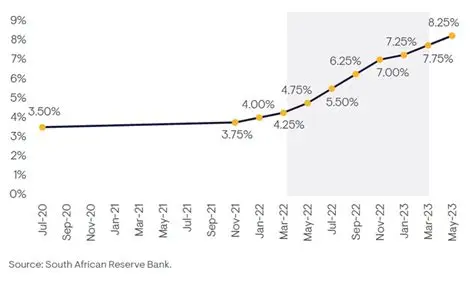
“The South African Reserve Bank’s July 2026 MPC statement kept the repo rate at 7.0%, citing inflation at 5.0% driven by fuel costs and global oil volatility. While first-quarter growth was stronger than expected, consumer confidence has fallen, and municipal dysfunction is constraining investment, leaving the outlook uncertain.”
South Africa’s economic trajectory in mid-2026 is being shaped by a complex interplay of global oil shocks, domestic structural challenges, and cautious monetary policy. The South African Reserve Bank (SARB), under Governor Lesetja Kganyago, has opted to maintain the repo rate at 7.0%, balancing inflationary pressures against weak growth prospects. This decision underscores the delicate trade-offs facing policymakers as households grapple with rising fuel costs and businesses confront declining confidence.
Global Context
The MPC statement situates South Africa within a turbulent global environment. The Middle East crisis has disrupted oil supply chains, pushing Brent crude prices back to $90 per barrel after dipping below $70 earlier in July. This volatility has filtered into domestic fuel prices, raising transport costs and squeezing household budgets. Meanwhile, the global AI investment boom has provided some offset, boosting valuations and stabilizing growth forecasts internationally.
Domestic Growth Trends
South Africa’s first-quarter GDP growth surprised on the upside, reaching 2% year-on-year, largely due to higher net exports. However, this momentum is unlikely to persist. Consumer confidence has dropped sharply, business sentiment has weakened, and sectoral data reveal declining activity since the onset of the Middle East conflict. Municipal dysfunction—manifested in poor service delivery and infrastructure failures—has become a binding constraint on growth. Without reforms, investment will remain subdued.
Inflation Dynamics
Headline inflation rose to 5.0% in June 2026, above the SARB’s 3% target band. Fuel costs are the primary driver, with petrol and diesel prices fluctuating alongside global oil markets. Producer-price inflation has also accelerated, with manufactured goods inflation reaching 7.8% year-on-year, driven by petroleum and chemical products. This raises concerns about second-round effects, where higher input costs could spill into broader consumer prices.
Monetary Policy Response
The SARB’s decision to hold the repo rate at 7.0% reflects a finely balanced assessment. On one hand, elevated inflation and producer-price pressures argue for further tightening. On the other, weak domestic demand, high unemployment, and subdued wage growth caution against aggressive hikes. Analysts suggest that a 25 basis point increase to 7.25% remains possible if inflation persists, but for now, stability is prioritized.
Sectoral Pressures
The motor industry illustrates the microeconomic challenges facing South Africa. While domestic vehicle sales hit record highs, exports of vehicles and components fell by 20% in Q1 2026, contributing to a trade deficit in May. High production costs, port inefficiencies, and cheap imports from China threaten the sector’s competitiveness. Unless structural reforms are enacted, this crucial industry may decline, undermining foreign exchange earnings.
Fiscal Stability
Despite these challenges, rising mineral sales have bolstered fiscal revenues. Higher company tax collections have enabled the Treasury to record a third successive primary budget surplus, improving sovereign bond ratings. This fiscal resilience provides some buffer against external shocks, though it cannot fully offset the drag from weak household consumption and investment.
Outlook and Risks
The SARB projects that inflation will remain above 4% until early 2027, with growth slowing in the second and third quarters of 2026. Recovery is expected in the second half of the year, contingent on global stabilization and domestic reforms. Risks include prolonged oil price volatility, municipal dysfunction, and declining export competitiveness.
Conclusion
South Africa’s July 2026 MPC statement reflects a cautious balancing act. By holding the repo rate steady, the SARB aims to contain inflation without stifling fragile growth. Yet the path forward is fraught with uncertainty. Structural reforms, improved governance, and resilience in key industries will be essential to restore confidence and sustain recovery.



