




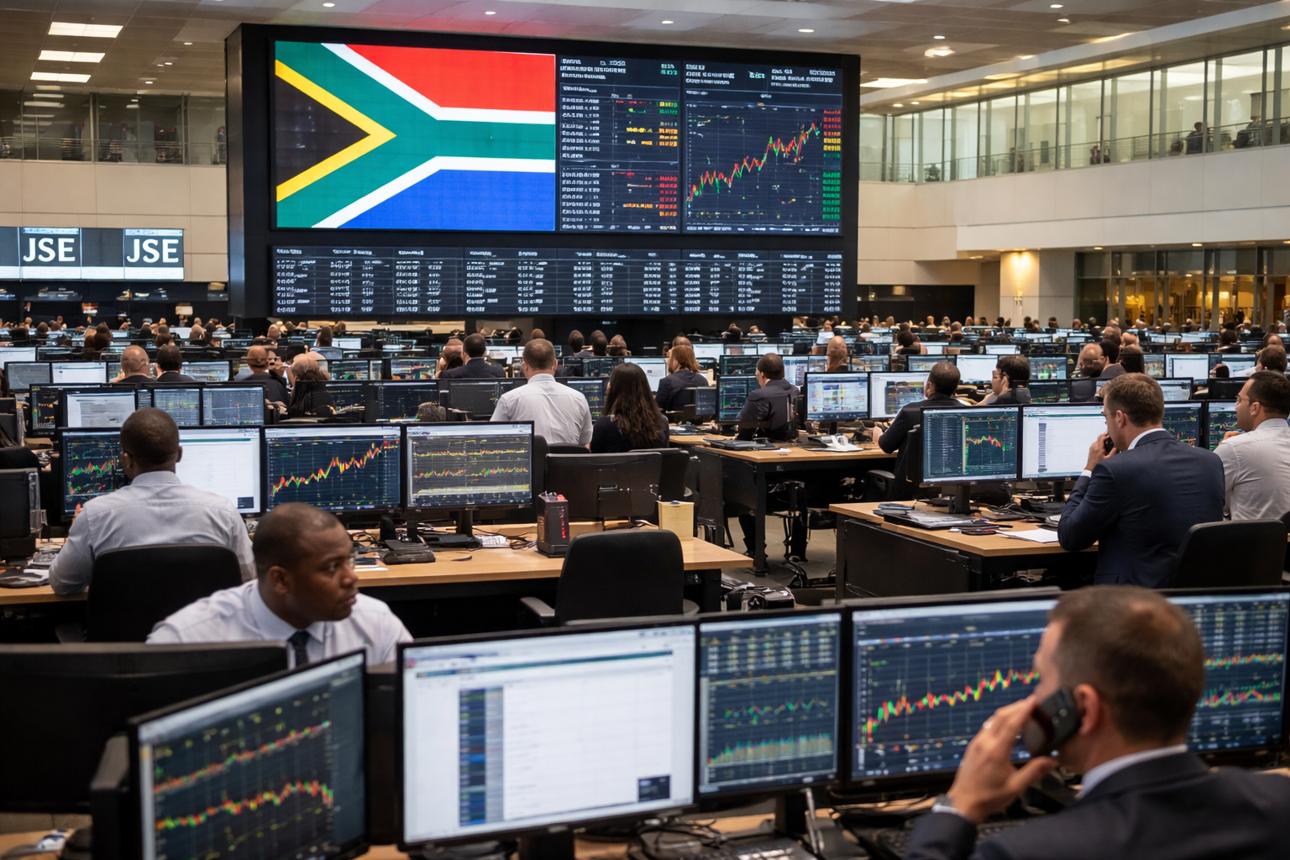
“The South African rand weakened against a stronger US dollar on Friday, 6 November 2026, as investors assessed continuing municipal election results and broader international market developments. The currency’s movement highlights the sensitivity of South African financial markets to political developments, global investor sentiment and changes in demand for emerging-market assets.”
South African Rand Weakens as Stronger US Dollar and Municipal Election Uncertainty Weigh on Financial Markets
South African currency faces renewed pressure
South Africa’s financial markets entered Friday, 6 November 2026, facing renewed currency pressure as the rand weakened against a stronger US dollar. The movement came amid continuing municipal election vote counting, international financial market volatility and shifting investor expectations concerning global economic conditions.
According to Reuters, the rand traded at approximately R16.5275 per US dollar at 06:55 GMT, representing a decline of around 0.3% from its previous closing level. Meanwhile, investors continued assessing the implications of South Africa’s municipal election results, which indicated declining support for the African National Congress (ANC).
The currency movement illustrates how South Africa’s financial markets remain sensitive to both domestic political developments and international investment conditions. Although the rand has experienced periods of improvement during 2026, renewed volatility demonstrates the importance of economic confidence, fiscal discipline and political stability in determining the country’s financial outlook.
Municipal election results become an important market consideration
The municipal elections held on 4 November have emerged as an important consideration for investors evaluating South Africa’s economic prospects.
As vote counting continued on Friday, Reuters reported that approximately 72% of votes had been counted, with the ANC receiving around 32% of the vote compared with 46% in the 2021 municipal elections. The Democratic Alliance (DA), meanwhile, had secured approximately 24% of the vote at the time of the report.
These results have significant implications for the country’s political landscape, particularly in major metropolitan areas where municipal administrations influence infrastructure investment, public services, procurement and economic development.
For financial markets, however, election results are important primarily because of their potential consequences for governance and economic policy.
Investors typically assess whether political developments could improve or weaken the operating environment for businesses. Stable administrations, effective municipal management and predictable policies can strengthen confidence, while prolonged political uncertainty may encourage investors to adopt more cautious positions.
Lisette IJssel de Schepper, chief economist at the Bureau for Economic Research, highlighted the importance of whether the elections would result in more stable administrations, improved service delivery and stronger conditions for business, according to Reuters.
The distinction is particularly important for Johannesburg, Tshwane and other major economic centres where coalition negotiations may influence the composition and functioning of municipal governments.
The potential for coalition arrangements creates both opportunities and challenges. Cooperation between political parties could improve governance if it produces stable administrations capable of implementing effective policies. However, disagreements between coalition partners could create uncertainty around budgets, infrastructure projects and municipal priorities.
Stronger US dollar increases pressure on the rand
International financial developments have also contributed to the rand’s weakness.
Reuters reported that the US dollar gained more than 0.3% against a basket of currencies as investors sought relatively safe assets following a global sell-off in artificial intelligence-related equities.
The dollar’s performance is particularly important for emerging-market currencies such as the rand because international investors frequently adjust their exposure to these markets when global financial conditions change.
During periods of uncertainty, investors may reduce holdings of emerging-market assets and increase their allocation to dollar-denominated investments.
This movement can weaken emerging-market currencies even when their domestic economic fundamentals remain relatively stable.
South Africa is particularly exposed because the rand is actively traded and frequently responds quickly to changes in global risk appetite.
The currency also reflects developments in commodity markets, interest-rate expectations and international capital flows.
Consequently, movements in the dollar can influence South Africa’s financial conditions through several channels, including exchange rates, bond yields, imported inflation and investor confidence.
Government bond yields reflect investor caution
The currency’s weakness was accompanied by modest pressure on South African government bonds.
Reuters reported that South Africa’s benchmark 2035 government bond was marginally weaker during early trading, with its yield increasing by approximately 4.5 basis points to 8.33%.
Bond yields represent the returns investors demand when purchasing government debt. Higher yields generally indicate that investors require additional compensation for holding bonds, although yields can also rise because of changes in global interest rates and inflation expectations.
South African government bonds are influenced by domestic fiscal conditions, monetary policy, inflation expectations and international financial markets.
A sustained increase in borrowing costs could complicate government efforts to manage debt and finance infrastructure investment.
However, short-term movements should not automatically be interpreted as evidence of a worsening fiscal outlook.
Investors frequently adjust bond positions in response to temporary changes in market sentiment, and these movements can reverse when international conditions improve.
South Africa’s fiscal outlook receives encouraging support
Despite currency volatility, developments in South Africa’s public finances have provided a more encouraging backdrop for financial markets.
On 5 November, Reuters reported that National Treasury said the country’s GDP rebasing exercise had improved important fiscal indicators.
The revised economic estimates indicated that South Africa’s economy was approximately 5% larger than previously measured.
According to Treasury, the revised debt-to-GDP ratio peaked at 74.6% in the 2025/26 financial year, compared with the earlier estimate of 78.4%.
The revised forecast also placed the 2026/27 main budget deficit at 3.5% of GDP, down from the previous estimate of 3.7%. The primary surplus was projected at 1.6% of GDP for 2026/27, increasing to 2.8% by 2029/30.
These revisions provide an improved statistical picture of South Africa’s fiscal position.
Nevertheless, a larger measured economy does not automatically mean that government has reduced its outstanding debt or generated additional cash revenue.
GDP rebasing changes the measurement of economic activity and therefore affects ratios calculated using GDP as their denominator.
The actual fiscal challenge remains the management of government expenditure, debt servicing, revenue collection and economic growth.
For investors, the revised figures may nevertheless strengthen confidence in the country’s fiscal framework and support a more favourable assessment of sovereign risk.
Johannesburg Stock Exchange experiences substantial gains
The rand’s movements followed a strong performance by South African equities on Thursday, 5 November.
Business Day reported that the Johannesburg Stock Exchange’s All Share Index advanced 3.67%, while the Top 40 Index increased 3.99%.
The resources index gained 2.78%, and the precious metals and mining index increased 4.27%.
The rally reflected international developments, particularly changes in investor expectations following the US midterm elections and movements in commodity prices.
Precious metals shares benefited from stronger gold-related market conditions, while expectations of lower oil prices supported optimism about inflation and economic activity.
The rally also demonstrated how South African equities can respond differently from the rand.
A weaker currency can sometimes support export-oriented companies by increasing the rand value of foreign earnings. However, currency depreciation can also increase imported input costs and create inflationary pressure.
Consequently, the relationship between the exchange rate and equity performance is complex and depends on the characteristics of individual companies and sectors.
Retail earnings reveal continuing pressure on consumers
Developments in the retail sector have provided another indication of the financial conditions facing South African households.
Reuters reported on Friday that South African retailer TFG recorded a 6.8% decline in half-year earnings, reflecting weaker trading in its British and Australian businesses despite improvements in its African division.
For the six months ending September 30, headline earnings per share fell to 272.8 cents, while operating profit declined 6.5% to R2.1 billion.
Revenue increased marginally to R31.4 billion, although sales declined 0.4% amid pressure on consumer spending.
TFG’s African business performed comparatively better, with retail turnover increasing 3.8% to R19.7 billion and operating profit rising 2.7%.
The company also announced an interim dividend of 121 cents per share, representing a decline of 6.9%.
The results highlight the uneven conditions affecting South African consumers and businesses.
Retailers continue to navigate household budget constraints, operating expenses, exchange-rate movements and changing consumer behaviour.
These developments are important for financial markets because household consumption represents a substantial component of South Africa’s economic activity.
When consumers reduce spending, retailers may experience weaker turnover, businesses may reconsider expansion plans and employment opportunities can become more constrained.
Inflation and fuel prices remain important economic considerations
Exchange-rate movements also have implications for South Africa’s inflation outlook.
A weaker rand can increase the domestic cost of imported goods, machinery, industrial inputs and petroleum products.
However, the actual inflation impact depends on several factors, including international commodity prices, domestic pricing structures and the extent to which businesses pass higher costs on to consumers.
International oil prices have recently experienced considerable volatility.
Business Day reported that Brent crude fell sharply on Thursday amid hopes that developments surrounding the US-Iran conflict could improve the global energy outlook.
The decline in oil prices contributed to optimism about inflation and supported financial markets.
Lower petroleum prices could provide relief to South African households and businesses by reducing transport and production costs.
However, continued geopolitical uncertainty means that energy prices remain vulnerable to sudden changes.
The combination of currency movements and international oil prices therefore remains important for determining South Africa’s inflation trajectory.
Financial markets await greater political and economic certainty
South Africa’s financial markets are likely to remain attentive to developments surrounding municipal coalition negotiations, international currency movements and the government’s fiscal performance.
Political stability at municipal level could support investor confidence if it leads to stronger service delivery, improved infrastructure management and more predictable administrative processes.
Similarly, continued progress in fiscal consolidation could strengthen the country’s financial position and improve the prospects for lower borrowing costs.
Nevertheless, structural economic challenges remain significant.
South Africa continues to face unemployment, infrastructure constraints, limited economic growth and pressure on public finances.
Addressing these challenges requires sustained investment, effective governance and policies that encourage productive economic activity.
Financial markets can provide an important signal of investor confidence, but currency movements alone cannot determine whether the economy is improving or deteriorating.
Outlook: The rand remains sensitive to global and domestic developments
The rand’s weakening on 6 November provides a reminder that South Africa’s financial markets operate within an increasingly interconnected international environment.
The currency’s performance reflects the interaction between domestic political developments, international investor sentiment, commodity prices and global monetary conditions.
The encouraging revisions to South Africa’s fiscal indicators provide a supportive foundation, while the recent performance of the JSE demonstrates the potential benefits of improved international market sentiment.
However, continuing volatility in global markets and uncertainty surrounding municipal governance remain important considerations for investors.
The coming days will provide greater clarity regarding election outcomes and the composition of municipal administrations.
Investors will also continue monitoring international developments affecting the dollar, commodity prices and emerging-market capital flows.
Ultimately, South Africa’s financial stability will depend not only on short-term currency movements but also on its ability to sustain economic growth, maintain fiscal discipline and improve the operating environment for businesses.
The rand’s latest movement is therefore best understood as part of a broader financial landscape in which political developments and international economic conditions continue to shape investor expectations.



