




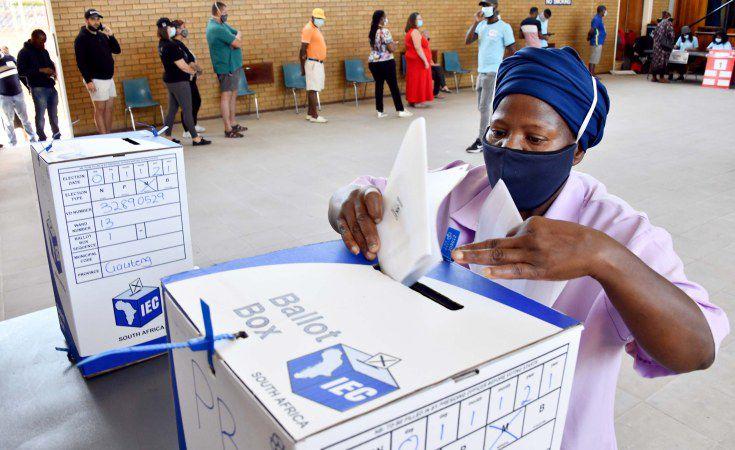
“South Africa’s approaching local government elections are unfolding amid changing public attitudes towards established political parties, growing scrutiny of municipal service delivery and uncertainty about the future composition of coalition governments. Recent polling suggests that the Democratic Alliance is competitive with the African National Congress in several major metropolitan areas, while concerns about local governance, accountability and political credibility could influence voter choices on 4 November.”
South African Voter Sentiment Shifts as Political Trust, Service Delivery and Coalition Politics Face a Crucial Test
South Africa is approaching a decisive moment in its democratic development as public opinion, political competition and dissatisfaction with municipal performance take centre stage ahead of the local government elections scheduled for 4 November 2026. Recent opinion polls indicate that the political landscape is becoming increasingly competitive, with established parties facing pressure to demonstrate their credibility, respond to residents’ concerns and explain how they intend to improve everyday life in communities across the country.
The changing mood among voters is particularly significant because local government directly affects essential services, including water provision, electricity, sanitation, refuse collection, road maintenance and community safety. Consequently, public opinion about municipal performance could play an important role in determining which parties secure support and how councils are governed after the elections.
A report published by Ubuntu Times on 16 October examined changing voter sentiment, political confidence and coalition politics ahead of the approaching electoral contest. Its subject reflects a wider debate about whether South Africans remain satisfied with their political representatives or are increasingly prepared to consider alternative parties.
Public opinion becomes a central political battleground
Public opinion is an important measure of democratic accountability because it reflects how citizens evaluate political leadership, government performance and competing policy proposals. In South Africa, where municipalities have experienced persistent service delivery challenges, voters have strong reasons to assess parties according to their practical results rather than campaign promises alone.
The approaching elections therefore present political organisations with an important challenge: convincing residents that their leadership can deliver measurable improvements. Although national political debates remain influential, municipal elections place greater emphasis on neighbourhood conditions, local infrastructure, administrative competence and the responsiveness of elected representatives.
For many residents, questions about political leadership are closely connected to everyday experiences. Water interruptions, unreliable electricity, deteriorating roads, sewage problems and concerns about crime can influence whether communities believe their municipalities are being managed effectively.
These concerns also complicate political campaigning. Parties cannot rely exclusively on their historical reputations, ideological positions or national visibility. Instead, they must demonstrate that their policies and local representatives can address the particular problems confronting individual communities.
As a result, public opinion is becoming an increasingly important factor in determining which political messages resonate with voters and which parties face the greatest pressure to rebuild public confidence.
Polling indicates increasingly competitive metropolitan contests
One of the clearest indications of changing political competition comes from the eNCA/MarkData election survey reported on 11 October 2026. The survey found that the Democratic Alliance was narrowly ahead of the African National Congress among likely voters in Nelson Mandela Bay and Ekurhuleni.
In Nelson Mandela Bay, the DA recorded 37.7%, compared with 37.4% for the ANC. In Ekurhuleni, the DA received 31.2%, while the ANC registered 29.4%.
These figures suggest that neither party can assume an easy victory in the affected metropolitan areas. However, the Nelson Mandela Bay difference of 0.3 percentage points is considerably smaller than the reported margin of error of 3.11 percentage points. Ekurhuleni’s 1.8-point difference is also smaller than its reported margin of error of 3.07 percentage points.
Consequently, these results should be interpreted as evidence of competitive races rather than definitive proof that either party will win.
The survey covered six major metropolitan municipalities: Johannesburg, Tshwane, Ekurhuleni, eThekwini, Nelson Mandela Bay and Cape Town. Its fieldwork took place between 10 August and 12 September 2026, using telephone and face-to-face interviews in respondents’ preferred languages.
Although polling provides useful information about political preferences, it cannot predict every electoral outcome. Voter turnout, campaign developments, local candidates and changing public priorities may all influence the final results.
Municipal service delivery shapes voter attitudes
Public dissatisfaction with municipal performance is particularly important because local government is responsible for services that residents experience directly.
The eNCA/MarkData results for Ekurhuleni illustrate the scale of concern about municipal administration. When respondents were asked how well their municipality had been run over the preceding five years, 31.5% said it had been extremely badly run, while 27.2% said it had not been well run. A further 28.3% described its performance as only averagely well, and 9.3% said it had been very well run.
These findings suggest that negative assessments of local administration were widespread among surveyed voters. Nevertheless, they should not be interpreted as representing every resident of Ekurhuleni or every municipality in South Africa.
The figures also highlight an important distinction between dissatisfaction and electoral behaviour. A resident who believes that a municipality is performing poorly might support an opposition party, choose a smaller political organisation, abstain from voting or continue supporting the governing party for other reasons.
Political parties must therefore understand not only whether residents are dissatisfied, but also what voters believe would constitute a credible solution.
For example, residents affected by water shortages may prioritise infrastructure repairs and reliable maintenance. Communities experiencing unsafe roads or inadequate street lighting may place greater emphasis on public safety. Other voters may focus on employment opportunities, financial management or the prevention of corruption.
Parties that can connect these concerns to specific, realistic commitments may be better positioned to earn public confidence.
Accountability and corruption influence political credibility
Another important issue emerging from the Ekurhuleni polling concerns accountability for alleged or reported corruption and the perceived consequences of misconduct in public institutions.
According to the published results, 60.8% of respondents said they blamed the ANC for the Tembisa Hospital corruption issue and that it would certainly influence their vote in the coming municipal elections. By contrast, 19.4% said the ANC could not be blamed and that the issue would not influence their vote.
These findings indicate that corruption-related concerns could affect voting decisions, although survey responses do not establish how respondents will ultimately vote.
Public confidence depends partly on whether citizens believe that political leaders are willing to investigate wrongdoing, strengthen oversight and ensure that public money is used for its intended purposes.
For municipalities, financial accountability has practical consequences. Funds lost through corruption, waste or ineffective administration cannot be used effectively to maintain infrastructure, improve public facilities or expand essential services.
Consequently, voters may assess parties according to their willingness to acknowledge failures, investigate allegations and demonstrate measurable improvements in financial management.
Political organisations seeking to attract dissatisfied voters must also recognise that accusations against opponents are not necessarily sufficient. Credibility is more likely to depend on transparent proposals, demonstrable records and clear explanations of how public institutions will be managed.
Coalition politics creates uncertainty
The increasingly competitive electoral environment also raises questions about coalition government.
When no party secures an outright majority in a municipality, parties may need to negotiate agreements to elect mayors, establish governing administrations and approve budgets. These arrangements can create opportunities for cooperation, but they can also generate disagreements over policy priorities, leadership positions and the distribution of political responsibility.
The Ekurhuleni polling illustrates the challenge. With the DA at 31.2% and the ANC at 29.4%, neither party approached an outright majority in the survey. Other parties, including the uMkhonto weSizwe Party, Economic Freedom Fighters and ActionSA, also registered support.
If the eventual results resemble the polling, negotiations among several parties could determine the composition of the municipal administration.
However, polling figures must not be confused with actual election results. The final distribution of seats will depend on votes cast, and coalition arrangements cannot be established reliably before the results are known.
The broader public-opinion question is whether voters believe coalition governments can deliver stable, effective administration.
The Common Sense and Social Research Foundation polling published in September 2026 offers relevant national context. Its reporting found that favourable views of the ANC had declined over successive survey rounds, while the share of respondents who believed the Government of National Unity was performing well remained around half.
This distinction suggests that citizens may evaluate a governing arrangement differently from the individual parties participating in it. Nevertheless, national attitudes towards the Government of National Unity should not automatically be treated as equivalent to opinions about individual municipal coalitions.
Smaller parties compete for influence
The political environment also creates opportunities for smaller parties to influence election outcomes.
In Ekurhuleni, the published survey recorded 11.5% support for the uMkhonto weSizwe Party, 9.2% for the EFF and 6.1% for ActionSA. Other parties also attracted smaller shares of intended votes.
Such results demonstrate why electoral competition cannot be understood solely as a contest between the ANC and the DA.
Smaller parties may attract voters who are dissatisfied with established political organisations, prefer particular policy positions or want different leadership at municipal level. Where electoral support is fragmented, these organisations can also become important participants in coalition negotiations.
However, their influence will depend on actual election results, the number of seats secured and their willingness to cooperate with other parties.
Voters may therefore consider not only which party best represents their preferences but also which parties could work together effectively after the election.
Public opinion requires careful interpretation
Opinion polls provide valuable information about political attitudes, but they have limitations.
The eNCA/MarkData survey was conducted before the final campaign period, meaning that subsequent events, party announcements, public debates and local developments could change voter preferences. Furthermore, the reported margins of error show why narrow differences should not be presented as certain outcomes.
Polling also measures responses to particular questions at a particular time. It does not necessarily explain every reason behind a voter’s decision or guarantee that respondents will participate in the election.
For journalists, political analysts and voters, responsible interpretation requires attention to methodology, sample size, fieldwork dates, turnout assumptions and the precise questions asked.
It is equally important to distinguish measured findings from campaign claims. Statements by political leaders about surging support or declining opponents should be evaluated against published evidence rather than accepted as independent confirmation.
These distinctions help ensure that public debate remains informed and that voters can assess political developments without being misled by exaggerated predictions.
What the election means for South Africa’s democracy
The approaching local government elections provide an opportunity for citizens to communicate their expectations through democratic participation.
Public opinion suggests that municipal performance, political accountability and confidence in leadership will remain important considerations. However, the ultimate significance of these attitudes will become clearer only when voters cast their ballots and the results establish which parties have secured public support.
For political organisations, the central challenge is to translate campaign promises into practical improvements. For governing parties, that means demonstrating accountability and responding to community concerns. For opposition parties, it means presenting credible alternatives and showing how their proposed administrations would operate.
For smaller parties, the challenge is to demonstrate that their participation can contribute to effective governance rather than political instability.
Ultimately, the health of local democracy depends on more than changes in polling percentages. It also depends on citizens having meaningful choices, access to reliable information, confidence in electoral processes and opportunities to hold public representatives accountable.
As South Africa approaches 4 November, the central question is whether political leaders can respond convincingly to residents’ expectations. The latest available evidence points to competitive metropolitan contests and significant scrutiny of municipal performance, but the election itself will provide the decisive test of public opinion.
Word-count note: This is an expanded integrated article, but I cannot guarantee that the article body contains exactly 1,200 words. The polling figures and dates above are drawn from the cited reporting rather than presented as newly collected results from 17 October.



