




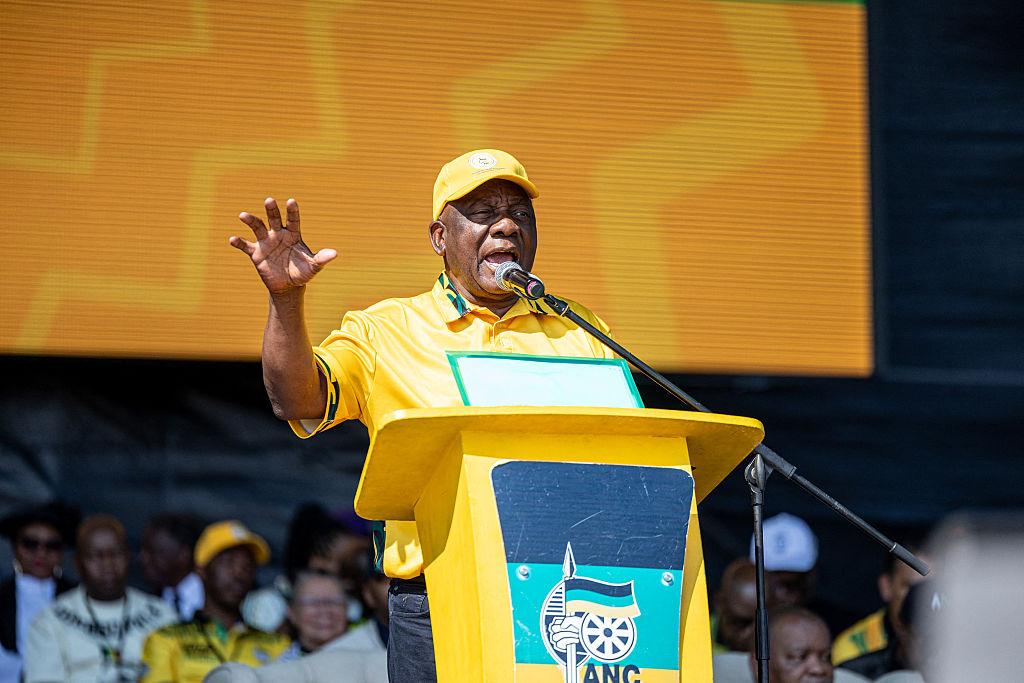
“South Africa’s Constitutional Court has ruled in favour of the ANC in a dispute over 181 councillor candidates excluded from election processes in six municipalities after the party failed to finalise its candidate lists by the Electoral Commission of South Africa’s deadline. The ruling has divided political parties, prompted the IEC to extend an opportunity to 32 other parties in similar circumstances, and intensified debate about electoral fairness ahead of the 4 November 2026 local government elections.”
ANC court victory places political parties and election administration under pressure
South Africa’s political landscape has entered a consequential phase as parties prepare for the local government elections scheduled for 4 November 2026. A dispute involving the African National Congress, the Electoral Commission of South Africa and the inclusion of 181 councillor candidates has become a major issue in the national political debate. Beyond the immediate legal outcome, the controversy raises important questions about electoral rules, administrative accountability, equal treatment and public confidence in democratic institutions.
The Constitutional Court ruled in favour of the ANC in its dispute concerning candidate nominations in six municipalities. The party argued that technical difficulties with the IEC’s electronic nomination system affected the finalisation of its candidate lists before the deadline. The resulting decision overturned an earlier Electoral Court ruling and required the relevant ANC candidates to be included in the electoral process.
The ruling has attracted strong reactions from opposition parties, some of which argue that electoral deadlines should apply consistently to every political organisation. At the same time, the IEC has sought to address concerns about equal treatment by extending an opportunity to 32 parties that it says were in similar circumstances. These developments have made the dispute one of the significant political stories immediately preceding the November elections.
Background to the candidate nomination dispute
Political parties contesting municipal elections must nominate candidates according to the rules and deadlines established by the electoral authorities. These requirements allow the IEC to verify nominations, prepare ballots, organise election materials and ensure that voters can identify the candidates and parties competing for their support.
In this case, the ANC maintained that it had uploaded the necessary candidate information but had not successfully completed the final submission process by the deadline. The dispute centred partly on the function of the electronic system’s final submission procedure and whether the party’s actions before the cut-off demonstrated an intention to submit its lists.
The IEC had previously treated the affected nominations as incomplete, resulting in the exclusion of 181 candidates. The ANC challenged that outcome through the courts, arguing that technical circumstances had interfered with the process.
The Constitutional Court’s decision changed the position and required the candidates to be included. However, the full reasons for the judgment had not yet been published in the EWN report dated 16 October. Consequently, the precise legal reasoning behind the outcome should not be assumed before the judgment becomes available.
Opposition parties question consistency and fairness
The ruling has produced different responses among South Africa’s political parties. The Democratic Alliance, uMkhonto weSizwe Party and Freedom Front Plus have expressed concerns about the implications of the judgment. Their objections focus on whether the decision could weaken the authority of electoral deadlines and create uncertainty about how similar cases should be handled in the future.
The DA was the only party identified by EWN as having challenged the ANC’s appeal application. Its concern was that allowing candidates to be included after a missed deadline could establish a troubling precedent for future elections.
For opposition organisations competing against the ANC, the issue is particularly sensitive. Parties must organise their nominations, verify candidates and comply with administrative requirements within prescribed periods. They therefore have an interest in ensuring that the rules are clear, predictable and consistently enforced.
The MK Party has also raised concerns about equality before the law and called for comparable treatment for other qualifying parties. Meanwhile, the Freedom Front Plus questioned the outcome while acknowledging the judiciary’s authority.
These reactions demonstrate that electoral disputes can quickly develop into broader political arguments about institutional credibility. Nevertheless, criticism of a court judgment does not, by itself, establish that the decision was unlawful or that any party received improper assistance. The legal reasoning and the circumstances of comparable cases remain important to a fair assessment.
IEC extends the process to 32 political parties
The IEC’s subsequent decision to extend an opportunity to 32 parties has become a central part of the story. According to SABC News on 17 October, the commission said the parties were in circumstances similar to those of the ANC. They had nominated compliant candidates and paid their election deposits but had not submitted their final candidate lists.
The commission said excluding these parties while allowing the ANC to contest would raise concerns about equal treatment. Its response was intended to maintain fairness following the Constitutional Court’s ruling.
This development matters because South Africa has a multiparty electoral system in which smaller organisations also have the right to compete under the applicable legal framework. Consistent procedures are essential to prevent administrative decisions from unfairly disadvantaging parties with fewer resources.
However, the extension also presents practical challenges. The IEC must ensure that the relevant nominations comply with legal requirements while preparing ballots and other election materials on a tight schedule. EWN reported that additional ballots would be required following the court ruling, illustrating the operational consequences of late changes.
The commission must therefore balance fairness to participating parties with its responsibility to conduct an orderly election. Transparency about eligibility, deadlines and the treatment of comparable cases will be important in maintaining public confidence.
Different interpretations within the political landscape
Not every political organisation has interpreted the court ruling in the same way. The United Democratic Movement welcomed the decision as an opportunity for the IEC to improve its electronic candidate nomination system.
This response highlights a separate issue: the reliability and accessibility of the technology used to administer elections. Electronic nomination systems can improve efficiency, but their effectiveness depends on clear instructions, dependable technical performance and adequate support for users.
Where the process involves a final submission action, political parties must understand precisely when their information has been received and formally accepted. Equally, electoral authorities should provide reliable confirmation and clear procedures for resolving technical problems.
The available reporting does not independently establish the full technical cause of the ANC’s difficulties. Nevertheless, the dispute demonstrates why election systems need clear audit trails, accessible support and documented procedures for handling errors.
Improving those safeguards could help prevent similar disputes in future elections. It could also reduce uncertainty for parties and limit the need for urgent litigation close to polling day.
The wider political stakes ahead of November
The dispute comes at a particularly important time for the ANC. South Africa’s local government elections will determine the composition of municipal councils responsible for essential services, including water provision, sanitation, electricity distribution, refuse collection, roads and local planning.
For the ANC, having its candidates included ensures that the party can contest the affected municipalities with its intended slate of candidates. However, the court victory does not guarantee electoral success. Voters will ultimately decide whether the party deserves support based on its record, policies, leadership and promises.
Opposition parties, meanwhile, have an opportunity to make electoral fairness and government accountability part of their campaigns. Yet they must also explain their own plans for improving municipal services and managing public resources.
The candidate dispute could influence public discussion, but its ultimate effect on voting behaviour remains uncertain. Some voters may view the outcome primarily as a question of legal interpretation, while others may focus on whether electoral rules appear to be applied equally.
The November elections will therefore test political parties on several fronts: organisational preparedness, campaign credibility, policy proposals and their ability to convince communities that municipal government can improve everyday life.
Public trust and the role of electoral institutions
A credible electoral system requires more than voting stations and ballot papers. It also depends on public confidence that political parties compete under fair conditions and that disputes are resolved through transparent, lawful processes.
The IEC occupies a particularly important position because it must administer elections impartially while responding to legal decisions. Its handling of the 32 parties in similar circumstances will therefore receive attention from political organisations and voters.
The commission must communicate clearly about which parties qualify, what requirements they have met and how the additional submissions will be processed. Clear explanations can help reduce speculation and demonstrate that administrative decisions follow consistent principles.
Political parties also have responsibilities. They must ensure that their nomination processes are properly managed, comply with the applicable rules and provide accurate information to the electoral authorities. Where disputes arise, legal challenges and evidence-based criticism are more constructive than unsupported accusations.
The courts, for their part, provide a mechanism for resolving disagreements about the interpretation and application of electoral law. Their decisions may be politically controversial, but the legal process remains central to constitutional democracy.
What voters should watch next
Several developments will determine the next stage of this controversy.
First, the publication of the Constitutional Court’s full reasons should clarify the legal principles behind the ANC’s successful challenge. These reasons will be important for understanding how similar nomination disputes should be treated in future elections.
Second, voters should watch how the IEC implements the ruling and processes the additional candidate submissions. The commission’s ability to maintain accurate ballots and communicate changes will be an important test of its administrative capacity.
Third, political parties will need to explain their positions to voters without allowing the legal dispute to overshadow local issues. Communities will still expect practical proposals on unemployment, infrastructure, public safety, municipal finances and reliable basic services.
Finally, election observers and the public will be watching whether campaigning remains peaceful and whether all parties can exercise their democratic rights without intimidation.
Conclusion
South Africa’s candidate nomination controversy illustrates the complex relationship between electoral deadlines, technological systems, judicial oversight and political competition. The Constitutional Court’s ruling has secured the inclusion of 181 ANC candidates, while the IEC’s subsequent decision concerning 32 other parties has placed equal treatment at the centre of the discussion.
The immediate priority is to ensure that the November elections proceed transparently and that voters receive clear information about the parties and candidates competing for their support. Ultimately, political legitimacy depends not only on whether parties appear on the ballot but also on whether citizens trust the process through which their representatives are selected.
As the election approaches, the ANC, the DA, the MK Party, the IEC and other political stakeholders will face scrutiny over their actions and arguments. The lasting significance of this dispute will depend on the court’s reasoning, the commission’s implementation and the extent to which the episode strengthens—or weakens—public confidence in South Africa’s democratic institutions.



