




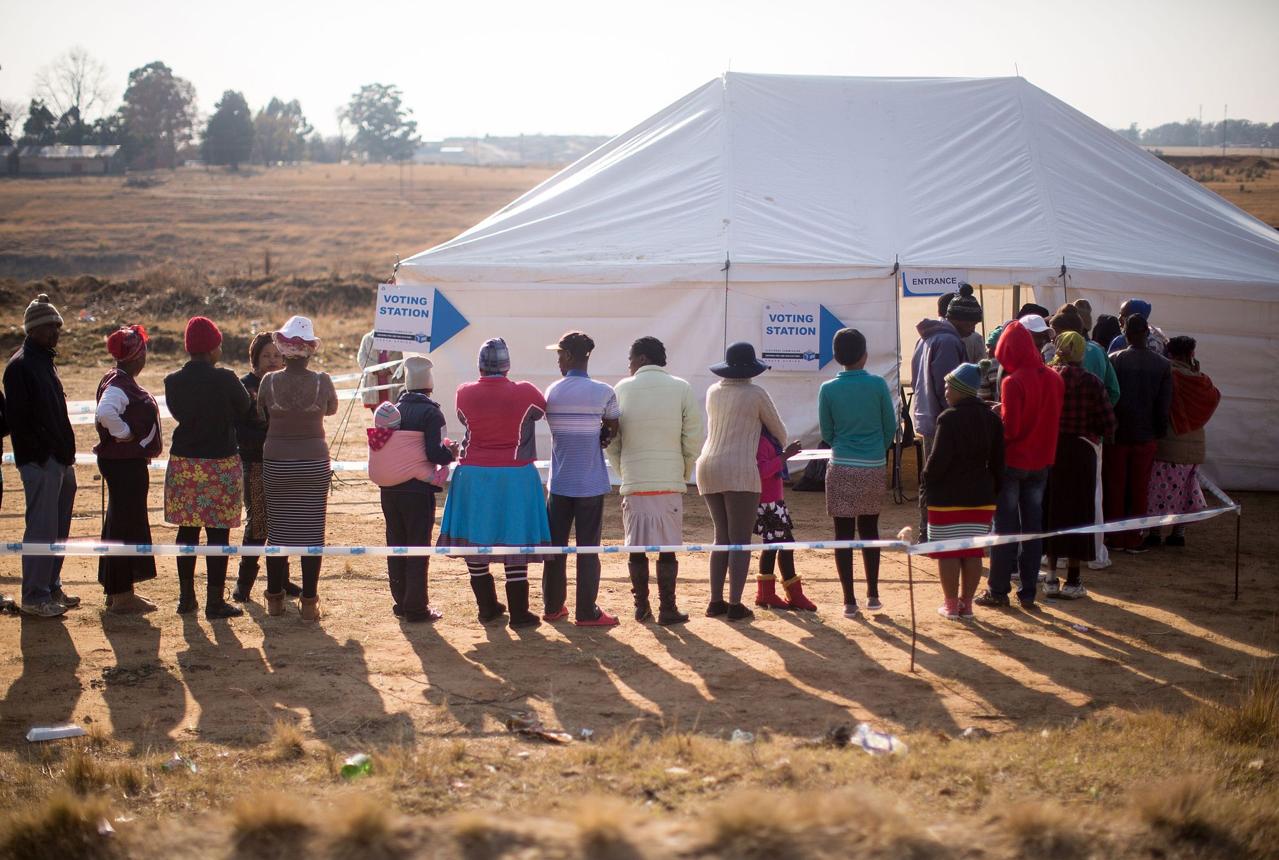
“South Africa’s November 2026 local government elections have exposed growing public dissatisfaction with political parties, declining trust in political institutions, and increasing demands for accountability and improved municipal services. Research findings and election outcomes indicate that voters are increasingly willing to withdraw support from established parties, while millions remain disengaged from electoral participation.”
South African voters reject political complacency as public dissatisfaction reshapes local government
Article prepared from current reporting and public opinion research. The article below is an original synthesis, not a reproduction of any single publisher’s report.
1. A decisive message from the electorate
South Africa’s political landscape is undergoing a significant transformation following the November 2026 local government elections, with public opinion increasingly reflecting dissatisfaction with governance, municipal service delivery and the performance of established political parties. The election results have reinforced a growing national debate about political accountability, public trust and the future direction of democratic representation.
The African National Congress (ANC), which dominated national politics for decades following the end of apartheid, experienced another substantial electoral setback. Its declining support reflects mounting public frustration over corruption allegations, unreliable municipal services, infrastructure deterioration and the perceived inability of political leadership to address everyday economic challenges.
Reuters reported on 9 November that the ANC received less than one-third of the vote nationally and failed to win outright control of major metropolitan municipalities. The outcome demonstrated that historic political loyalty increasingly competes with voters’ expectations of practical governance and measurable improvements in living conditions.
The election has consequently become more than a contest between political parties. It represents a broader public assessment of democratic institutions and the responsibilities of elected representatives.
2. Public trust becomes a central political concern
Public confidence in political institutions has emerged as one of the most important issues shaping South Africa’s political environment.
An Ipsos survey released ahead of the elections found that only approximately one-quarter of adult South Africans trusted their current local governments. Among registered voters, 55% expressed distrust of their municipalities.
The research highlighted the relationship between public confidence and everyday experiences, including water availability, road maintenance, refuse collection, infrastructure reliability and community safety.
According to Ipsos, municipal credibility increasingly depends on visible improvements in residents’ circumstances rather than campaign promises or political communication.
This finding illustrates why local government elections have become particularly significant.
Municipal authorities are responsible for many services that directly affect households and businesses. When these services deteriorate, residents experience the consequences immediately, making municipal performance an important factor in political decision-making.
Consequently, public dissatisfaction can quickly translate into electoral consequences.
3. Voters increasingly demand accountability
South Africa’s changing electoral environment suggests that voters are becoming more willing to reconsider traditional political affiliations.
For many years, liberation history, political identity and historical relationships influenced electoral behaviour. However, recent elections indicate that these factors are increasingly accompanied by demands for effective administration, economic opportunities and improved public services.
The 2026 results reinforce the argument that voters expect political parties to demonstrate their effectiveness in office.
The ANC’s declining support illustrates this development. Its historical significance remains substantial, but voters increasingly evaluate the party through its contemporary performance.
The same principle applies to opposition parties. Electoral gains do not automatically guarantee lasting public confidence. Parties entering government must demonstrate that they can deliver services, manage public finances responsibly and maintain transparent institutions.
Political analyst Sandile Mnguni, commenting on early election results through Associated Press reporting, observed that voters were increasingly evaluating political leaders according to their performance rather than longstanding party loyalty.
This shift creates a more competitive environment in which political parties must continually demonstrate their relevance.
4. Service delivery remains at the centre of public opinion
Municipal service delivery is one of the strongest themes emerging from South Africa’s recent political developments.
Residents continue to face concerns about water shortages, electricity reliability, deteriorating roads, inadequate sanitation, refuse removal and infrastructure maintenance.
These challenges affect households, businesses, schools, healthcare facilities and public institutions.
The consequences are particularly significant in communities where residents depend heavily on municipal infrastructure and have limited alternatives.
The Ipsos findings suggest that citizens increasingly judge local governments through their experiences of municipal services rather than through political messaging alone.
Poor service delivery can therefore become a powerful source of political dissatisfaction.
When municipalities fail to address persistent problems, residents may conclude that elected representatives are disconnected from their needs.
The November elections provided an opportunity for citizens to communicate that dissatisfaction through their votes.
However, electoral change alone does not guarantee improved governance.
New administrations must establish clear priorities, develop credible implementation plans and demonstrate that public resources are being used effectively.
The challenge for incoming municipal leaders is therefore to convert electoral mandates into tangible improvements in communities.
5. The growing importance of coalition politics
The fragmentation of political support has made coalition governments increasingly important in South Africa.
The 2026 local government elections produced a political environment in which numerous municipalities require cooperation between parties to establish governing majorities.
The Democratic Alliance (DA) strengthened its position in several metropolitan areas, while smaller political parties gained influence in councils where no party secured sufficient support independently.
The ANC’s weakened electoral position also reduced its bargaining strength in coalition negotiations.
Reuters reported that coalition negotiations following the election could influence municipal leadership arrangements and potentially affect national political developments ahead of the 2029 elections.
Coalition government offers opportunities for broader representation and political cooperation.
However, it also creates risks.
Parties may struggle to maintain stable agreements, particularly where ideological differences, leadership disputes or disagreements over administrative responsibilities emerge.
For residents, the most important question is whether coalition arrangements will improve governance.
Political negotiations that prioritise leadership positions over municipal performance could reinforce public frustration.
By contrast, transparent agreements focused on service delivery, accountability and financial management could help rebuild confidence.
6. Electoral participation reveals both engagement and frustration
South Africa’s electoral participation provides another important insight into public opinion.
The Independent Electoral Commission announced a national turnout of approximately 52% for the 2026 local government elections, representing an improvement from the 45.9% recorded in 2021.
Approximately 14.9 million registered voters participated in the election, according to the final announcement.
Although participation improved, millions of registered voters remained absent from polling stations.
This suggests that increased turnout should not automatically be interpreted as a complete revival of public confidence in political institutions.
Some voters may have participated because they wanted to express dissatisfaction with existing administrations.
Others may have remained disengaged because they believed political parties were unlikely to deliver meaningful improvements.
The Human Sciences Research Council (HSRC) has highlighted declining satisfaction with democracy and declining trust in political institutions as important concerns affecting electoral participation.
Its findings suggest that some citizens are increasingly questioning whether democratic processes adequately address their expectations.
The challenge for political leaders is therefore not simply to encourage citizens to vote.
They must also demonstrate that participation produces meaningful political accountability.
7. Youth dissatisfaction raises questions about democratic representation
Young South Africans represent an important section of the electorate, yet their relationship with political institutions remains complicated.
Ipsos reported on 3 November that many young people appear disconnected from the political system. The research identified unemployment, insufficient representation and scepticism about politicians as important factors affecting youth engagement.
Many young citizens question whether electoral participation can adequately address the challenges they face.
Youth unemployment remains a particularly significant concern because it affects economic independence, household security and long-term prospects.
Political parties that fail to address these concerns risk losing the confidence of younger generations.
The implications extend beyond individual elections.
If young citizens increasingly believe political institutions cannot improve their circumstances, democratic participation may weaken over time.
Political organisations therefore face pressure to develop policies that respond directly to youth employment, education, skills development, entrepreneurship and economic inclusion.
The challenge is to translate political communication into credible opportunities.
8. Electoral confidence remains stronger than political confidence
An important distinction emerging from the 2026 elections is that public confidence in the electoral process remains stronger than confidence in many political institutions.
The HSRC’s Election Satisfaction Survey found that 90% of voters considered electoral procedures free, while 91% considered them fair.
Approximately 95% expressed satisfaction with the service provided by electoral officials, and 95% were satisfied that their votes remained secret.
Nevertheless, trust in the Electoral Commission declined from 91% in 2016 to 81% in 2026.
The findings demonstrate that South Africans can appreciate the administration of elections while simultaneously expressing dissatisfaction with the broader political environment.
The HSRC also identified concerns about corruption, misinformation, impartiality and confidence in the accuracy of electoral results among some respondents.
These concerns do not overturn the survey’s generally positive assessment of the election.
Instead, they highlight the importance of protecting the credibility of democratic institutions.
9. Political parties face a changing electorate
The election results have created a more competitive political environment.
The DA and ActionSA strengthened their electoral positions, while the ANC’s declining support reinforced concerns about its ability to maintain long-term political dominance.
The Citizen reported on 10 November that electoral gains by the DA and ActionSA reflected growing voter disillusionment with the ANC and a search for alternative political representation.
However, analysts also cautioned that opposition parties must demonstrate their own capacity to govern effectively.
Electoral growth may partly reflect dissatisfaction with existing administrations rather than complete confidence in alternative parties.
This distinction is important.
A party can benefit from public frustration without necessarily possessing a fully developed governing mandate.
Opposition parties must therefore demonstrate administrative competence, financial responsibility and responsiveness to communities.
Their future political success will depend on whether they can convert electoral support into improved public services.
10. Public opinion and the future of democratic accountability
South Africa’s current political developments demonstrate the growing importance of public opinion in determining electoral outcomes.
Citizens increasingly expect political parties to provide measurable results, transparent administration and credible responses to economic and social challenges.
The consequences of failing to meet these expectations are becoming increasingly visible.
Political parties that neglect accountability may experience declining public confidence, while those that demonstrate effective governance may strengthen their electoral position.
However, democratic accountability extends beyond voting.
It requires functioning oversight institutions, independent journalism, active civil society organisations, transparent public expenditure and meaningful opportunities for citizens to communicate their concerns.
Local government remains particularly important because it provides one of the most direct connections between political institutions and everyday life.
Residents can observe whether roads are repaired, water systems maintained, refuse collected and municipal finances managed responsibly.
These experiences shape public perceptions of government effectiveness.
11. The challenges facing incoming municipal administrations
Incoming municipal administrations face considerable pressure to demonstrate that political change can produce practical improvements.
Their priorities include restoring infrastructure, strengthening financial management, improving municipal services and addressing public concerns about corruption.
Coalition governments must also establish clear decision-making procedures and maintain stable working relationships.
Political instability can undermine service delivery when disagreements prevent councils from adopting budgets, appointing officials or implementing development programmes.
The public will therefore judge coalition governments not only according to their political composition but also according to their ability to maintain effective administration.
Transparent coalition agreements, public reporting and measurable service delivery targets could help strengthen accountability.
Equally important is the need to communicate honestly with residents.
Municipal authorities must explain financial constraints, identify priorities and provide realistic timelines for improvements.
Unrealistic promises could further undermine public confidence.
12. Conclusion: South Africa enters a new phase of public accountability
South Africa’s November 2026 local government elections have reinforced a fundamental message about the country’s democratic development.
Public opinion is increasingly shaped by expectations of effective governance, transparent leadership and reliable public services.
The declining support for established political parties demonstrates that historical political loyalties cannot indefinitely compensate for poor performance.
At the same time, the persistence of electoral participation and strong satisfaction with election administration indicate that important elements of democratic confidence remain intact.
The challenge is to strengthen the relationship between democratic participation and tangible improvements in citizens’ lives.
Political parties must demonstrate that they understand public concerns and can translate electoral mandates into effective governance.
Municipal administrations must prioritise service delivery, financial accountability and transparent decision-making.
Civil society organisations and journalists must continue monitoring political commitments and holding public institutions accountable.
Ultimately, South Africa’s democratic future will depend not simply on which political parties win elections, but on whether those parties can respond meaningfully to the expectations of the people they represent.
The 2026 elections have made that responsibility increasingly difficult to ignore.



