




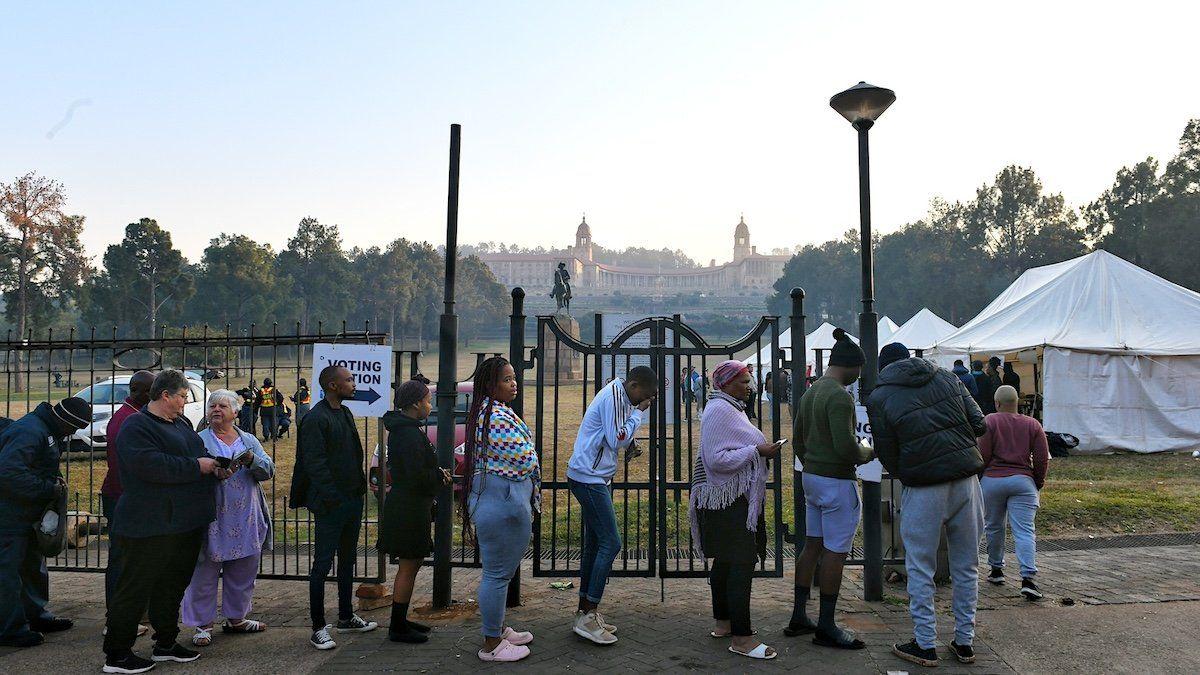
“Recent public-opinion polling suggests that South African voters are increasingly dissatisfied with the country’s direction, municipal service delivery and established political leadership as the 4 November 2026 local government elections approach. Findings from surveys published in October show weakening support for the African National Congress (ANC), stronger competition from opposition parties and growing public acceptance of coalition government, although voters still expect political parties to demonstrate that cooperation can deliver tangible improvements.”
Introduction: A changing political mood
South Africa is approaching a significant local government election amid growing public scrutiny of political leadership, municipal performance and the ability of government institutions to respond to citizens’ everyday needs. Recent polling suggests that voters are becoming increasingly willing to reconsider their political loyalties, creating a challenging environment for established parties and new political movements alike.
The November 4 elections are particularly important because municipalities are responsible for services that directly affect households and businesses, including water provision, electricity distribution, sanitation, refuse collection, road maintenance and aspects of local economic development.
For many voters, these responsibilities are more than campaign promises. They influence household expenses, business operations, neighbourhood safety and confidence in democratic institutions.
A series of surveys published during October indicates that dissatisfaction with government performance is influencing the political conversation. However, public opinion is not moving uniformly towards one opposition party. Instead, the emerging picture is one of fragmented preferences, competing expectations and greater uncertainty about which political arrangements will deliver effective local administration.
Public confidence remains under pressure
A Social Research Foundation survey conducted with The Common Sense between September 18 and October 12, 2026, interviewed 3,100 respondents who were screened as registered voters.
Its October 19 report found that the ANC had 32% support, while the Democratic Alliance (DA) had 26%. The uMkhonto weSizwe Party (MKP) received 12%, and the Economic Freedom Fighters (EFF) recorded 8%.
The researchers described the ANC result as a joint record low in their polling series. The figures suggest that the party faces a serious challenge in retaining its historic position as South Africa’s dominant political organisation.
Nevertheless, polling should not be confused with election results. Voting intentions can change as campaigns progress, candidates become better known and voters evaluate new information. Turnout also affects the final distribution of votes.
The findings are therefore best understood as an indication of the political climate rather than a definitive prediction of the election outcome.
For the ANC, the challenge is to persuade voters that it can address longstanding problems and restore confidence in municipal administration. Opposition parties, meanwhile, must demonstrate that they can convert public dissatisfaction into credible alternatives.
Municipal services emerge as a decisive issue
Public opinion about local government is closely connected to the quality and reliability of basic services. A separate report published by TimesLIVE on October 18 examined polling conducted by MarkData in Johannesburg and Cape Town.
In Johannesburg, the survey found that 40.7% of respondents considered the municipality to have been extremely badly run over the preceding five years. Another 28% said it had not been well run.
The findings also highlighted dissatisfaction with infrastructure. Some 61.5% of respondents said the municipality had not managed water supply well and that a different mayor and governing majority were needed. Meanwhile, 63% judged the municipality’s handling of electricity, roads and sewage infrastructure negatively and supported a change in leadership.
These responses illustrate how municipal performance can influence public confidence in political parties. When residents experience recurring interruptions to essential services, they may question the competence of the administration responsible, regardless of the party’s national reputation.
However, service delivery challenges are often complex. Municipalities operate within financial, infrastructure and institutional constraints, while responsibilities can be divided among local, provincial and national authorities. Voters’ perceptions of responsibility may therefore differ from the formal allocation of government powers.
Political parties will need to explain both what they intend to change and how they will finance, implement and maintain their proposed solutions.
Political competition becomes increasingly fragmented
The changing political environment is not simply a contest between the ANC and the DA. Other parties are competing for support and may become important in determining who governs municipalities after the election.
An October 6 report by The Common Sense, drawing on a News24 and SABI poll, recorded national voting intentions of 32% for the ANC, 25% for the DA, 15% for the MKP and 12% for the EFF. The poll interviewed 5,001 registered voters between August 25 and September 17.
The metropolitan results also suggested that political preferences vary significantly by location. The DA performed strongly in Cape Town and Tshwane, while the MKP was particularly competitive in eThekwini.
Johannesburg presented a more complicated picture, with several parties competing for meaningful shares of the vote. Such fragmentation increases the likelihood that governing majorities will depend on negotiations between political organisations.
For voters, this raises a practical question: will their preferred party be able to govern effectively, or will the final administration depend on agreements made after ballots have been counted?
The answer may depend as much on coalition negotiations as on which party emerges as the largest in individual municipalities.
Coalition government gains public acceptance
Public attitudes towards coalition government are another important feature of the current political climate.
An October 5 report by Inside Politics described a News24 and SABI Strategy Group survey in which 61% of respondents said they would be happy with a coalition governing their municipality after the elections, compared with 32% who opposed such arrangements.
More recent polling published by Inside Politics on October 20 reported that 68% supported ANC–DA cooperation in municipalities where neither party secured an outright majority, while 30% opposed it.
Although these questions measure different aspects of coalition preferences, they suggest that cooperation between parties is becoming an increasingly familiar part of South African politics.
However, accepting coalitions in principle does not mean voters agree on which parties should govern together. Negotiations may involve disagreements over budgets, mayoral appointments, service priorities and accountability.
Coalition administrations must therefore establish clear governing agreements and practical mechanisms for resolving disputes. Without these, political instability can disrupt municipal planning and undermine public confidence.
The election will test whether parties can translate voters’ willingness to accept shared government into durable arrangements that prioritise service delivery.
Jobs, unemployment and corruption shape voter priorities
Public opinion is also influenced by concerns that extend beyond municipal infrastructure.
The October polling reported by The Common Sense identified employment and unemployment, corruption and crime among the issues shaping voters’ priorities. In its analysis of national polling, jobs and unemployment featured prominently, followed by corruption and public safety concerns.
These issues matter because residents often assess government through the combined experience of economic opportunity, public safety and the reliability of essential services.
Unemployment can intensify frustration where people believe political leaders have failed to create conditions for businesses to grow or for young people to enter the labour market. Corruption allegations can deepen that frustration by weakening trust that public resources are being used appropriately.
Local government cannot independently solve every national economic challenge. Nevertheless, municipalities can influence the business environment through planning decisions, infrastructure maintenance, transparent procurement and efficient administrative processes.
Candidates who explain how local policies can support investment, improve accountability and strengthen service delivery may be better positioned to address voters’ immediate concerns.
Public opinion is not a single national verdict
Although national polling provides useful insight, it can obscure important differences between communities.
Johannesburg, Cape Town, Tshwane and eThekwini have distinct economic conditions, political histories and local service-delivery challenges. Smaller municipalities may face different pressures, including limited revenue, infrastructure backlogs and difficulties attracting skilled personnel.
The concerns of urban voters may not fully represent those of residents in rural communities or smaller towns. Likewise, dissatisfaction with a particular municipal administration does not necessarily translate into support for the same opposition party elsewhere.
Survey methodology also matters. Sample selection, weighting, interview methods, question wording and the timing of fieldwork can influence results.
For that reason, responsible interpretation requires attention to the population surveyed and the dates on which interviews were conducted. A poll is a snapshot of opinion, not a guarantee of future behaviour.
Voters’ opinions may also reflect competing considerations. A person might be dissatisfied with municipal performance while remaining loyal to a party for historical, ideological or community reasons. Another voter might support coalition government but reject a particular proposed coalition.
These distinctions are important when evaluating the implications of polling for the coming election.
Accountability will matter after the election
The central question facing political parties is whether they can demonstrate that public criticism leads to meaningful action.
Residents need more than promises of transformation or improved administration. They need credible plans, transparent budgets, realistic delivery timelines and accessible mechanisms for reporting failures.
Municipal councils must also ensure that oversight functions properly, procurement decisions are transparent and public funds are directed towards legitimate priorities.
Coalition governments face an additional responsibility: making sure that disagreements between political partners do not repeatedly interrupt administration. Clear agreements on responsibilities and performance targets can help voters judge whether their representatives are delivering results.
Civil society organisations, journalists and residents also have a role in scrutinising public commitments and comparing them with actual performance.
The value of public-opinion research lies partly in identifying the issues that citizens believe require urgent attention. Its broader democratic value depends on whether political institutions respond constructively to those concerns.
Conclusion: An important test for South African democracy
The latest available polling paints a picture of a changing political environment in South Africa. The ANC faces pressure, the DA and other opposition parties are competing for greater influence, and coalition arrangements are increasingly central to discussions about local government.
At the same time, concerns about water, electricity, roads, unemployment, corruption and public safety remain important to the electorate.
The November 4 local government elections will provide a clearer indication of how these attitudes translate into voting behaviour. The results will also reveal which parties can negotiate governing arrangements and whether those arrangements can remain stable.
Ultimately, public opinion is not simply a measure of party popularity. It reflects citizens’ expectations about how democratic institutions should work and whether elected representatives can improve everyday life.
Political organisations that listen to those concerns, communicate realistic plans and demonstrate accountability may strengthen public confidence. Those that fail to respond risk further alienating voters who increasingly expect measurable results.
For South Africa, the central challenge is to turn political competition into more effective governance. The election will be an important test of whether changing voter expectations can encourage stronger accountability, more reliable municipal services and greater confidence in democratic decision-making.



