




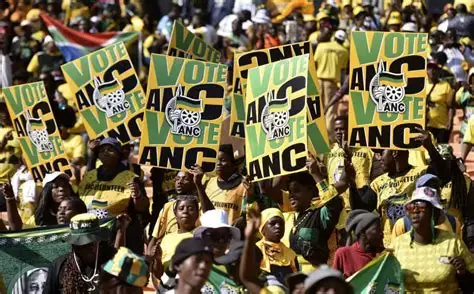
“The latest Social Research Foundation poll reveals ANC support has dropped to 37%, while the DA has risen to 30%, narrowing the gap to just seven points. This reflects mounting public frustration with corruption scandals, service delivery failures, and economic stagnation, positioning the November 2026 elections as a turning point in South Africa’s democratic history.”
South Africa’s political landscape is undergoing one of its most dramatic transformations since the end of apartheid. The African National Congress (ANC), long the dominant force in national politics, is now facing unprecedented challenges as public opinion shifts sharply in favor of opposition parties, particularly the Democratic Alliance (DA). With the November 2026 elections looming, the latest polling data suggests that the ANC’s once unassailable majority is crumbling, and the DA is emerging as a credible national alternative.
Historical Context
For decades, the ANC commanded comfortable majorities, buoyed by its liberation legacy and association with Nelson Mandela’s presidency. However, cracks began to show in the late 2010s, with scandals such as state capture, Eskom mismanagement, and the Phala Phala controversy eroding public trust. By 2019, coalition politics became increasingly common at the municipal level, and by 2024, the Government of National Unity (GNU) was formed to stabilize governance. Yet skepticism about its effectiveness remains high.
Current Polling Data
- ANC support: 37%
- DA support: 30%
- Gap: 7 points
This narrowing margin is historic. The DA, once dismissed as a regional party, has successfully positioned itself as a credible national alternative. Its campaign strategy emphasizes job creation, reliable service delivery, and anti-corruption measures, resonating strongly with urban voters in Gauteng, Johannesburg, and Tshwane.
Public Opinion Drivers
- Corruption Concerns: The ANC’s handling of scandals has deeply undermined confidence.
- Service Delivery Failures: Cities face collapsing infrastructure, unreliable electricity, and water shortages.
- Economic Stagnation: Unemployment remains above 33%, with inequality entrenched.
- Immigration & GNU: Divisions over immigration and skepticism about coalition governance fuel discontent.
DA’s Rising Momentum
The DA’s manifesto focuses on pragmatic governance. By targeting Gauteng, where polling places it ahead of the ANC, the party is capitalizing on urban frustration. Its promises of efficient service delivery, anti-corruption reforms, and economic revival resonate with middle-class voters and disillusioned ANC supporters.
Broader Implications
If the ANC fails to regain momentum, South Africa could face its first truly competitive national election since 1994. A DA surge would not only reshape the political balance but also force new coalition negotiations, potentially redefining governance in the country.
Conclusion
The November 2026 elections are shaping up to be a watershed moment in South Africa’s democratic journey. With the ANC’s dominance waning and the DA gaining ground, public opinion is signaling a demand for accountability, efficiency, and renewal. Whether this translates into a historic realignment remains to be seen, but one thing is clear: South Africans are ready for change.



