




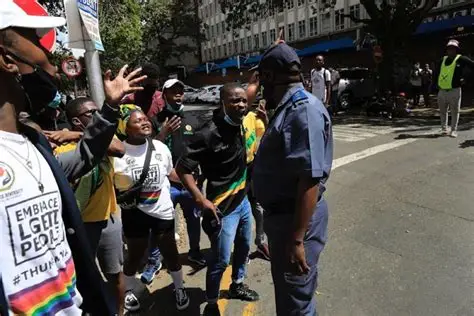
“The South African Police Service announced it will rely on baseline operational funds to manage the large-scale anti-immigrant protests planned for September 30, despite growing concerns over violence and displacement. Civil society groups warn that activism framed as economic justice has devolved into xenophobic vigilantism, threatening social cohesion and constitutional protections.”
South Africa is once again at the center of a heated political and social debate as anti-immigrant activism intensifies. The South African Police Service (SAPS) has confirmed it will not allocate additional funds to police the upcoming September 30 demonstrations organized by activist groups demanding the deportation of undocumented migrants. This announcement comes at a time when tensions are already high, with previous protests resulting in fatalities, mass displacement, and international condemnation.
Background of the Activism
Since March 2026, movements such as Operation Dudula and the March and March Movement have mobilized communities under the banner of reclaiming jobs and housing from undocumented migrants. These groups argue that foreign nationals are taking opportunities meant for South Africans, framing their activism as economic justice. However, critics—including civil society organizations and human rights defenders—warn that these campaigns have devolved into xenophobic vigilantism.
SAPS Position
Deputy National Police Commissioner Tebello Mosikili announced on September 8 that SAPS will rely on its baseline operational budget to police the September 30 protests. She emphasized that standard law enforcement procedures would be sufficient to manage the demonstrations, ruling out any special financial allocation despite the scale of mobilization. This decision signals that authorities view the protests as manageable within current policing capacity.
Disputed Death Toll
International media reports have claimed that at least 10 foreign nationals died during earlier anti-immigrant demonstrations. SAPS disputes this, stating that the confirmed death toll stands at four—two in KwaZulu-Natal and two in the Western Cape. Importantly, the fatalities included both South Africans and foreign nationals, underscoring the complex and violent nature of these protests. Investigations remain ongoing, with arrests already made across both groups.
Humanitarian Impact
The activism has had devastating humanitarian consequences. According to reports, more than 160,000 foreign nationals have been displaced due to violent protests and intimidation campaigns. Families have been forced to flee communities where they had lived for years, creating a mass displacement crisis that has drawn international attention. Civil society organizations argue that this activism undermines constitutional protections and threatens South Africa’s fragile social cohesion.
Civil Society Response
Civil society groups, including human rights NGOs and faith-based organizations, have condemned the protests as xenophobic and unconstitutional. They warn that the rhetoric of “economic justice” is being weaponized to justify vigilantism and violence. Calls have been made for the government to strengthen protections for foreign nationals and to address the root causes of unemployment and inequality without scapegoating migrants.
Political Context
The activism is unfolding against a backdrop of political instability and economic hardship. With unemployment rates remaining high and service delivery failures widespread, frustration among South Africans has created fertile ground for populist movements. Politicians have been accused of exploiting anti-immigrant sentiment to gain support, further polarizing the national discourse.
International Condemnation
International organizations, including the United Nations and regional African bodies, have expressed concern over the situation. They warn that South Africa risks violating its obligations under international human rights law if xenophobic violence continues unchecked. Diplomatic pressure is mounting for the government to take stronger action to protect vulnerable communities.
Looking Ahead
The September 30 protests are expected to be a major test for SAPS and the government. With no additional budget allocated, the police will need to rely on existing resources to maintain order. The outcome of these demonstrations will likely shape the trajectory of activism in South Africa, determining whether the country can balance legitimate grievances with constitutional protections for all residents.



