




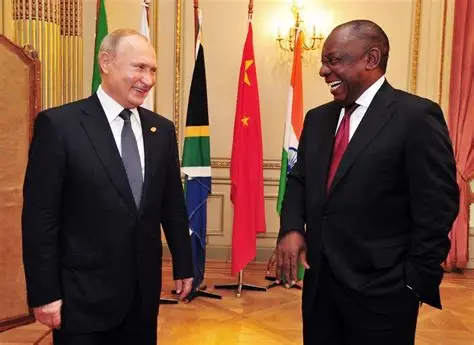
“President Cyril Ramaphosa will attend the 18th BRICS Summit in New Delhi, where leaders from emerging economies will deliberate on trade, investment, and global governance reforms. South Africa aims to leverage the summit to expand intra-BRICS cooperation, mobilize infrastructure investment, and strengthen its diplomatic influence in the Global South.”
South Africa is preparing for a defining moment in its international relations as President Cyril Ramaphosa heads to New Delhi for the 18th BRICS Summit scheduled for 12–13 September 2026. The summit, hosted under India’s chairship with the theme “Building for Resilience, Innovation, Cooperation and Security”, will bring together leaders from Brazil, Russia, India, China, South Africa, and newly expanded members including Egypt, Ethiopia, Indonesia, Iran, Saudi Arabia, and the UAE. Against the backdrop of global instability, South Africa’s participation signals its intent to deepen ties within BRICS and assert its role as a leading voice for the Global South.
South Africa’s Strategic Objectives
- Trade Expansion: Ramaphosa will emphasize expanding intra-BRICS trade and investment, particularly in manufacturing and value-added industries.
- Infrastructure Development: South Africa seeks to mobilize BRICS investment into African infrastructure projects aligned with the African Continental Free Trade Area (AfCFTA).
- Global Governance Reform: Pretoria will advocate for reforms in the United Nations Security Council and international financial institutions to better reflect the interests of developing nations.
- Diplomatic Positioning: By participating actively, South Africa aims to balance relations between Western powers and emerging economies, reinforcing its non-aligned stance.
Context of Geopolitical Tensions
The summit takes place amid ongoing conflicts in Ukraine and the Middle East, as well as intensifying U.S.–China rivalry. These dynamics have disrupted global supply chains and slowed progress toward the UN Sustainable Development Goals (SDGs). South Africa’s role is to champion multilateralism and ensure that African priorities—such as industrialization, food security, and climate resilience—remain central to BRICS deliberations.
Business Forum and Economic Diplomacy
Ramaphosa will also participate in the BRICS Business Forum Leader’s Dialogue, engaging with business leaders on:
- Trade and supply chains
- Agriculture and food security
- Women-led development initiatives
- Digital economy and innovation
South Africa’s BRICS Business Council and BRICS Women’s Business Alliance will play a crucial role in identifying opportunities for investment and commercial partnerships. This reflects Pretoria’s broader strategy of linking diplomacy with economic growth.
South Africa’s Balancing Act
While strengthening ties with BRICS, South Africa is simultaneously working to reset strained relations with the United States. Just weeks before the summit, Ramaphosa hosted U.S. Ambassador Leo Brent Bozell III in Tshwane to recalibrate bilateral ties after years of tension marked by aid suspensions and diplomatic disputes. This dual-track diplomacy underscores South Africa’s pragmatic approach: engaging both Western and emerging powers to maximize national interests.
Implications for Africa
South Africa’s leadership within BRICS carries continental significance:
- AfCFTA Integration: Mobilizing BRICS investment into African infrastructure will accelerate AfCFTA’s implementation.
- Voice of Africa: As the only African BRICS founding member, South Africa represents broader African interests in global governance debates.
- Development Financing: Access to BRICS’ New Development Bank (NDB) could provide alternative financing for African states, reducing reliance on Western institutions.
Conclusion
The 18th BRICS Summit is more than a diplomatic gathering—it is a test of South Africa’s ability to navigate complex global politics while advancing African priorities. Ramaphosa’s participation highlights Pretoria’s ambition to be a bridge between continents, a champion of multilateralism, and a driver of economic transformation. As the world watches New Delhi, South Africa’s role in shaping the future of the Global South will be on full display.



