




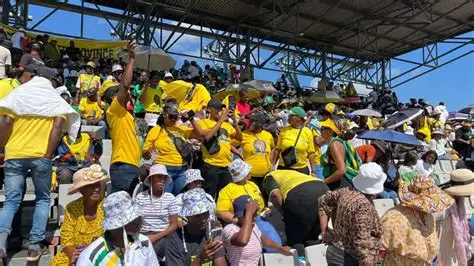
“The IEC has set November 4, 2026, as the official date for South Africa’s local government elections, marking the start of a decisive 90-day campaign period. Early results show the ANC leading but facing strong challenges from the DA and MK, raising the likelihood of coalition governments across municipalities.”
South Africa’s political landscape has entered a historic phase as the Independent Electoral Commission (IEC) officially proclaimed November 4, 2026, as the date for the local government elections. This announcement sets the stage for a fiercely contested campaign period, with the African National Congress (ANC), Democratic Alliance (DA), uMkhonto weSizwe (MK), and Economic Freedom Fighters (EFF) all vying for dominance in municipalities nationwide. With over 29 million registered voters, largely driven by youth mobilization, these elections are expected to reshape the country’s political map.
Current Results Snapshot
- ANC: 40.18% (6,459,284 votes)
- DA: 21.81% (3,506,855 votes)
- MK: 14.58% (2,344,291 votes)
- EFF: 9.52% (1,529,914 votes)
- IFP: 3.85% (618,208 votes)
These figures highlight the ANC’s continued dominance but also underscore the rise of challengers, particularly the DA and MK, who are consolidating urban and provincial support bases.
ANC’s Position
The ANC remains the largest party, but its 40.18% share reflects a significant decline compared to past elections. President Cyril Ramaphosa has emphasized the party’s commitment to service delivery, but ongoing challenges such as unemployment, corruption scandals, and infrastructure failures have eroded public trust. The ANC’s campaign strategy now focuses on rural strongholds and leveraging its historical legacy to maintain relevance.
DA’s Surge
The DA has emerged as a formidable challenger, securing 21.81% of the vote. Its appeal lies in urban centers, where dissatisfaction with ANC governance has fueled support. The DA’s messaging emphasizes accountability, economic reform, and improved municipal management. Analysts suggest that the DA’s performance could position it as a key coalition partner in several municipalities.
MK’s Rise
The MK party, led by former President Jacob Zuma’s allies, has stunned observers by capturing 14.58% of the vote. Its populist rhetoric and focus on grassroots mobilization resonate strongly with disillusioned voters, particularly in KwaZulu-Natal. The MK’s rise signals a shift in South Africa’s political dynamics, as it challenges both the ANC and EFF for influence among working-class communities.
EFF and Smaller Parties
The EFF, with 9.52%, continues to push radical economic transformation policies, but its growth appears slower compared to MK. Smaller parties like the Inkatha Freedom Party (IFP) remain regionally significant, particularly in KwaZulu-Natal, but lack national traction.
Coalition Possibilities
With no party likely to secure outright majorities in many municipalities, coalition governments are expected to become the norm. Analysts predict that the ANC may seek alliances with smaller parties, while the DA could explore partnerships with the IFP or even MK in select regions. These coalition negotiations will test South Africa’s political maturity and ability to govern inclusively.
Voter Mobilization
The IEC reported a surge in voter registration, surpassing 29 million citizens. Youth participation has been particularly notable, with campaigns leveraging social media to engage first-time voters. This demographic shift could significantly influence outcomes, as younger voters demand accountability, transparency, and economic opportunities.
Challenges Ahead
The elections face logistical and political challenges:
- Candidate list disputes: The ANC recently clashed with the IEC over the exclusion of hundreds of councillor candidates.
- Service delivery protests: Communities continue to express frustration over water shortages, electricity blackouts, and unemployment.
- Economic pressures: Rising inflation and stagnant growth add urgency to campaign promises.
Conclusion
The proclamation of November 4, 2026, as election day marks a turning point in South Africa’s democratic journey. While the ANC remains the frontrunner, the DA and MK’s surge signals a fragmented political landscape where coalition governments are inevitable. With millions of newly registered voters, particularly youth, the elections promise to redefine South Africa’s political future and test the resilience of its democratic institutions.



