




“At the CNBC Africa AI Summit in Sandton, South African banks, startups, and government leaders showcased tangible AI adoption results, signaling a shift from pilot projects to scaled implementation. Discovery Bank, Nedbank, and Gauteng’s provincial government revealed breakthroughs in customer service, fraud detection, and investment mobilization, while startups like Flowt demonstrated AI’s potential for small business finance.”
Artificial Intelligence (AI) has long been hailed as the technology that will redefine industries, economies, and societies. In South Africa, the conversation has often centered on potential rather than practice. That changed dramatically on August 27, 2026, when the CNBC Africa AI Summit in Sandton became the stage for a series of groundbreaking announcements. Banks, startups, and government officials revealed not just plans but measurable results, marking a decisive leap forward in the country’s AI journey.
Banking Sector Transformation
Discovery Bank’s revelation that over 50% of client interactions now run through its AI banking channel is a watershed moment. In just three to four months, the bank transitioned from pilot testing to full-scale deployment, demonstrating both the speed and scalability of AI in financial services. This shift has streamlined customer engagement, reduced operational costs, and positioned Discovery Bank as a leader in AI-driven banking innovation.
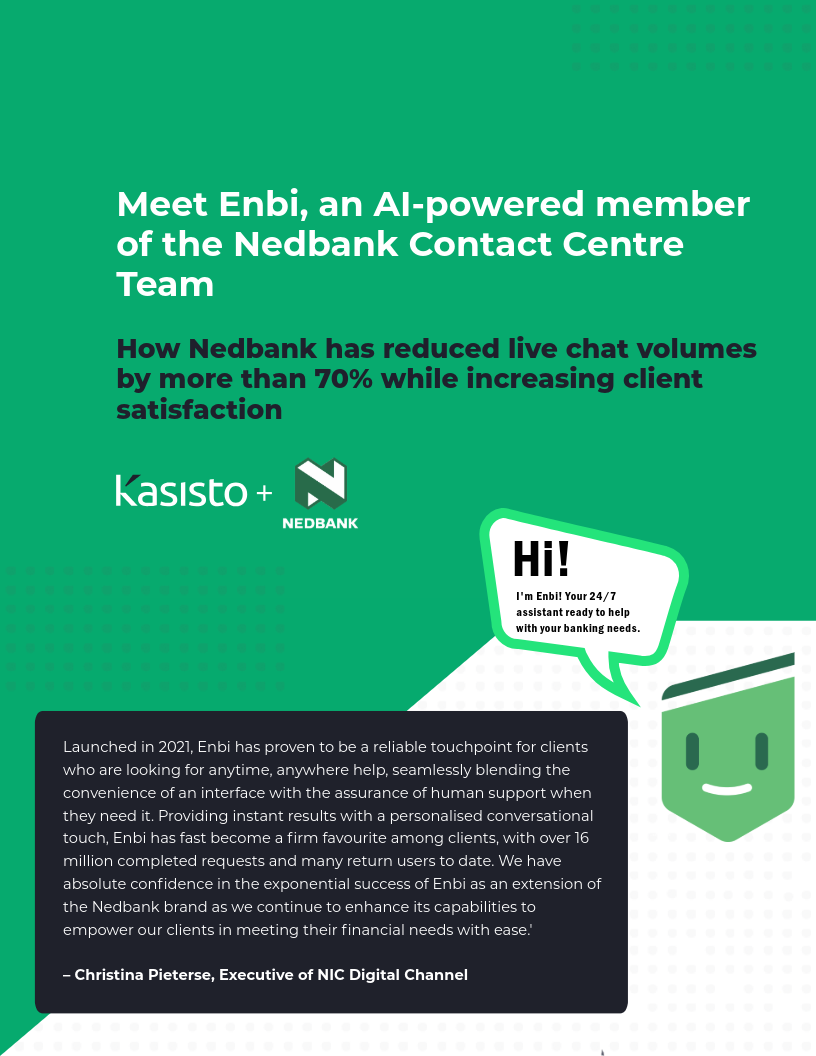
Nedbank’s achievement is equally striking. By deploying AI in fraud detection, the bank reduced case capture time from 40 minutes to just 2 minutes. This efficiency not only enhances customer trust but also strengthens the bank’s resilience against financial crime. Together, these examples illustrate how AI is reshaping the very foundations of South African banking.
Government’s AI Investment Push
Gauteng’s provincial government used the summit to announce R206 billion in investment commitments across 90 bankable projects, part of a broader mobilization of more than R500 billion over two years. MEC Vuyiswa Ramokgopa emphasized that these investments are designed to position Gauteng as a tech-enabled economy, with AI at the core of its development strategy. This commitment reflects a recognition that AI is not just a tool for efficiency but a driver of economic transformation and global competitiveness.
Startup Innovation: Flowt’s Breakthrough
While banks and government focused on large-scale adoption, startups highlighted AI’s potential at the grassroots level. Nairobi-based Flowt, which raised a pre-seed round from Delta40 Fund I, Impacc, and the Argidius Foundation, showcased how AI can empower small businesses. By turning messy financial records into lender-ready data, Flowt enables companies traditionally deemed too risky by banks to access credit. Its first facility went to GreenBay, a Kenyan appliance-refurbishing business that had struggled to grow due to lack of working capital.
This innovation underscores AI’s role in democratizing finance, ensuring that even small enterprises can benefit from technological advances.
Academic Perspective: Shaping AI Development
At the 16th East Africa Communication Association conference in Nairobi, scholars added a cautionary note. Professor Margaret Jjuuko, EACA president, warned that Africa must move beyond being a consumer of AI technologies and actively shape their development. She highlighted the risk that generative AI could widen the gap between institutions with the infrastructure to harness it and those without. This perspective reinforces the need for policies that ensure equitable access and prevent technological exclusion.
Why This Matters
The convergence of banking efficiency, government investment, startup innovation, and academic critique paints a comprehensive picture of South Africa’s AI landscape. The numbers tell the story:
- 50% of Discovery Bank’s interactions via AI
- Fraud detection time cut from 40 minutes to 2 minutes at Nedbank
- R206 billion in Gauteng investment commitments
- Flowt’s AI-driven lending breakthrough for small businesses
These milestones demonstrate that AI is no longer a distant promise but a present reality reshaping South Africa’s economy.
Challenges Ahead
Despite the optimism, challenges remain. Ensuring equitable access to AI technologies, preventing bias in AI systems, and crafting policies tailored to South Africa’s socio-economic context are critical. The risk of widening digital divides must be addressed through inclusive strategies that prioritize connectivity, affordability, and education.
Conclusion
The CNBC Africa AI Summit marked a turning point in South Africa’s AI journey. With banks achieving operational breakthroughs, government mobilizing massive investments, startups innovating at the grassroots, and academics urging caution, the country is entering a new era of AI-driven transformation. The challenge now is to sustain momentum, ensure inclusivity, and craft policies that harness AI’s potential while mitigating its risks.



