




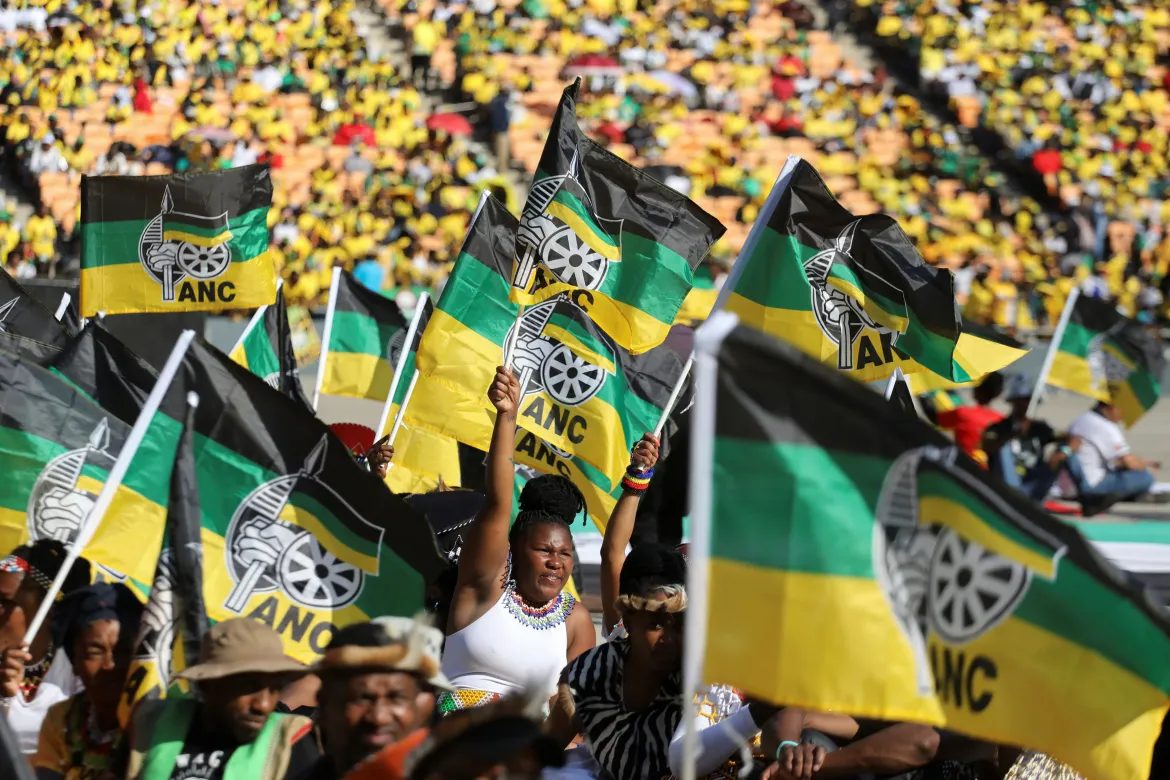
“The latest Ipsos poll reveals a neck-and-neck contest between the ANC and DA in major metros, with Jacob Zuma’s MK Party commanding 55% support in eThekwini. With elections set for November 4, 2026, the outcome hinges on voter mobilization and turnout strategies.”
South Africa’s political landscape is undergoing one of its most dramatic transformations since the dawn of democracy in 1994. The latest Ipsos “Pulse of the People” poll, released on September 4, 2026, has sent shockwaves through the country’s political establishment. The African National Congress (ANC), long the dominant force in South African politics, now finds itself in a precarious position, battling the Democratic Alliance (DA) in a dead heat across key metropolitan areas. Meanwhile, Jacob Zuma’s uMkhonto weSizwe (MK) Party has emerged as a formidable player, particularly in eThekwini, where it commands a majority of voter support.
Polling Breakdown
- Johannesburg: ANC leads narrowly with 31%, DA trails at 27%.
- Tshwane (Pretoria): DA surges ahead with 31%, ANC lags at 22%.
- Ekurhuleni & Nelson Mandela Bay: Both metros show razor-thin margins between ANC and DA.
- eThekwini (Durban): MK Party dominates with 55%, reshaping the political map.
- National Picture: ANC at 31%, DA at 25%, MK at 14%, EFF at 11%, ActionSA at 6%, IFP at 3%, and Patriotic Alliance at 2%.
Public Opinion Drivers
- Corruption Fatigue: Years of scandals, from state capture to the Phala Phala controversy, have eroded trust in the ANC.
- Service Delivery Failures: Persistent electricity blackouts, water shortages, and collapsing infrastructure fuel disillusionment.
- Economic Stagnation: With unemployment above 33%, frustration over inequality and lack of opportunity is mounting.
- Rise of Alternatives: The DA’s focus on anti-corruption and service delivery resonates with urban voters, while MK capitalizes on Zuma’s populist appeal.
The MK Factor
Jacob Zuma’s MK Party has stunned analysts by securing majority support in eThekwini. This surge reflects both Zuma’s enduring influence in KwaZulu-Natal and widespread dissatisfaction with traditional parties. MK’s populist rhetoric, rooted in promises of radical economic transformation and loyalty to Zuma’s legacy, has galvanized voters who feel excluded from mainstream politics.
The ANC’s Struggle
The ANC’s liberation legacy, once its strongest asset, now appears insufficient to maintain dominance. Internal divisions, governance failures, and declining credibility have left the party vulnerable. While it still commands loyalty in rural areas, urban voters are increasingly shifting toward alternatives.
The DA’s Momentum
The DA has successfully positioned itself as a credible national alternative. Its campaign emphasizes pragmatic governance, job creation, and reliable service delivery. In Tshwane, the DA’s lead suggests that urban frustration is translating into tangible electoral gains.
Coalition Politics Looming
With no party likely to secure an outright majority, coalition politics may define the post-election landscape. The possibility of ANC-DA cooperation, or DA-MK alliances, raises complex questions about governance stability. Past coalition experiments at municipal level have been fraught with instability, but the 2026 elections may force parties to adapt.
Voter Turnout as Decisive Factor
Pollsters emphasize that final outcomes will hinge on voter turnout. The ANC’s traditional strength lies in mobilizing rural voters, while the DA and MK must ensure urban and youth participation. With over 29 million registered voters, turnout strategies could determine whether South Africa experiences continuity or a seismic political shift.
Conclusion
The Ipsos poll underscores a historic moment in South Africa’s democratic journey. Public opinion has shifted dramatically, eroding the ANC’s dominance and elevating both the DA and MK Party. As the November 4 elections approach, the battle for metros like Johannesburg, Tshwane, and eThekwini will shape the country’s political future. Whether South Africa enters a new era of coalition governance or witnesses the rise of new dominant forces, one thing is clear: the electorate is demanding accountability, service delivery, and change.



